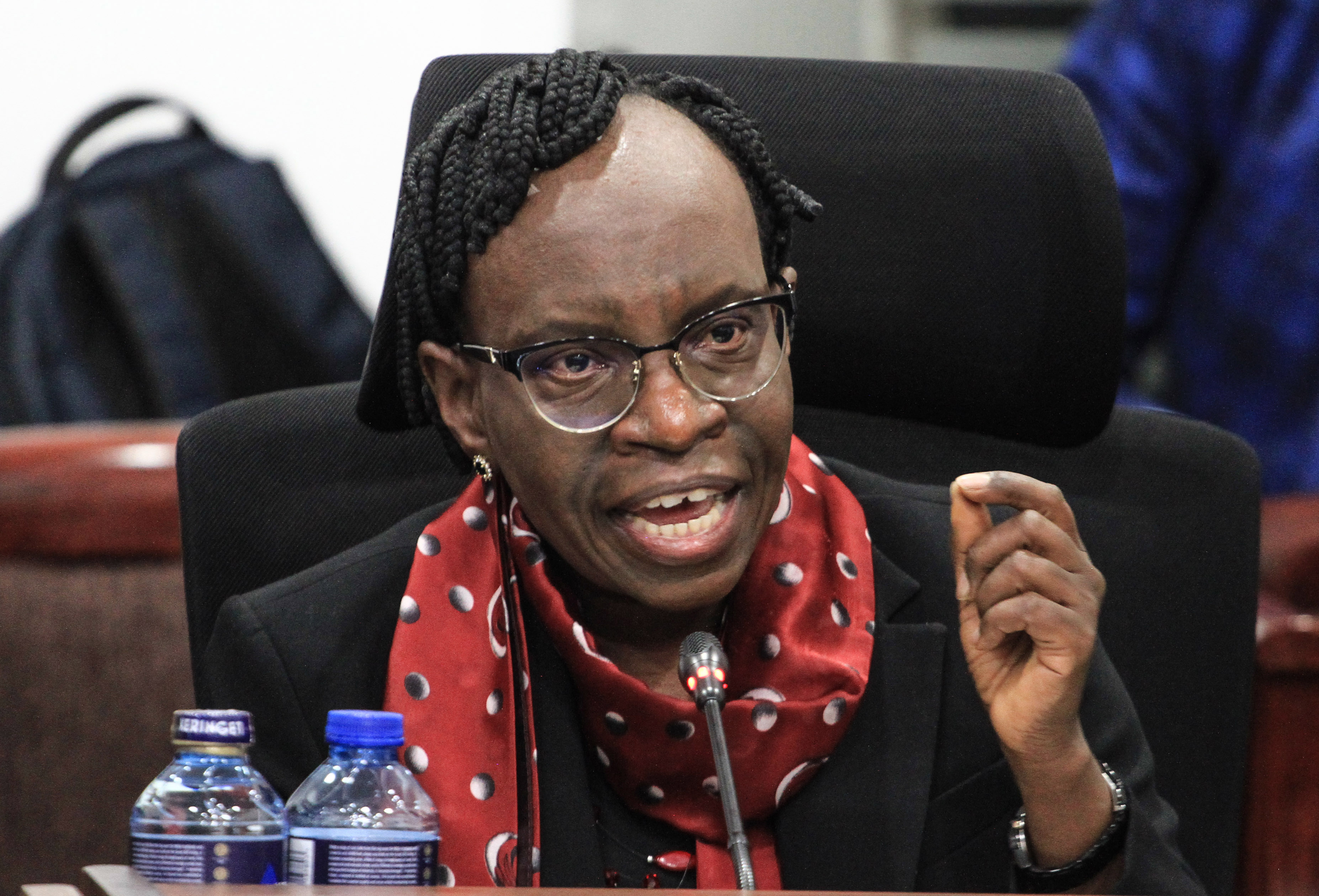
Auditor General Nancy Gathungu has exposed a Sh22.5 billion discrepancy in payments made by the National Health Insurance Fund, reigniting concerns over financial mismanagement at the state insurer.
The latest findings, detailed in the audit report for the
financial year ending June 30, 2024, reveal systemic flaws ranging from
irregular payments to duplicated records.
Perhaps the most alarming revelation is that Gathungu’s team
was blocked from accessing NHIF’s e-claims system logs, which are a critical
tool for verifying transactions.
The auditor said access to critical system logs was
restricted – a recurring theme in audits of mega systems operated by state
agencies.
It emerged that the e-claims system at the fund was
outsourced, and the system administrators had restricted access to the files.
“These log files are crucial for audit verification of
transactional data, but could not be accessed, as administrative privileges,
including full access to these critical files, are exclusively managed by the
system vendor,” Gathungu said.
In 2020, auditors raised concerns over the outsourced
system’s lack of transparency, a problem which has persisted four years later.
Without full access, auditors cannot confirm whether claims
were legitimately processed or manipulated, a gap that has been exploited by
fraudsters.
“In the circumstances, the effectiveness of internal
controls on the e-claim system on access rights could not be confirmed,” she
stated in the report tabled in Parliament.
The audit mirrors past queries that have plagued NHIF for
years, since it is not the first time the fund’s financial management has come
under scrutiny.
In 2022, an audit uncovered Sh5.2 billion in unsupported
payments, including Sh1.8 billion paid to hospitals without proper
documentation.
The following year, another report flagged Sh3.6 billion in
irregular expenditures, including duplicate claims and payments for
non-existent services.
The current report exposes how little appears to have been
done to tighten controls despite the red flags.
Gathungu’s latest audit reveals even larger variances of
Sh22.5 billion between hospital billings and NHIF payments.
Shockingly, nearly 75 per cent of this amount (Sh16.8
billion) stems from claims filed beyond NHIF’s 30-day submission window. Past
audits have repeatedly flagged the loophole.
In 2023, delayed claims accounted for Sh12.1 billion in
questionable payments.
Auditors said it meant that NHIF failed to enforce its own
deadlines, leaving the fund vulnerable to fraud.
Other irregularities include some Sh3.1 billion, which was
paid before claims were even submitted.
Also flagged in the current report is Sh1.2 billion in
overpayments to hospitals, while some Sh990 million in claims were processed
without pre-authorisation.
The audit also uncovered discrepancies in NHIF’s declared
contributions of Sh40.2 billion, with Sh7.5 billion unaccounted for.
In 2021, the auditor cited a case where Sh4.8 billion in
member contributions could not be traced due to missing records.
Additionally, the latest report reveals Sh1.9 billion in
duplicated records and Sh1.7 billion in transactions with no valid dates.
The audit also highlights NHIF’s turbulent transition to the
Social Health Authority.
The Transition Committee has been called out after it failed
to produce a handover plan for assets and liabilities.
In 2023, a similar lack of coordination between NHIF and the
Ministry of Health led to Sh2.1 billion in unaccounted medical equipment
purchases.
Overpayments and salary breaches, which have been a
recurring theme in NHIF audits, have featured in the latest report too.
Among the instances flagged are Sh4.4 million in excess
basic salaries and Sh458,000 in unlawful house allowances.
The audit further flagged 625 employees paid below the legal
one-third basic pay threshold, lifting the lid on the strain on the authority’s
staffers’ payslips.
The report has also red-flagged Sh29.7 million in irregular
acting allowances, findings which mirror a 2022 audit that exposed Sh18 million
in unauthorised staff bonuses.
The report has unearthed the challenges that continue to mar
the NHIF transition to SHA, the latter being a subject of political
contestations.
President William Ruto’s administration has maintained that
the teething problems that SHA was fraught with have been addressed.
INSTANT ANALYSIS
Despite repeated warnings from the Auditor General, the fund has failed to implement lasting reforms, allowing irregularities to persist, and even grow. Even with billions in public funds at stake, the question that remains is whether the report will be acted upon or will join those gathering dust in the shelves of the supposed actors.