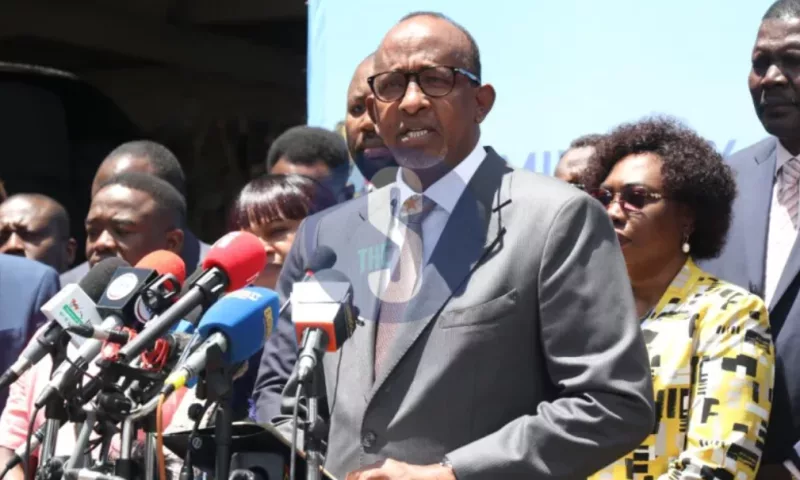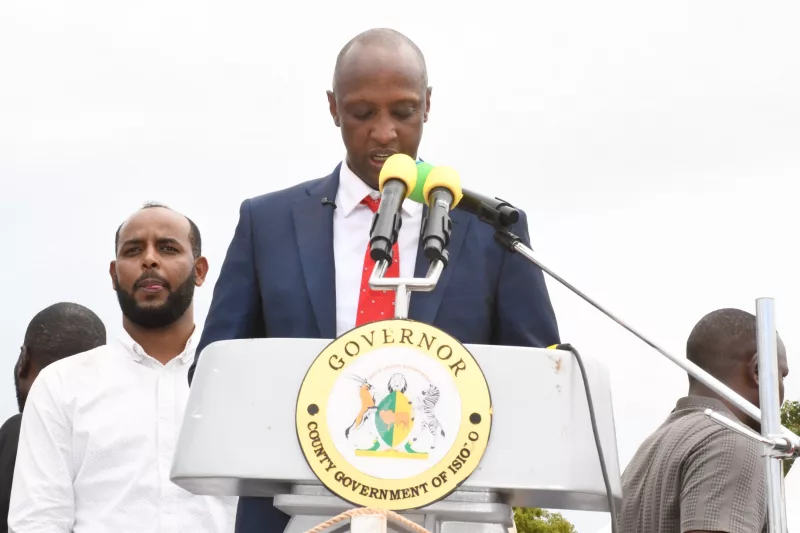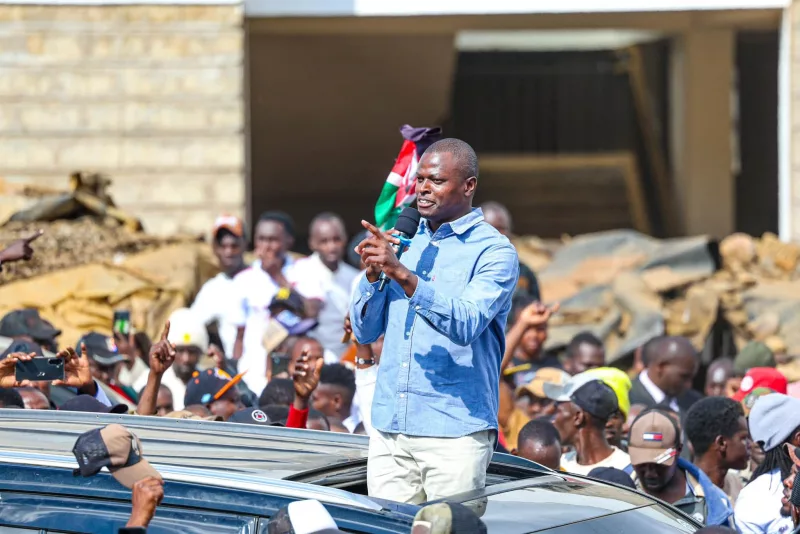
The sudden resignation of Moses Kuria as President William Ruto’s economic advisor is the clearest sign yet of growing political turbulence for the head of state in the influential Mt Kenya region.
Kuria, who served as senior advisor on Economic affairs for 10 months, resigned abruptly on Tuesday - delivering a significant political blow to a President already grappling with mounting pressure from multiple fronts.
“This evening, I have met my boss and my friend, President William Ruto. The President has graciously accepted my decision to resign from government,” Kuria said in a statement. Although he cited “personal interests” as the reason for his departure, the move is widely interpreted as a strategic step to position himself for the 2027 general election.
“He could be preparing to run for a political seat, but whether he will have influence in that region is debatable,” said political analyst Martin Andati.
Kuria’s resignation also comes at a time when the President is facing a youth-led revolt and nationwide anti-government protests.
Simultaneously, he appears to be losing grip on Mt Kenya, a region that was instrumental to his 2022 presidential win.
A former Trade and Public Service CS, Kuria was one of Ruto’s most vocal and experienced allies from Mt Kenya.
His bold, combative political style made him a valuable asset in defending the administration and consolidating support in the vote-rich region.
Additionally, his exit comes at a time of escalating political tensions, as Ruto faces an intensifying backlash in Mt Kenya.
Tellingly, Kuria recently posted on his X handle depicting himself as secretary general of the Jubilee Party.
Some analysts see this as a calculated move to take over the powerful party from Jeremiah Kioni and realign himself ahead of 2027.
“There are serious indications that he could be taking over the position of secretary general of Jubilee. Uhuru Kenyatta is making changes to his party,” Andati said.
At the heart of the Mt Kenya rebellion is Ruto’s estranged deputy, Rigathi Gachagua, who has mounted a bold political offensive to reclaim regional dominance.
The former DP is increasingly seen as a potential contender or kingmaker in 2027.
Kuria’s departure further weakens Ruto’s grip on the region where frustration is now rising over unfulfilled promises and perceived marginalisation.
Currently, Interior CS Kithure Kindiki and National Assembly majority leader Kimani Ichung’wah are among Ruto’s remaining lieutenants in the region – but their efforts to hold the fort have yielded limited success.
In a bid to bolster his standing, Ruto last year brought in political heavyweights, including former Nyeri Senator Mutahi Kagwe, ex-Nakuru Governor Lee Kinyanjui and former Kiambu Governor William Kabogo, appointing them to Cabinet positions.
Yet, this strategy has shown little political return, as the trio has had minimal visible impact on local dynamics. Gachagua’s grip on the region appears to be tightening.
At the national level, Ruto's administration is battling intensifying anti-government protests, which have paralysed major towns, led to police killings, enforced disappearances and caused widespread economic disruptions.
The protests are driven by public anger over government failures: excessive taxation, economic hardship, corruption, police brutality and broken promises.
Against this backdrop, Kuria’s resignation appears to be both a personal protest and a political calculation – distancing himself from a faltering administration while signalling discontent within Ruto’s inner circle.
Some analysts argue that Kuria may not be exiting the political scene but instead switching roles – perhaps at the President’s behest.
Former Government Delivery Unit head Peter Mbae believes Kuria is being deployed to serve as Ruto’s political point man in Mt Kenya.
“He has a party [Chama Cha Kazi] and is being mentioned as the President’s man. The resignation statement read more like a pat on the back. He’s simply moving from State House to the political arena,” Mbae said.
Political commentator Herman Manyora echoed this sentiment, saying Kuria’s departure could be a tactical move to mobilise support more freely, unencumbered by public service restrictions. “The President may have realised Mt Kenya is slipping away. Kuria is a grassroots mobiliser and this gives him room to operate politically,” Manyora said.
“It brings back the old Moses Kuria – visible, combative and now resourced to rally support.” However, Manyora also suggested that Kuria may have resigned out of frustration or boredom. “Maybe he was just tired of reading newspapers in the office. He might have felt sidelined and that could also explain the move,” he added.
For his part, Martin Andati, a political observer, said that while Kuria's move is significant, he might not entirely lose his influence.
In what appeared to be a preemptive counter to the talk of political exits and realignments, Lands CS Alice Wahome lashed out at ODM officials who insist the party remains in the opposition – even after joining the Ruto administration through a cooperation pact.
“Our friends in ODM are confused. This is their first time in government and it’s only because the President agreed to share power,” Wahome had said in May.
She criticised ODM secretary general Edwin Sifuna and others who publicly deny being part of the government, despite ODM-affiliated Cabinet Secretaries holding key roles.
“You can’t have your cake and eat it. ODM can’t claim they’re not in government. That’s politically dishonest,” Wahome said.
She emphasised that with Cabinet slots and high-level appointments, ODM is firmly embedded in the Kenya Kwanza administration, regardless of public denials by some of its leaders.