Catherine Mwilu remembers when a female patient came for testing last week.
When Mwilu, a nurse at Medilife Hospital tried to explain the positive result for a sexually transmitted disease, the patient immediately shut her down.
Begging her to put her out of her misery, she asked to get to the point, was she pregnant?
"Confirming she was not pregnant, her tense shoulders relaxed as she sighed blissfully. Any advice I gave her on how to prevent contracting the same STD in future clearly went over head," Mwilu says.
"After getting the antibiotics, she was practically skipping out of the hospital. This has been the norm when dealing with Gen Z patients,” she explains.
As a nurse, Mwilu's job necessitates one-on-one interactions with her patients.
Speaking to The Star, Paul Murimi, a millennial, details the shift in the Kenyans’ attitude towards diseases, in the last decade.
He says the best illustration of the attitude shift would be through MTV Shuga, a Kenyan drama series.
He says when MTV Shuga was first produced more than a decade ago, the issue of HIV was heavy.
According to Murimi, through characters like Femi, Princess and Weki who had HIV, the deeply rooted stigma around diseases was clearly illustrated.
He says that tThough HIV is talked about in the recently released MTV Shuga Mashariki, this topic lacks the shock value that it had more than a decade ago.
"When Salaton admits to having HIV to Nyokabi, a romantic interest, Nyokabi is angrier at him for keeping this from her rather than the fact that he has HIV," he says.
"Moreover, when Nyokabi discovers that she’s pregnant later in the show, this news is more of a cliff hanger to the audience, rather than how Salaton and Nyokabi will manage a relationship where one of them has HIV.”
At 23, the last thing Mercy Nyaboke wanted was a pregnancy. She soon came to terms with the fact you can’t always get what you want.
“I had started feeling sick. In the beginning, I rationalised that it was just normal sickness. When the sickness persisted, I bought a pregnancy test kit.
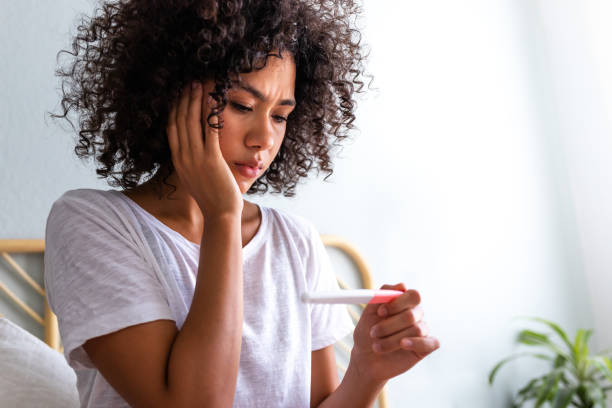
She remembers sitting on the bathroom floor staring blanking in the distance with teary eyes as she waited for the pregnancy test to finish reading.
"I had a plethora of thoughts, the main one being how I was going to manage pregnancy as a student if the pregnancy test turned positive," Nyaboke says.
As if not harrowing enough, she knew that seeking support from the father’s child, who was as toxic as a man gets, would be vain.
As she counted down the seconds to the reveal, she prayed to God for a miracle. She would accept anything but a pregnancy.
"In a desperate attempt to curry favour, I asked for herpes. However, as soon as I saw the two pink lines on the test, I accepted my fate with a tear stricken face," she says.
"Looking back, I can’t believe that the petrifying thought of pregnancy made me ask for herpes. That was crazy, but I can laugh about it now.”
Opening up to The Star, Milton Ogolla shares his experience when he was entertaining casual relationships.
“After joining campus, I had only thing in my mind, having fun. At 20 years of age, having a girlfriend nagging me endlessly was my definition of a nightmare worse than what those characters went through in Final Destination," Ogolla says.
Before long, he got a beautiful lady who shared his sentiment, an open relationship was the way to go. One night, things progressed too quickly but was all in all a delightful experience.
A week later, however, he thought that her interest towards him had dwindled. Calls were left unanswered and messages blue ticked.
Out of the blue, she asked to talk to him privately one evening. Looking at her worried expression, he was sent into immediate panic.
"Without giving her the chance to speak, the first thing that I idiotically asked was if she was pregnant," Ogolla explains.
"When she confirmed that she was not pregnant, I immediately felt like the air become lighter and the colour around me became brighter,” he recounts cheekily.
Omollo describes further, “She later told me that she is HIV positive and has been since birth."
Explaining her sudden cold demeanour towards him in the last month, she expressed that she felt guilty about having sexual relations without telling him about her status prior.
Before things progressed too quickly, she still considered him a stranger and she only disclosed personal information like that to her partners when in a serious relationship, he said.
Astoundingly, he realised that in his mind, her HIV status was frivolous.
"I’m not sure whether it was because she told me that she is an elite suppressor who maintained undetectable viral load without anti retroviral therapy," he explains.
"Or maybe it was because she diligently went for testing. Whatever the reason, my perception of her became better.”
Dr Anne Chemutai, a psychologist at HealingNest Hub, explains to The Star the psyche behind the Kenyan youth’s trepidation for pregnancy.
“In Kenya, fear surrounding pregnancy is often more pronounced than fear of diseases due to a combination of social, cultural, and practical factors," Chemutai says.
These include stigma, limited access to healthcare, fear of social judgment, and the perceived limitations pregnancy can impose on their lives.
Chemutai says that for the percentage of Kenyan youth who grew up in a household where they live hand to mouth, the thought of getting a child without prior planning is simply unfathomable.
"Most of them would rather have a sexually transmitted disease that they have to keep up with for the rest of their lives than having a child," she explains.
"A child is simply more on the plate for Kenyan youth, some who due to certain circumstances never had the leeway to truly enjoy their childhood.” she reveals candidly.



![Africa CDC Director General Dr Jean Kaseya at a past event. [Photo: Arthur Mbuguah, WHM]](https://cdn.radioafrica.digital/image/2026/10/8ced213c-affb-4dff-97ca-1b6bac1f958e.webp)