The hashtag #WeAreAllKikuyu has become a potent and thought-provoking symbol in Kenya, trending on X (formerly Twitter) since early July 2025.
Speculation is rife that Cyprian Nyakundi, the outspoken Kenyan blogger known for his provocative online presence, may have been the catalyst behind the hashtag's sudden rise.
Initially, #WeAreAllKikuyu appears to celebrate the Kikuyu community, Kenya’s largest ethnic group. According to the 2019 Kenya Population and Housing Census, the Kikuyu number 8,148,668 individuals, comprising 17.13% of the total Kenyan population.
As @KikuyuPride tweeted, “#WeAreAllKikuyu honours our roots, but it’s bigger than that!” Some, like @NyakundiWatcher, believe Nyakundi is actively pushing the hashtag "to call out the government’s lies!"
Reclaiming the Narrative: Unity Against Scapegoating
The hashtag’s deeper purpose, however, has emerged as a direct response to the government’s portrayal of the June 25, 2025, maandamano protests and the July 7 Saba Saba demonstrations.
Despite the widespread participation of all Kenyan communities—including the Luo (5,066,966 individuals, 10.65%), Luhya (6,823,842 individuals, 14.35%), Kamba (4,663,910 individuals, 9.81%), and many others—President William Ruto’s administration has been accused of attempting to scapegoat the Kikuyu community by framing these protests as ethnically driven.
These demonstrations, marking the 35th anniversary of Kenya’s pro-democracy uprising, saw broad-based involvement, yet the government's narrative has sought to isolate one group.
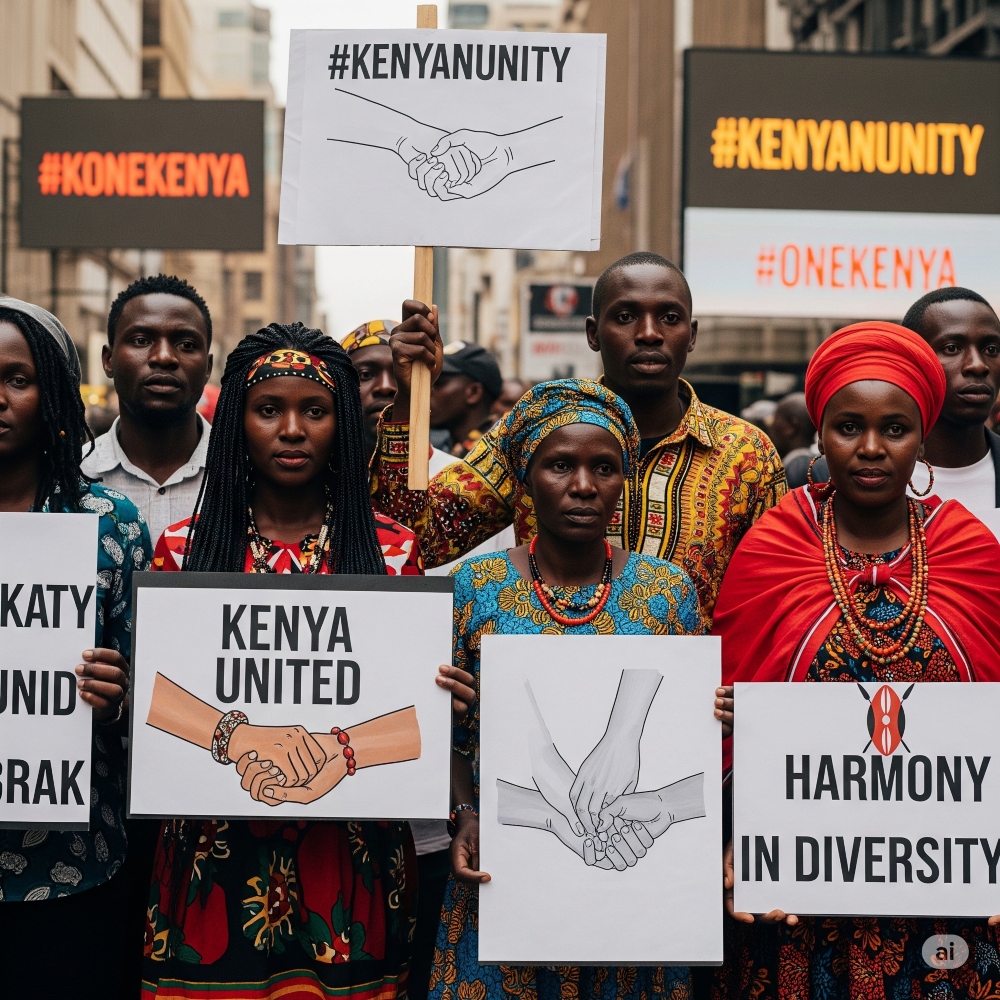
As @UnityKenya wrote, “#WeAreAllKikuyu rejects the government’s divide-and-rule tactic. All tribes marched! #KenyaUnited.” @PeaceLoverKE added, “After Boniface Kariuki’s death, #WeAreAllKikuyu shows we’re all in this fight, not just one group.”
Social media comments further reinforce this stance. @GenZKibera posted, “All communities were at Saba Saba, but Ruto blames Kikuyu. #WeAreAllKikuyu says no to that narrative. #YouthPower.”
@LuoVoiceKE tweeted, “I’m Luo, I protested too. #WeAreAllKikuyu is about unity against oppression, not tribe. #TruthMatters.” Echoing this, @KambaWarrior added, “Kamba, Luhya, all of us were there.
This hashtag exposes the government’s lie. #WeAreAllKikuyu.” The consensus among these voices is clear: the hashtag is a collective counter to the narrative of ethnic isolation.
Political Undertones and Diverse Reactions
The hashtag carries strong political undertones, with many interpreting it as a direct pushback against the Ruto administration.
While the administration includes Kikuyu allies, critics argue it has paradoxically sought to target the community for its perceived role in the opposition.
@PoliticalAnalystKE wrote, “#WeAreAllKikuyu dismantles Ruto’s Kikuyu scapegoat story. Smart move! #InclusiveKenya.”
@CoastVoiceKE noted, “If Nyakundi started it, it’s a clever rejection of tribal framing. #KenyaOne.”
Reactions to the hashtag are varied. @Skeptic254 questioned its ultimate meaning: “Nyakundi or not, #WeAreAllKikuyu—is it unity or a cover? Needs clarity.”
@DiasporaKenyan, reflecting from abroad, added, “#WeAreAllKikuyu shows Kenya’s collective resistance. Proud!”
However, @MinorityRightsKE cautioned against potential pitfalls: “Let’s ensure #WeAreAllKikuyu includes all, not just Kikuyu pride. #DiversityMatters.”
@KikuyuResistance tweeted, “#WeAreAllKikuyu because all tribes fought on June 25th and Saba Saba.
No marginalization!” The emergence of the hashtag coincides with a period of intense national reflection following recent economic protests and a Supreme Court ruling on inheritance rights—events that have collectively forced the country to examine core issues of equality, justice, and shared national identity.
As @HopefulKenyan concluded, “#WeAreAllKikuyu is about solidarity, not division. Let’s keep rejecting the government’s lies.”