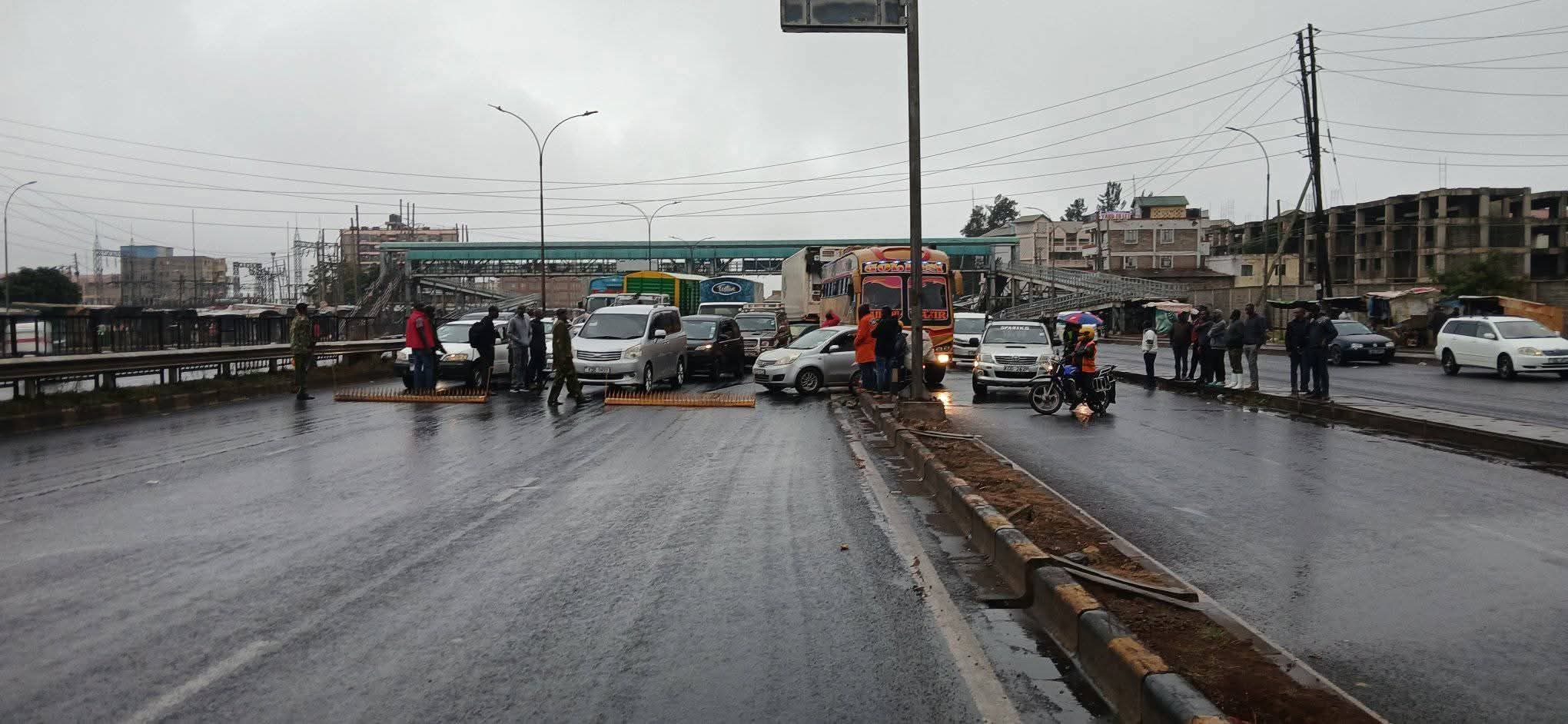
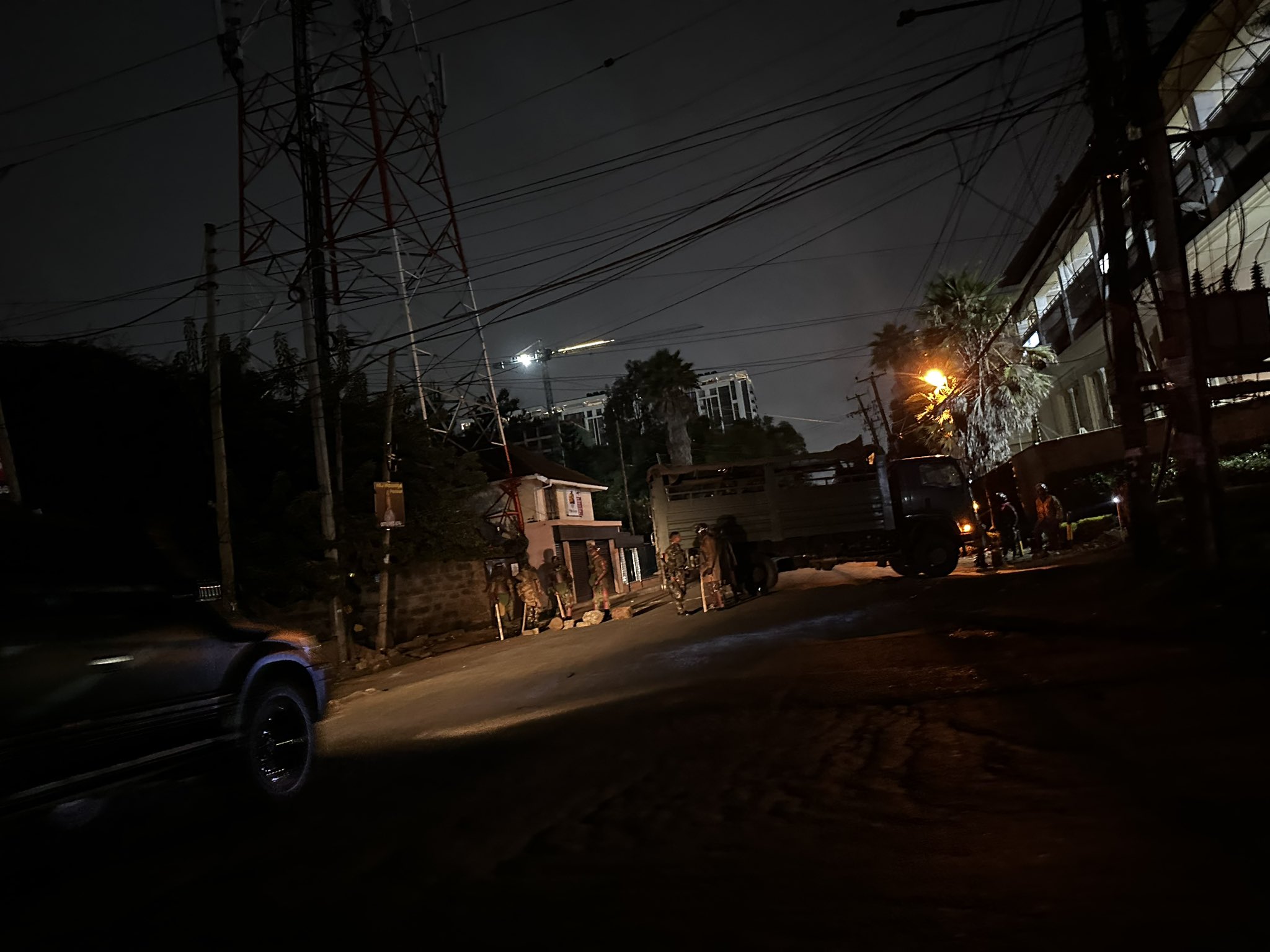
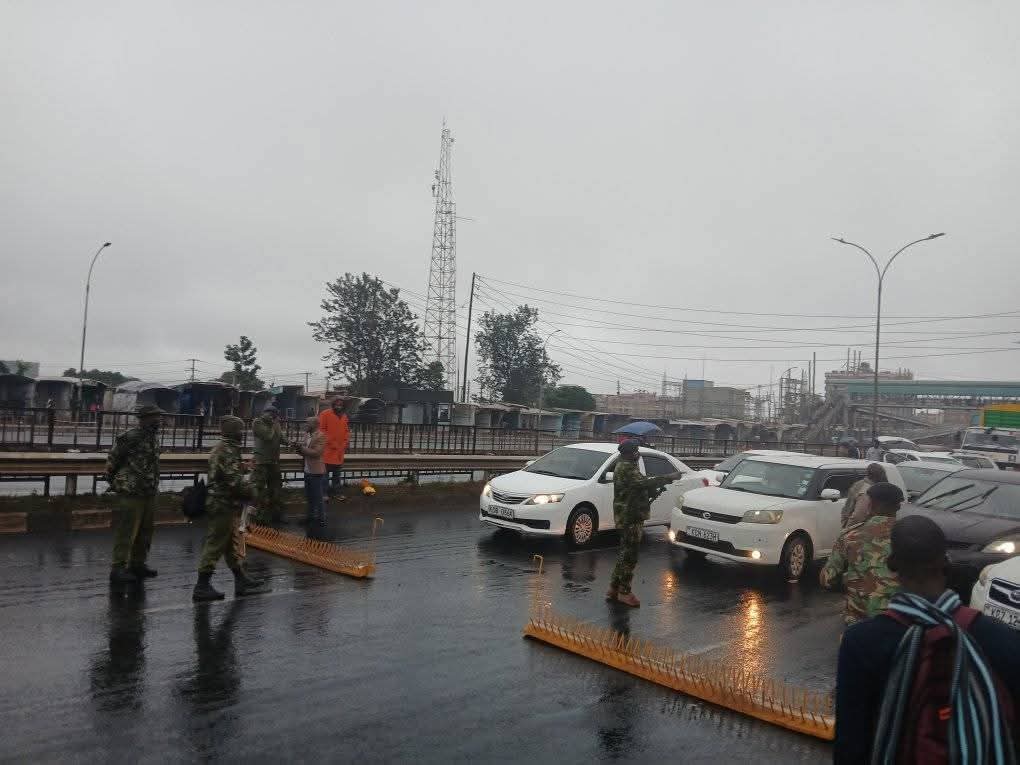
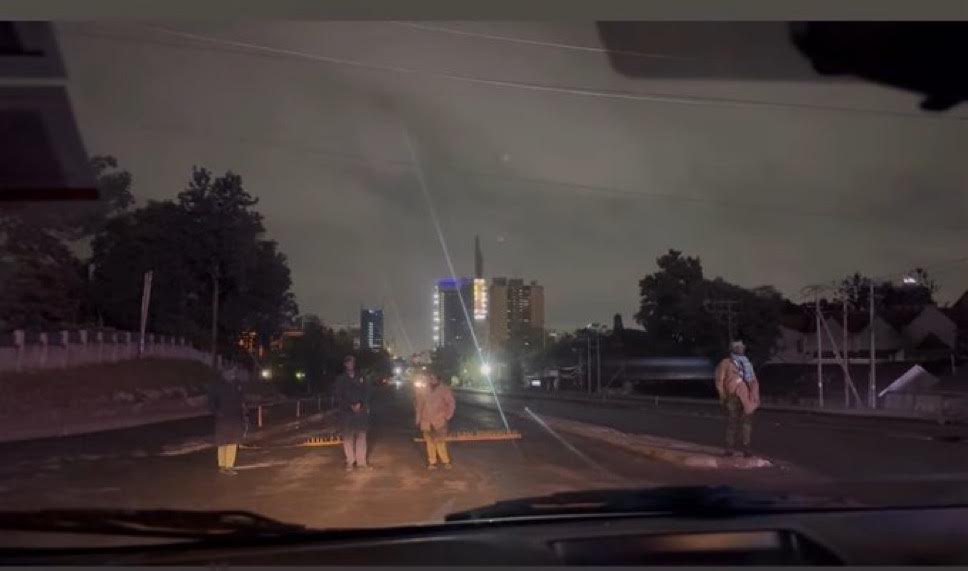
Major arteries leading into Nairobi's Central Business District (CBD) were notably blocked by anti-riot police early this morning, as security forces mounted roadblocks and conducted extensive searches.
The pre-dawn operation, characterized by police braving a morning breeze, was implemented ahead of planned Saba Saba commemorations, reflecting heightened security concerns.
Despite government assurances that July 7th would proceed as a normal working day, the preventative measures suggested an underlying apprehension regarding potential civil unrest.
The police action saw both private and public service vehicles halted from accessing the city center. The stated rationale behind these stringent checks was to prevent individuals planning protests from disguising themselves and surprising security agencies within the bustling city heart.
Roadblocks were strategically positioned on key routes including Waiyaki Way, Kenyatta Avenue, Jogoo Road, Mombasa Road, Thika Road, Kiambu Road, Uhuru Highway, and Valley Road, alongside other major feeder roads.
Only vehicles with emergency needs or those belonging to the government were granted passage. The prevailing fear of disruptions, mirroring recent protests over police brutality and extrajudicial killings, led many learning institutions in towns and cities to advise students to remain home, with classes expected to resume on Tuesday.
Furthermore, major businesses within the city had already taken precautions over the weekend, barricading their premises with metal grills in anticipation of potential looting.
The date, July 7th, holds profound historical significance in Kenya, widely known as "Saba Saba" (Swahili for 'Seven Seven'). It commemorates the pro-democracy demonstrations held on this day in 1990, a pivotal moment when Kenyans rallied for the reintroduction of multi-party democracy, challenging the then-single-party rule under KANU and President Daniel Moi.
These historic protests, though met with severe police brutality resulting in deaths and injuries, are credited with laying the groundwork for the eventual repeal of Section 2A of the constitution, ushering in a multi-party political system.
Saba Saba has since remained a potent symbol of defiance, the struggle for human rights, and the ongoing call for political and social reforms.
In recent years, Kenyan youth, particularly Generation Z, have emerged as a formidable and unpredictable force in public demonstrations.
Their impact was profoundly evident during the mid-2024 protests against the controversial Finance Bill, where they spearheaded widespread nationwide demonstrations.
These youth-led movements have often been characterized by their organic, decentralized nature, leveraging social media platforms like TikTok, X (formerly Twitter), and Instagram for rapid organization, information dissemination, and rallying support.
This digital savviness has allowed them to bypass traditional political structures and media gatekeepers, posing new challenges for authorities attempting to manage dissent.
Their willingness to confront authority directly, coupled with their innovative tactics, has made them a significant factor in shaping contemporary Kenyan activism and compelling state actors to adapt their responses to public grievances.