In a dramatic turn of events that has captivated Equatorial Guinea and drawn international attention, Balthasar Ebang Engonga, a former high-ranking government official, has been sentenced to 18 years in prison for embezzling state funds.
The verdict, delivered on 2 July 2025, marks the downfall of a once-powerful figure at the heart of the nation’s political elite.
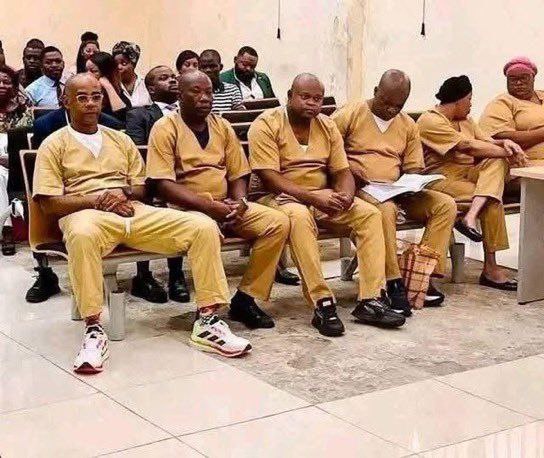
Images of Engonga dressed in prison attire, widely shared on social media, have become a symbol of his spectacular fall from grace.
A Rise and Fall within the Elite
Until his dismissal in 2024, Engonga served as Director General of the National Agency for Financial Investigation (ANIF), a body tasked with tackling money laundering and financial crime.
As a nephew to President Teodoro Obiang Nguema—Africa’s longest-serving leader, in power since 1979—Engonga was part of the ruling elite.
Educated in finance at the University of Malabo, he was seen as a key figure in financial oversight, with some even speculating he could be a potential successor to the presidency.
However, that promising trajectory unravelled when allegations of embezzlement surfaced, placing Engonga at the centre of a scandal that many say underscores the depth of corruption in the oil-rich country.
The Embezzlement and Scandal
Engonga’s conviction stems from accusations that he siphoned off large sums of public money, a charge that aligns with Equatorial Guinea’s longstanding struggles with graft.
The World Bank estimates that corruption costs the country approximately $1.6 billion annually—a staggering figure considering the widespread poverty among its 1.7 million citizens, despite vast oil reserves.
The case took an explosive turn in 2024 when over 150 intimate tapes featuring Engonga with multiple women—some reportedly linked to other powerful officials—leaked online.
The footage, which went viral, scandalised the nation and is believed by some to have been deliberately released to destroy his political standing.
In response, Vice-President Teodoro Obiang Mangue—son of the president—ordered telecom providers to limit the spread of the videos, an effort many viewed as a last-ditch attempt to contain the damage to the ruling family’s reputation.
Public Reaction and Political Implications
The sentencing has ignited a firestorm of reactions on social media. While some users made light of Engonga’s past exploits, others questioned whether the punishment was proportionate or merely selective justice.
One user commented, “The real problem isn’t just Engonga—it’s the whole rotten system.”
Human rights activists have echoed this view, suggesting that Engonga’s fall is more a symptom of endemic corruption than a genuine attempt at reform.
The Obiang regime has long faced international criticism for human rights abuses, wealth hoarding, and an extravagant lifestyle exemplified by the vice-president’s notorious spending habits.