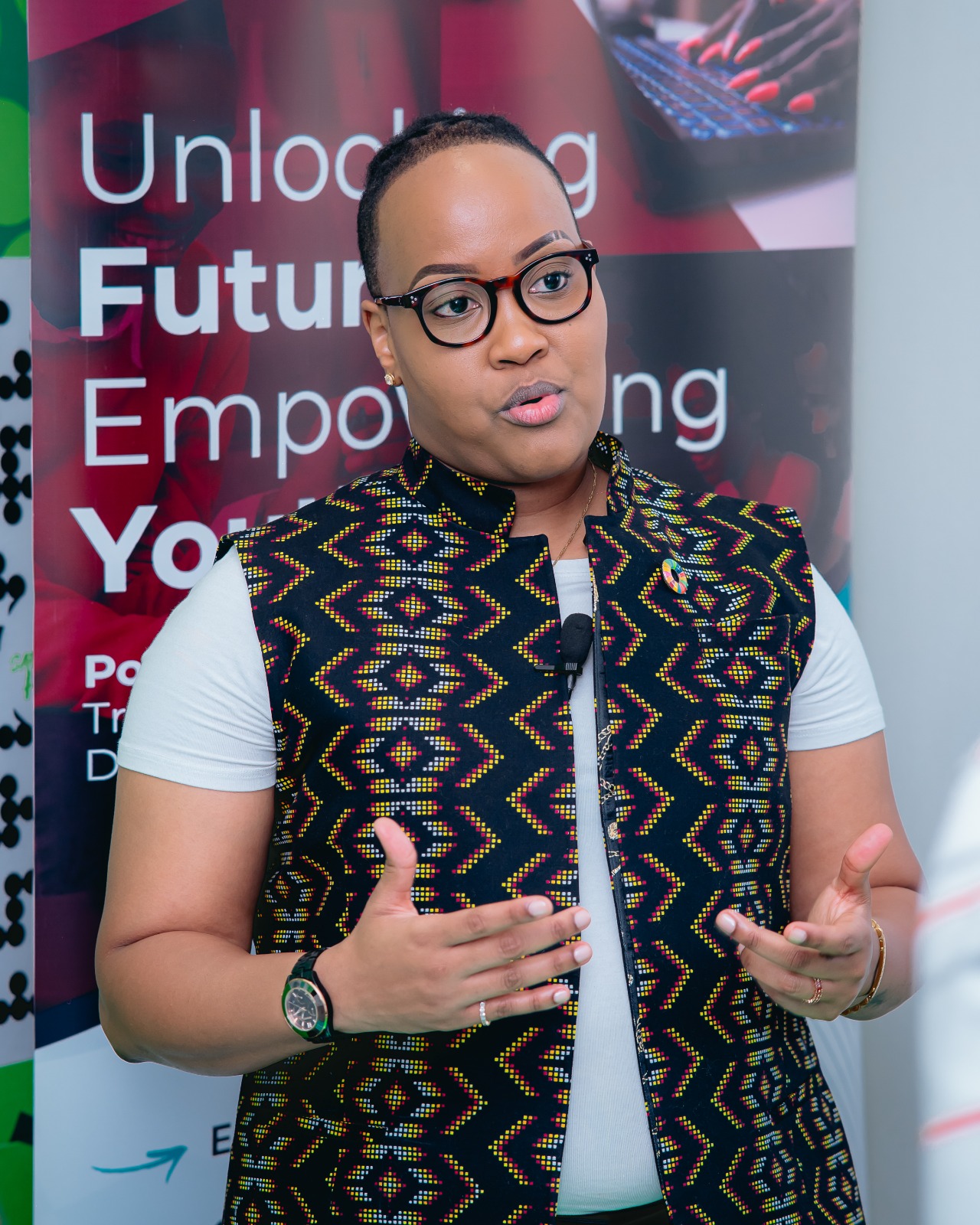
 Power Learn Project Africa executive director Mumbi Ndung'u, during a PLP and Safaricom hook cohort graduation in Nairobi/ HANDOUT
Power Learn Project Africa (PLP) has been keen
on unlocking hidden potential in Kenya and the African continent by ensuring young people, including outside major
cities, contribute to and benefit from the digital rise.
The Star spoke to the Executive Director Mumbi Ndung'u on PLP and Kenya’s tech space at large.
Excerpts:
In a nutshell, tell us about Power Learn Project Africa
Power Learn Project Africa (PLP) is a Pan-African impact organisation working to democratise access to digital skills and unlock the continent’s vast potential through technology. We run a flagship 16-week software development scholarship programme that has trained over 20,000 African youth. Our model is built on accessibility; we deliver virtual learning, partner with local tech hubs and ensure learners from remote and underserved communities can thrive. Why do we do it? We believe that Africa’s greatest asset is its youth and tech is the bridge that will take them from potential to prosperity.
The organisation is on a mission to unlock Africa's potential by training 1 million developers. How do you intend to do this?
We are executing a continent-wide strategy to train one million developers by combining accessible delivery, local partnerships and clear post-training pathways. Accessible learning: Our platform is optimised for low-bandwidth use and available to learners with laptops across Africa. We deliver high-quality, digital-first content that is easily accessible even in regions with unstable internet. Community-rooted implementation: We collaborate directly with county governments, grassroots organisations and tech hubs to embed our programmes locally and ensure relevance to regional needs. Pathways after training: Learners transition into jobs, startup support or advanced tech courses in areas like backend development, AI and cybersecurity, guided by our Talent Hub and employability team.African-led execution: Our model is driven by African teams who design, build and lead the work. This ensures cultural relevance, faster adaptability and real connection to the learners we train.This approach is not theoretical; it’s what we are delivering across Kenya, Nigeria, South Africa, Tanzania, to mention but a few countries. Our goal is not just to train developers but to make tech a pathway to income, innovation and impact for Africa’s youth.
How would you describe Kenya’s developers’ space in the wake of a digital revolution?
Kenya is the beating heart of East Africa’s tech revolution. The developer community here is creative, bold and rapidly growing, supported by a vibrant startup scene and innovation-friendly policies. But the ecosystem still suffers from urban concentration, with most opportunities centralised in Nairobi. Through PLP, we are working to unlock hidden potential in places like Kakamega, Kilifi, Garissa and Kisumu, ensuring young people outside major cities can contribute to and benefit from Kenya’s digital rise.
What is the in thing for developers?
Today’s developer is not just a coder; they are a problem-solver. The "in thing" is building scalable, real-world solutions that address African challenges. That means leveraging AI and data to improve agriculture, healthcare and governance. There is also the use of cloud, APIs, and mobile-first design to build products that are accessible. Mastering frameworks like React, Node.js, and languages like Python, which dominate today’s job market and perhaps most importantly, learning how to collaborate, pitch and monetise ideas. The modern developer is part technologist, part entrepreneur that is a techpreneur.
Python and Blockchain have, in recent times attracted a lot of attention. How would you rate these programmes in Kenya?
Python is everywhere and for good reason. It powers AI, machine learning, automation and web development, and it is part of our core curriculum because it’s both accessible to beginners and valuable to employers. Blockchain is gaining ground, especially in Kenya’s fintech and digital ID ecosystem. From SACCO systems to cross-border payments, we are seeing real-world use cases emerge. While still in early stages, the appetite is growing and we are preparing our learners to be part of that future through blockchain modules and hackathons.
What is your take on Kenya’s regulatory environment in regards to digital transformation?
Kenya has taken meaningful steps like the Digital Economy Blueprint and support for youth-focused initiatives like Ajira Digital and the Kenya Youth Employment Program. These have laid a strong foundation as far as regulation is concerned.But more work is needed. Regulations around data privacy, AI and digital inclusion must evolve quickly and equitably. It is also crucial that we see more decentralisation so counties can drive innovation independently while being supported nationally. A smart, agile regulatory framework will define how fast Kenya can leap forward.
What do you think of AI in Kenya?
AI is no longer a luxury. It is a necessity for inclusive progress. Across Kenya and Africa, we are already seeing AI in action from health diagnostics and agri-tech forecasting to customer service chatbots and digital credit scoring. But these innovations must go beyond consumption. For Africa to shape the future of AI, we must build from within: training engineers, generating local datasets and ensuring our youth have the tools to become creators, not just users of emerging technology. At Power Learn Project Africa (PLP), we launched AI Safari to democratise access to AI education in Africa. This programme is not a technical bootcamp for the few—it is an accessible, story-driven journey designed for beginners, entrepreneurs, students and professionals who want to understand AI’s impact and potential.
Which sectors do you think AI can help in driving the country’s growth and how best can Kenya tap into these opportunities?
AI can supercharge nearly every sector.For instance, in agriculture, AI is a tool to develop smart irrigation, crop monitoring and supply chain forecasting tech solutions. In healthcare, AI is useful in developing early diagnosis tools, patient records automation and mental health chatbots. Within the finance space, AI comes in handy for Fraud detection, personalised banking and risk modelling and in the education sector, AI is powering personalised learning and digital tutors.To truly tap into this, Kenya must invest in AI upskilling, cross-sector collaborations, and policies that promote ethical AI development rooted in African values.
What inspired you to invest in this project?
It started with stories and with struggle. Across the continent, we kept hearing the same thing: "We need tech talent, but we can’t find it." Companies were looking to hire software developers but the pipeline was dry. Not because the talent didn’t exist but because it had never been nurtured. At the same time, we saw thousands of young people brimming with potential. Curious, motivated eager to learn but locked out by cost, by geography, by a lack of belief that this space was for them. We built Power Learn Project Africa to bridge this gap. Not just to teach code, but to remove the barriers-cost, access, mindset, that were keeping young Africans on the sidelines of the digital revolution. We believed then and still do now, that talent is everywhere. Opportunity is not. So we started with one goal: create an accessible, transformative entry point into tech. One that doesn’t just produce coders, but thinkers. Problem-solvers, builders and yes, hireable, in-demand software developers who are ready to shape the future of African innovation.
How are you contributing to the tech landscape in Africa?
At Power Learn Project (PLP), we are actively shaping the future of Africa’s tech landscape by building the continent’s next generation of developers, innovators and digital leaders. Our contribution goes beyond training; it is about creating a full ecosystem where young people can learn, grow and lead.
What are some of the biggest challenges in the Kenyan tech space and how can they be addressed?
The challenges are layered. First, unequal access to devices and reliable internet excludes a large percentage of rural and underserved youth from even beginning their tech journey. Second, there's a persistent underrepresentation of women and learners from non-urban counties, which further limits the inclusivity of the ecosystem. Third, there is a disconnect between training programmes and real employment opportunities—many young people finish a course with no clear path to income generation. At Power Learn Project, we’ve responded by launching county-based cohorts to localise access, providing device and data grants to remove entry barriers and building the PLP Talent Hub to link graduates with internships, freelance gigs and full-time roles. We also engage employers early to co-design relevant training. The future of Kenya’s tech space depends on removing these systemic barriers and creating clear, supported pathways from learning to earning.
What drives you as an individual?
My radical belief in African potential. I am constantly inspired by the resilience and brilliance of our youth. Every time I meet a learner who has never touched a laptop and see them, six months later, launching an app, freelancing or pitching a startup, I am reminded that access is everything. It is not about charity. It’s about rebalancing the scale of opportunity and giving people the tools to thrive.
How do you balance work and family?
For me, it’s about being present and intentional. Just like we design systems in tech, I believe we must also design our lives with care. I try to stay grounded, create boundaries that allow for rest and reflection and surround myself with a strong support system—both personally and professionally. It is not always perfect but showing up with focus and clarity, wherever I am, helps create balance and sustainability in the long run.
If you were to change one thing in Kenya’s tech space, what would it be?
I would decentralise access to opportunity. It shouldn’t matter whether you are in Nairobi, Lodwar, Lamu or Taita Taveta; everyone deserves access to the tools, training, mentorship, and capital needed to participate in the digital economy. We need to stop treating tech as an urban luxury and start treating it as a national infrastructure priority. PLP is already piloting county partnerships to bring learning hubs closer to young people. I believe this is the future.
What advice would you give someone who wants to venture into the tech space?
Start small and start now. You don’t need a degree, fancy equipment or all the answers. What you need is curiosity and consistency. Use the free tools online. Join communities like PLP. Watch tutorials, contribute to open-source. Ask for help. Build something, even if it is not perfect. The tech world is vast and evolving and there is room for everyone: coders, designers, analysts, storytellers. The key is to start, stay open and grow.
What is the company's approach to innovation and understanding of the software development landscape?
At PLP, innovation is not just about using new tools. It is about being and staying learner-centric, responsive to industry and committed to impact. We continuously refine our curriculum based on employer feedback, market demand and learner experience. Our advanced tracks, including AI, cybersecurity, Node.js, and blockchain were launched after direct engagement with tech employers and industry partners. We also stay lean in our operations, piloting, iterating and scaling what works. Our model is not to push content but to nurture technologists who are adaptable, ethical and capable of solving real-world problems. That is how we prepare young people not just for the jobs of today, but for the innovations of tomorrow.