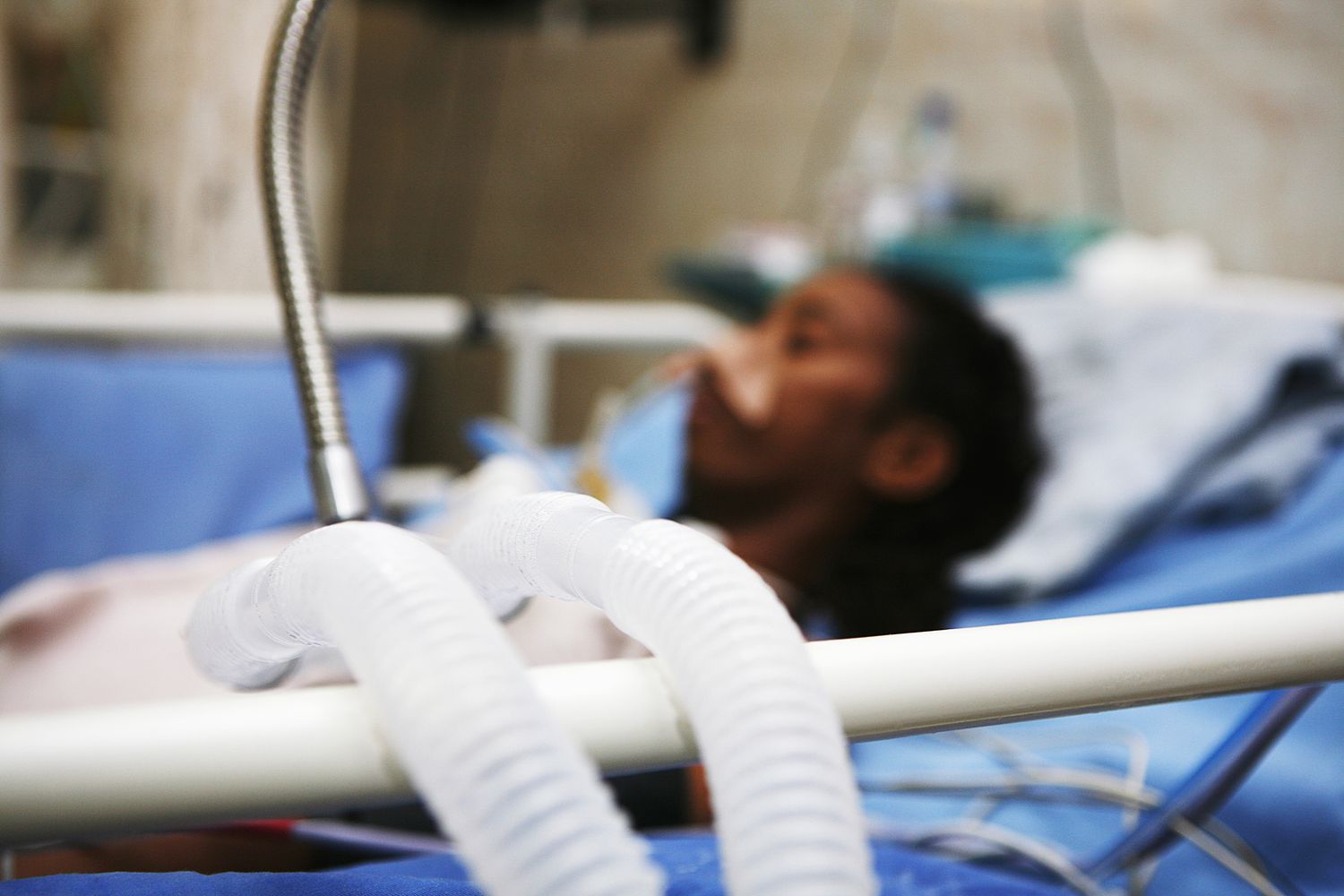
22-year-old hawker, Boniface Kariuki, who was shot in the head by police during protests over the death of blogger Albert Ojwang, on June 17, has been declared brain dead.
This was confirmed by the family on Sunday.
"Kariuki is confirmed brain dead. We know what it means. We are just waiting for the doctor to tell us he is no more," family spokesperson Emily Wanjira said.
Speaking to reporters outside Kenyatta National Hospital (KNH), she confirmed that doctors had delivered the devastating news.
Kariuki was critically injured on June 17 during a demonstration in Nairobi that turned violent when police opened fire on protesters demanding justice for Ojwang.
The family said Kariuki remains on life support, with his organs still functioning artificially.
However, doctors have informed them that there is no hope of recovery.
Medical staff also revealed that bullet fragments remain lodged in his brain, complicating any chance of surgical intervention.
Brain death is legally and medically recognised as death in Kenya.
Brain death is the definitive medical and legal term for when a person's entire brain, including the brainstem, has permanently ceased all functions. This means there is no possibility of recovery.
The brainstem is vital; it controls essential functions like breathing and heart rate. Its complete and irreversible loss is a critical indicator of death.
Unlike other severe brain injuries, brain death is final.
A person diagnosed as brain dead is legally considered deceased, even if their heart continues to beat with the aid of life support machines.
Brain death occurs as a result of an acute, catastrophic injury to the brain. This can happen when intracranial pressure (the pressure within the skull, specifically the pressure exerted by the brain tissue, cerebrospinal fluid (CSF), and blood) dramatically increases, exceeding the mean arterial pressure and cutting off blood flow to the brain.
Common causes include cardiopulmonary arrest, severe traumatic brain injuries, subarachnoid haemorrhage, and intracerebral haemorrhage.
Diagnosing brain death is a meticulous and highly standardised process designed to ensure absolute accuracy and prevent any errors.
This diagnosis is made by specialised medical professionals, typically neurologists, neurosurgeons, or critical care specialists who have undergone specific training and certification.
In Kenya, brain death laws are governed by the Transplantation of Human Tissues Act (2012).
It provides a legal framework for organ and tissue donation and transplantation, covering aspects of authorisation, purpose, procedures, ethics, and regulation to ensure safe and ethical practices.
While the Kenyan Penal Code outlaws any form of taking away of human life regardless of the situation one is in, effectively making the mercy killing or euthanasia procedure unlawful.
However, families can make decisions regarding a brain-dead loved one under certain circumstances.
The family can apply for A Do Not Resuscitate (DNR).
A DNR designation informs health care providers not to perform cardiopulmonary resuscitation (CPR) if a person's heart stops beating or if they stop breathing.
These orders are typically written after a discussion between a physician and the patient or members of the family.
“Similar to any order a doctor places in the medical record, a patient or health care proxy can reverse a prior DNR order at any time,” Harvard Health reads.