The already charged atmosphere in Nairobi's Central Business District (CBD) received a significant boost of political energy this Wednesday, June 25th, as opposition leaders Eugene Wamalwa and Kalonzo Musyoka joined the throngs of protesters.
Their presence, following an early morning mass at the Holy Family Basilica, adds a new layer of intensity to the memorial demonstrations, transforming them into a powerful convergence of grassroots activism and established political opposition.
The decision by Wamalwa and Musyoka, both prominent figures in Kenyan politics, to participate in the protests carries considerable weight. It signals a clear alignment with the grievances voiced by predominantly young Kenyans, who are commemorating the one-year anniversary of the deadly anti-Finance Bill protests of 2024.
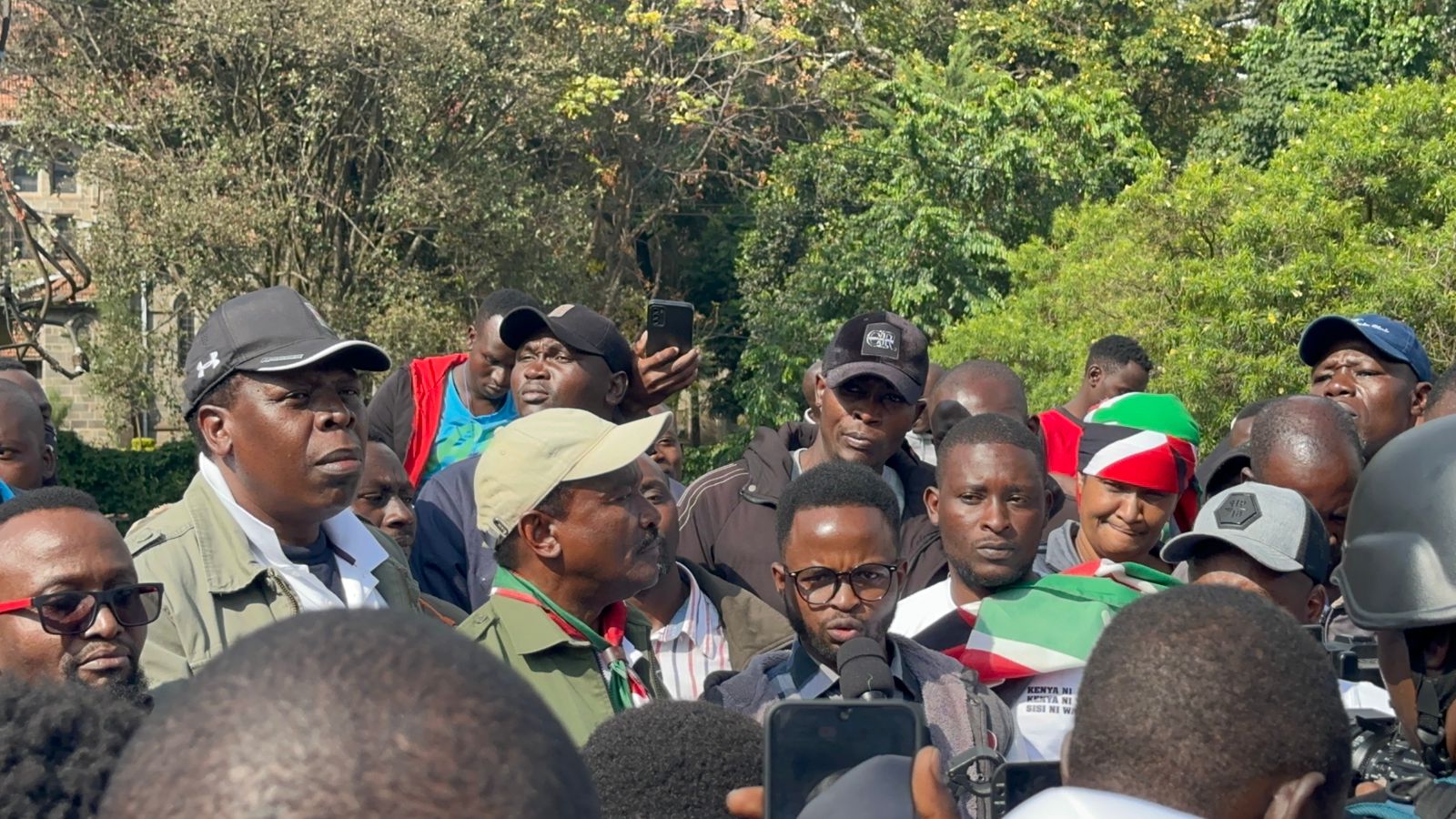
Their attendance, especially after a public display of faith at a major religious institution, frames their involvement not just as political maneuvering, but also as a moral stance against perceived injustices.
The protests, initially sparked by the contentious Finance Bill, have broadened to encompass demands for accountability regarding police brutality, an end to abductions, and calls for broader governance reform.
The death of Albert Ojwang, a teacher and blogger who allegedly died in police custody, has further inflamed public anger, making this year's commemoration particularly charged.
Nairobi's CBD remains under a virtual lockdown today, with police having sealed off all major access routes. This has forced thousands of Nairobians to trek long distances to reach the city center, a testament to both the determination of the protesters and the government's resolve to contain any large-scale gatherings.
Despite these challenges, the presence of Wamalwa and Musyoka is likely to galvanize the demonstrators, potentially drawing even larger crowds and amplifying their message.
The involvement of these opposition leaders also shifts the narrative beyond a purely youth-led movement. It introduces a more formal political dimension, potentially creating a united front against the current administration.

Both Wamalwa and Musyoka have been vocal critics of the government, and their participation in today's protests could be a strategic move to capitalize on the widespread public discontent and position themselves as allies of the people.
As the day unfolds, the focus will be on how this infusion of political firepower impacts the trajectory of the protests. Will it lead to a more organized and sustained challenge to the government? Or will the heavy police presence and logistical hurdles ultimately curtail the momentum?
Regardless, the sight of prominent opposition leaders marching alongside ordinary citizens sends a powerful message, both to the government and to the international community: the issues raised by these protests are not just fleeting concerns, but a deep-seated demand for change that resonates across Kenyan society.