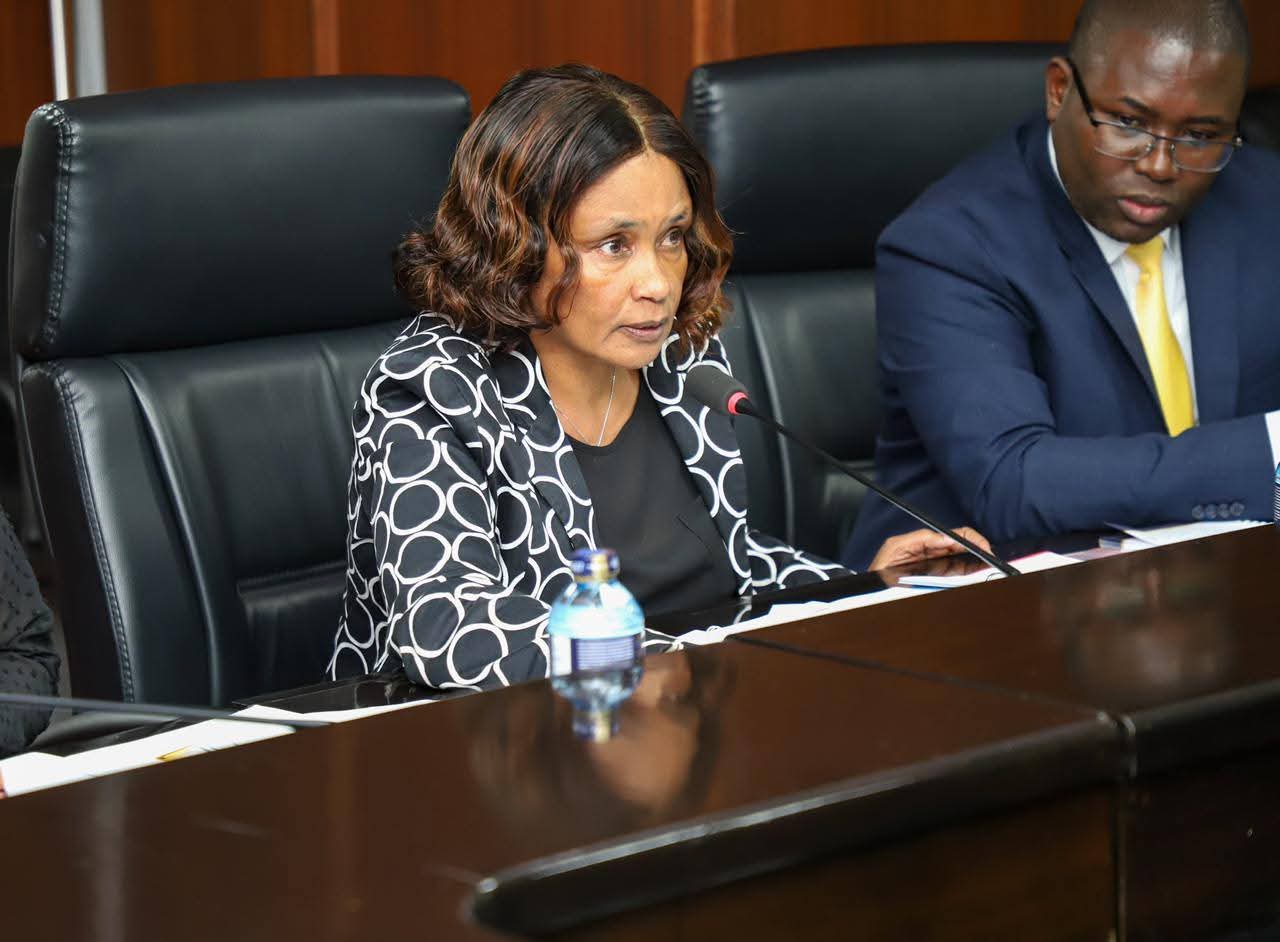
The Teachers Service Commission (TSC) has outlined a detailed procedure guiding the recruitment and deployment of teachers in the country.
Responding to a statement sought by Homa Bay woman representative Joyce Bensuda on the need for clarity around the process, TSC stated that it is an equal opportunity employer.
According to the commission’s acting CEO Eveleen Mitei, they operate within the framework of the constitution, the TSC Act, the Employment Act, and the National Cohesion and Integration Act, among other laws.
This, as she emphasised fairness, transparency, and national cohesion.
Mitei said the teacher recruitment policy, developed under Section 55 of the Code of Regulations for Teachers (CORT), governs the entire process.
This policy, she said, is anchored on key values of public service of fair competition and merit, transparency, accountability, equity, impartiality, and inclusiveness.
Here is a guide on the recruitment process as per the documents tabled by the commission before the National Assembly’s Education Committee.
Identification of vacancies
TSC said recruitment begins with identifying teacher shortages or vacancies resulting from exits such as retirement or resignation across the country.
Vacancy distribution
The available vacancies are distributed proportionally to counties and subcounties, ensuring that each region receives a fair share of opportunities based on needs and available positions.
Advertisement
Once the vacancies have been identified and approved based on the available budget, the demand and supply of teachers and the existing establishments, the Commission advertises for the vacancies in the print media and through the Commission’s website.
During this period, the teachers apply online via the TSC recruitment Portal.
Document verification
Once the application period is over, the commission then invites the shortlisted teachers for verification of academic certificates and other relevant documents at the Subcounty Offices or school level.
Decentralised interviews
In line with Article 6(3) of the constitution, interviews are conducted at grassroots levels to enhance access, equity, and regional representation.
This approach facilitates wider participation from candidates across all counties and minimizes logistical and financial barriers for applicants from remote areas.
Standardised scoring
A uniform interview scoring guide is applied across all regions.
This standardisation, the commission said, is aimed at promoting consistency, fairness, and transparency, ensuring that candidates are evaluated solely on merit.
Consideration of Asal and hard-to-staff areas
To ensure that schools in Asal and hard-to-staff areas are well-staffed with teachers, where an advertisement does not attract applicants due to lack of subject combination, consideration is given to the next available applicant.
Gender parity and inclusion of special groups
According to TSC, teacher recruitment deliberately takes into account gender balance, persons with disabilities and the inclusion of marginalised groups.
For instance, a total of 5% of all advertised vacancies are reserved for PWDs and with an aim to foster regional balance and promote retention, the commission prioritises the recruitment and deployment of teachers within their home counties during recruitment.
With regard to instances where some teachers are recruited into the service while in their prime age, TSC stated that the previous cap of 45 years was declared unconstitutional in 2020.
Kilgoris woman representative Rebecca Tonkei had raised concerns about recruiting teachers at old age, something she said prevents them from maximising their long-term teaching expertise.
“Since 2021, teachers up to 59 years and 11 months are eligible for employment,” said Mitei.
The TSC also acknowledged proposals to prioritise older, unemployed teachers and committed to mining data on teachers above 45 who are yet to be employed.
On disparities in hardship allowances, the TSC CEO acknowledged these concerns, stating, "We will take up the issue of hardship allowances and municipality allowances with the Public Service Commission."
Igembe North MP Julius Taitumu had pointed out the paradox of Nairobi, a well-developed municipality, sometimes receiving higher hardship allowances than rural areas lacking basic amenities.
The distribution of teachers also came under intense scrutiny. Mary Emaase urged for a country-wide assessment to identify teacher gaps.
"We have schools that have excess teachers and schools with not enough teachers, so that we can balance, and wherever there is need, Parliament can budget for recruitment," she proposed.