PRESIDENT William Ruto is facing mounting public skepticism over his commitments to Gen Z as the country marks one year after the deadly anti-tax and anti-government protests that nearly drove Kenya to its knees.
The anniversary comes as fresh waves of protest rock the country over the death of critic and blogger Albert Ojwang’ while in police custody.
Last June 25, 19 people were killed in Nairobi and three in other protests elsewhere after passage of the Finance Bill 2024, which was denounced as a burden and which Ruto finally withdrew. Finance Bill 2025 is also drawing criticism.
After the 2024 protests, President Ruto promised he had “heard” the Gen Z protesters and the rest of the disaffected nation and would make the changes they demanded. He also has promised there would be no extrajudicial killings.
Some analysts warn that since last year’s promises have largely been unfulfilled, a new wave of demos could break out as young people are clamouring again for accountability.
After initial peaceful demonstrations last year, some angry youth stormed Parliament on June 25 and attempted to set it ablaze over the controversial taxes as police opened fire. Some retreating demonstrators were shot.
To calm down the country, President Ruto made many promises after tearing up the bill, dissolving his entire Cabinet, and slashing the number of his advisers by half.
The President also banned public harambees involving state officers and berated officials he said were “arrogant, speaking out of turn, displaying obnoxious opulence”. But he still gives generously to churches and says he has no intention of stopping.
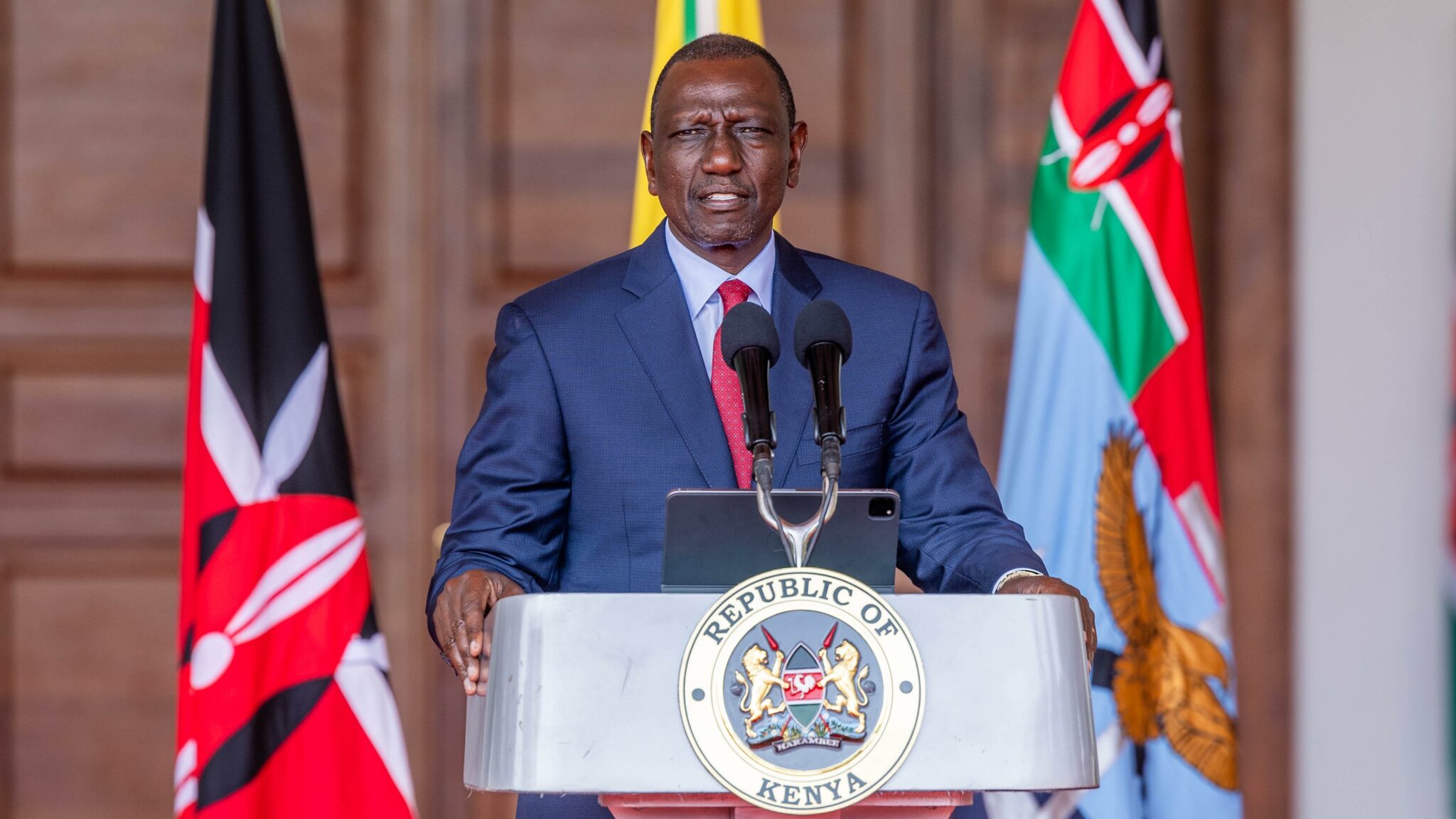
"My good sons and daughters, let me tell you that I value what you do. I have heard what you have said. I have seen what you have done and you have made recommendations,” Ruto told thousands of youths on X on July 2.
However, the resurgence of huge cash harambees, the hiring of more advisers, increased salaries for MPs, abductions and extrajudicial killings are widely viewed as betrayal.
Veteran human rights defender Suba Churchill told the Star the President was never genuine in declaring the stringent measures but was forced by circumstances to make empty promises to save his government.
“The President was not genuine; he was forced to appear to be taking measures, which, it turned out, he did not quite believe in,” Churchill said on the phone.
In the youth-led protests last year, thousands of Kenyans poured into the streets over the rising cost of living, proposed higher taxes, alleged corruption, and police abductions and killings. They forced the Ruto administration into damage control.While Gen Z protested for withdrawal of the controversial Finance Bill 2024, the push later expanded into demonstrations for more accountability from leaders and against hefty salaries for MPs who often flashed luxury wristwatches while Kenyans struggled with the high cost of living.
They also demanded tough measures against corruption, impunity, incompetence in state and public appointments, the ostentatious lifestyles of public officers, and unemployment.
The President promised a raft of immediate reforms, including accountability for police excesses such as abductions and killings.
However, one year later many of those commitments either stalled or the state seems to be implementing the opposite.
For instance, many of those dropped from the Cabinet have been appointed to other posts and Ruto has been on a hiring spree for advisers, which critics say amounts to doling out jobs “for the boys” (and “girls”) who will be useful in his re-election bid.
Instead of the promised reduction of advisers, there has been an increase and diversification into three categories: Cabinet-level advisers, the Council of Economic Advisers and special advisers.
In total, the President now has at least 22 advisers, each taking home at least Sh1 million in salary, according to a submission by State House Comptroller Katoo Ole Metito when he appeared before a parliamentary committee in April.
Ruto’s advisers include Prof Makau Mutua (constitutional affairs), Moses Kuria (senior economic adviser), Dr David Ndii (chairman of the Council of Economic Advisers), Prof Edward Kisiang’ani (senior adviser), Dr Monica Juma (national security), and former Police IG Joseph Boinnet (deputy national security adviser).
Others are Jaoko Oburu (economic empowerment and sustainable livelihoods), Nancy Laibuni (associate of the Council of Economic Advisers), Harriette Chinghai (adviser on women’s rights), and Prof Abdi Guliye (livestock and rangelands management)Ruto’s team also has embarked on large-scale harambees in which huge donations are made almost every weekend; in some cases, the sources of the funds are unclear.
The public display of opulence galled the public, fueling the 2024 unrest.
MPs arm-twisted the Salaries and Remuneration Commission to award them a total salary raise of Sh366,000 from April 1.
There is a feeling among the youth, and the public in general, that Kenya is an unequal society with the gap between the rich and the poor ever increasing.
University don Prof Gitile Naituli said the President did not mean any of his commitments and has resorted to the worrying trend of suppressing critical youths.
“He never implemented any of those measures he promised to implement. The young people were simply calling for good governance as they were worried their future was being stolen in front of their eyes,” Naituli told the Star.
Churchill said the birth of the broad-based government incorporating the opposition early this year has emboldened the President and made him comfortable, ‘forgetting’ the commitments he made to Kenyans.
“As a soon as he became comfortable after his MoU with ODM, the President has gone back to more or less the same practices,” he told the Star.
Recent glaring cases of torture and extrajudicial killings, such as the murder of Albert Ojwang’, leave Kenyans doubting whether Ruto’s pronouncements were genuine.
ODM executive director Oduor Ong’wen said that the reemerging extrajudicial killings are a great concern to the party that signed a cooperation pact with the ruling UDA.
“It is of great concern and our MPs had a press conference where they talked about it. Our youths also condemned it,” Ong’wen told the Star on the phone.
On whether the developments could strain the political deal between Ruto and ODM’s Raila Odinga, the former democracy activist and Moi-era political detainee was non-committal, only saying ODM should not be associated with some of the happenings.
“It is not for me to think right now [whether happenings would shake the broad-based arrangement]. These are not things we want to be associated with and therefore when they happen, we condemn them in the strongest terms,” Ong’wen said.
“Those are things you don’t mention in the same sentence with ODM.”
The Police Reforms Working Group put at 49 the number of Kenyans who have died in the hands of police since January.
The group representing 29 human rights groups said the killings are spread in Nakuru, Nairobi, Murang’a, Narok, Kakamega, Meru, Kitui, Kajiado, Nandi, Siaya, Trans Nzoia, Baringo, Embu and Mombasa counties.
“As of this month, 49 brutality cases have been reported across 13 counties,” the lobby group said in a statement.
Prof Naituli said the huge donations to churches and elsewhere for good causes – without disclosure of their origin – confirm the government still abets wooing the voting public with money.
“The money you are giving for harambees, can you account for it? Can you tell us which account you got it from and how much tax you paid, because some of donated funds are in the millions? We need to know they are not the proceeds of misdeeds,” he said.
“The harambees are completely unnecessary if the government is doing it work, which means to develop the country; if true devolution worked, nobody would need any harambee.”
Instant Analysis
The rollback of key pledges made by the President following last year’s unrest could boomerang on the administration, especially as a united opposition plans a nationwide commemoration of Gen-Z protest victims on June 25.