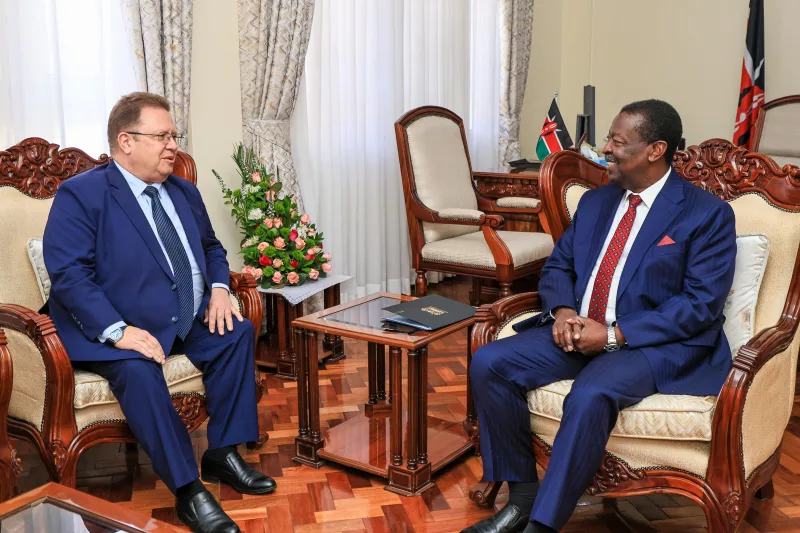
Treasury Cabinet Secretary John Mbadi has expressed excitement as he prepares to present the eagerly-awaited 2025/2026 budget at Parliament buildings in Nairobi on Thursday.
"I feel great this morning because it’s an important day for the country as I present the 2025/2026 budget and revenue-raising measures. I have a date with Kenyans," Mbadi said.
He clarified misconceptions regarding the Finance Bill, specifically denying the inclusion of VAT on essential items like bread, milk, and unga.
Mbadi urged Kenyans to read the real bill instead of spreading false information about taxing newborns on social media, accusing it of being propaganda.
"In the Finance Bill that is before the National Assembly, there is nowhere in that bill where we are putting VAT on bread, milk and unga are not even mentioned," he said.
"That bill that is being talked about on social media is not my bill, it is a bill that is manufactured by the opposition and you seem to have bought it. I heard that we are going to tax new born babies, that is a propaganda bill. Kenyans need to read the bill for themselves and not entertain propaganda manufactured elsewhere," he added.
The proposed budget of Sh4.2 trillion reflects the government's commitment to development but also reveals substantial financial hurdles.
The budget's reliance on a complex mix of revenue generation strategies, including borrowing, both domestically and internationally, raises important questions about fiscal sustainability and economic stability.
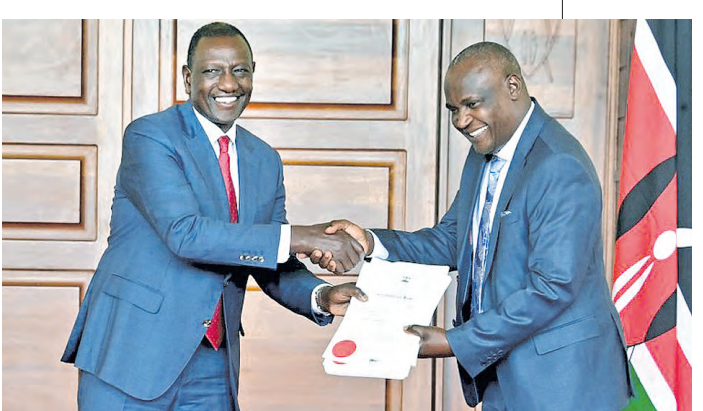
Projected revenues are set at Sh3.3 trillion, which falls short of the total expenditure and leads to a deficit of nearly Sh900 billion.
To address the shortfall, the government anticipates borrowing Sh876 billion, raising concerns about fiscal sustainability and inflation.
A significant portion of the borrowing (Sh592 billion) will be sourced domestically, which could have long-term implications for national debt.
The budget's reliance on borrowing underscores the need for effective revenue collection mechanisms and prudent fiscal management.
The success of this budget hinges on the government's ability to meet its ambitious revenue targets and manage its debt responsibly.
A lot of attention will be paid to CS Mbadi's forthcoming presentation, both for its specifics and for its potential effects on Kenya's economy.
In order to ensure the budget's efficacy and guard against possible misuse of public funds, transparency and accountability surrounding its implementation will be essential.