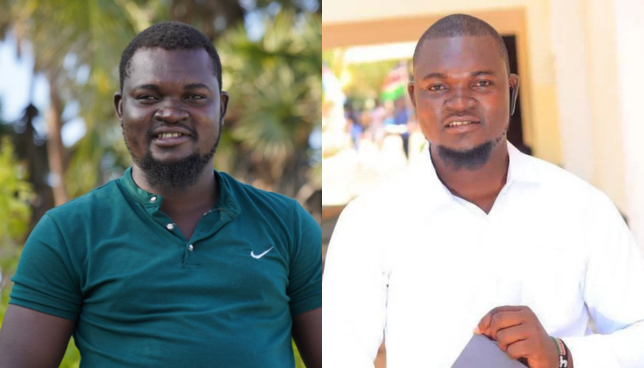
The death of Albert Ojwang’, a teacher and social media influencer, has ignited a storm of grief and anger across Kenya after an official postmortem revealed he was brutally killed inside Nairobi’s Central police station.
The findings contradict earlier police claims that Ojwang’ died by suicide, exposing a harrowing case of alleged police brutality and a cover-up that has shaken public confidence in law enforcement.
Ojwang’, who was 34, recently married, and had one child, was arrested on Saturday, June 7, 2025, at his home in Kokwanyo, Homa Bay county.
His arrest came after he allegedly posted critical remarks on social media about Deputy Inspector General of Police Eliud Lagat.
Although the specific post has not been produced, police officers descended on his home in the early hours, bundled him into a vehicle, and transported him 480 kilometres to Nairobi.
According to police sources at Central Police Station, who spoke on condition of anonymity, Ojwang’ arrived at the station at 2.35 am, already bleeding from his head and nose.
He was booked under the charge of “false publication.” Less than an hour later, at 3.45 am, his death was recorded by two officers.
“When they brought him, he was badly off, and they only finished him off at the station before the cover-up began,” said one officer familiar with the events, adding, “Those who have been suspended have nothing to do with the murder and they could not have intervened because this was the boss’ case.”
The official police account initially claimed that Ojwang’, left alone in his cell, had repeatedly bashed his head against the wall in an act of suicide.
However, an independent investigation by The Star, as well as a postmortem conducted by government pathologist Bernard Midia, have categorically rejected this narrative.
“He was strangled by police officers who hit him on the head with a blunt object, causing injuries on various parts of the head, neck compression, and multiple soft tissue trauma,” Dr Midia stated after the post-mortem.
“When we tie together other injuries that are well spread across the body, including the upper limbs and the trunk, then this is unlikely to be self-inflicted injury,” he added.
The postmortem found multiple injuries on Ojwang’s hands, suggesting a desperate struggle for life or air.
Dr Midia explained that the pattern of injuries—spaced across the face, sides, and back of the head—did not match the injuries expected from self-inflicted blows against a wall.
“But the bleeds that we found on the scalp and on the skin of the head were spaced, including on the face, sides of the head, and the back of the head,” he said.
ODM leader Raila Odinga condemned the killing, warning that the continued use of lethal force by police against young people was dragging the nation toward chaos and collapse.
“This incident adds to the horrifying long list of young and defenceless Kenyans whose lives have been taken too soon, in brutal and senseless circumstances, at the hands of the police,” Raila said.
He cautioned that such deaths not only cause personal grief but also damage public trust in state institutions.
“They seriously erode the authority and credibility of the police and the state, and that is a significant step towards chaos and collapse,” he stated.
Raila called for swift and transparent action, demanding that the National Police Service “commit to and take concrete actions to hold their own accountable, beginning with this senseless death of Albert Ojwang’.”
He added, “A speedy and credible closure to this latest incident of injustice in the hands of the police, alongside the many others that we have been pursuing since 2023, is not optional.”
Raila warned that when citizens cannot distinguish police injustice from mob injustice, the nation risks failure.
The killing of Ojwang’ has reignited a broader debate about police accountability in Kenya. Last year, dozens of young people were abducted and killed under mysterious circumstances, with many cases linked to security agencies.
Yet, despite public outcry and investigations, few arrests or prosecutions have taken place. Critics argue that a culture of impunity has taken root, emboldening rogue officers and leaving victims’ families without justice.
Wiper Party leader Kalonzo Musyoka demanded the immediate resignation of Deputy Inspector General of Police Eliud Lagat, following the death of social media influencer Albert Ojwang’.
In a statement issued to newsrooms, Kalonzo condemned what he described as a "brutal murder," blaming the Kenya Kwanza administration for failing to protect citizens and for escalating attacks on dissenting voices in the digital space.
“To call for investigations is completely out of place. Lagat, the Deputy IG, should resign immediately,” said Kalonzo.
National Assembly Speaker Moses Wetang'ula has directed the Administration and Internal Security Committee chairman, Gabriel Tongoyo, to produce an interim report on the killing of blogger Albert Ojwang within the next 48 hours.
During a heated session in the House on Tuesday, Wetang'ula had to contend with a myriad of grievances from MPs, who joined the country in condemning Ojwang’s death.
"This matter is causing a lot of anxiety, and the explanations coming out sound like a Steve Biko story," the Speaker said.
He added, "I want to direct the chairman of security to bring a preliminary report to the House on Thursday at 2.30 to inform the House and the country on the progress made in the investigations and some response to the issues raised by Jared Okello on behalf of other members who have issues on this."
"I know Thursday is budget day, but we have half an hour before the budget starts. You will bring a preliminary report and statement to the House at 2.30," Wetang'ula reiterated.
The chilling findings have intensified calls for accountability. Civil society organisations, led by Defenders Coalition boss Kamau Ngugi, are demanding that Deputy Inspector General Lagat—who reportedly lodged the complaint against Ojwang’—step aside to allow for an independent investigation.
“Lagat must publicly recuse himself and stand aside to ensure the investigation is not interfered with,” Ngugi insisted.
Ngugi further called for the Independent Policing Oversight Authority (IPOA) and the Kenya National Commission on Human Rights (KNCHR) to secure the crime scene, preserve all evidence, and interview all officers, detainees and witnesses.
Expressing deep skepticism about the independence of Kenyan law enforcement agencies, he urged the government to allow a UN fact-finding team to investigate the case and other deaths of critics in police custody.
“It is also time for the Kenyan authorities to admit a UN fact-finding team to independently investigate these, as well as other deaths and abductions. Without independent and external investigation, these practices remain a threat to Kenyan lives, the rule of law, national security, and the public interest,” Ngugi said.
The Office of the Director of Public Prosecutions has since cleared Ojwang’s co-accused, Kelvin Moinde, of any wrongdoing.
“The ODPP finding that Kelvin Moinde has committed no crime now suggests Ojwang’ may have died having broken no law,” Ngugi added. “Public patience has snapped with the national police service.”
Ojwang’s family, represented by lawyer Mutuma Zambezi, is demanding answers. His father, still in shock, described the terrifying moment six officers stormed their home and took his son away.
“My son was alive and well when he left this house. We want to know who gave the orders for his arrest and why he had to die in police custody.”