Kenya is poised to reap significant economic benefits after securing expanded access for its tea and coffee exports to Morocco, following its recent decision to support Rabat's position on the disputed Western Sahara territory.
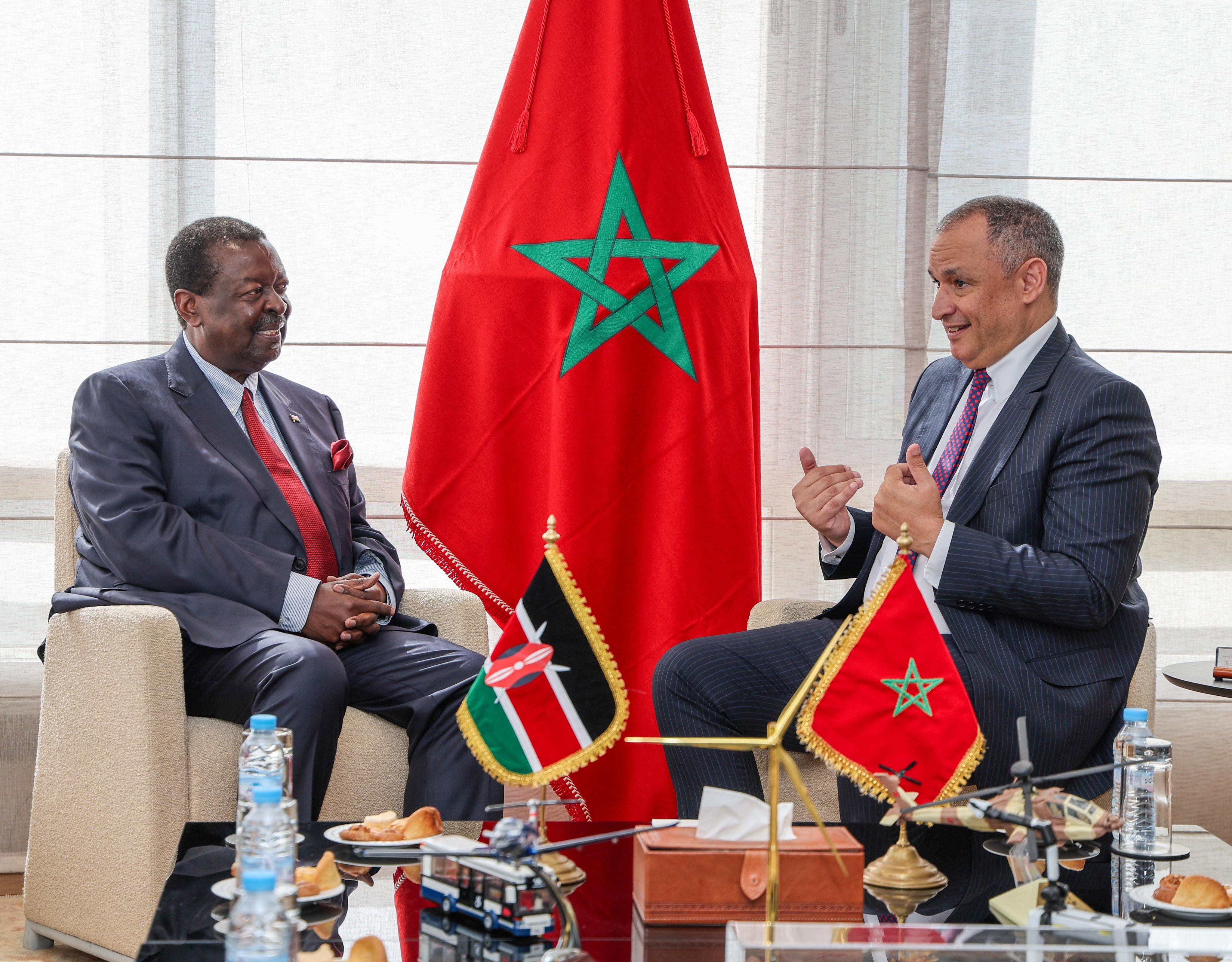
Foreign Affairs Cabinet Secretary Musalia Mudavadi announced the breakthrough during official talks in Morocco, where both countries agreed to deepen trade ties that have historically favored the North African nation.
“In a productive meeting with Ryad Mezzour, Morocco’s Minister of Industry and Trade, we reached a mutual understanding to expand the importation of Kenyan farm produce, an important step towards rebalancing trade, which has long tilted in Morocco’s favour,” Mudavadi said.
The discussions yielded concrete commitments, with Moroccan Prime Minister Aziz Akhannouch pledging to prioritize Kenyan tea and coffee imports.
Mudavadi emphasized that the agreement marks a crucial step toward rebalancing bilateral trade, while also paving the way for enhanced cooperation in tourism, agriculture, infrastructure, and education.
“We also agreed to commence immediate bilateral engagements aimed at unlocking Morocco’s full market potential for Kenyan products and expertise,” he added. Mudavadi said their bilateral talks centred on deepening cooperation across tourism, agriculture, trade, industry, and education sectors.
Among the immediate benefits is the planned resumption of direct flights between Nairobi and Morocco's major cities, a move expected to boost business and tourism links between the two nations.
This development comes on the heels of Kenya's significant diplomatic shift regarding Western Sahara, where it now endorses Morocco's autonomy plan as the "only credible and realistic solution" to the decades-old conflict.
The policy reversal aligns with President William Ruto's long-held stance, contrasting with former President Uhuru Kenyatta's support for a UN-backed independence referendum for the territory.
Since taking office, Ruto has moved decisively to strengthen ties with Morocco, including withdrawing Kenya's ambassador to Algeria's dual accreditation over Western Sahara and establishing a Kenyan embassy in Rabat.
The Western Sahara dispute remains one of Africa's most protracted conflicts, with Morocco controlling 80 per cent of the territory while the Algeria-backed Polisario Front seeks independence.
Kenya's new position reflects Rabat's growing diplomatic influence across the continent and underscores the increasing role of economic pragmatism in shaping Nairobi's foreign policy decisions.
While the move secures immediate trade advantages for Kenya, particularly in agricultural exports and fertilizer imports, it also carries potential diplomatic costs in relations with Algeria and other African nations that recognize the Sahrawi Arab Democratic Republic.
Beyond agricultural trade, the burgeoning Kenya-Morocco partnership now encompasses cooperation in renewable energy, fisheries, and security.
Morocco has also committed to accelerating fertilizer exports to Kenya, leveraging its position as the world's second-largest phosphate producer.
The comprehensive nature of these agreements suggests both nations are positioning themselves as strategic partners in their respective regions, with economic considerations increasingly taking precedence over traditional diplomatic alignments.
Kenya on Monday officially backed Morocco’s autonomy plan for Western Sahara, calling it the only credible and realistic path to resolving the decades-long conflict.
A communication publicised by the Moroccan Foreign Ministry said Kenya considers the autonomy plan as the only sustainable approach to the resolution of the Sahara issue, and intends to co-operate with like-minded states to foster its realisation.
“The Republic of Kenya welcomes the growing international consensus and the momentum led by His Majesty King Mohammed VI in favour of the autonomy plan presented by the Kingdom of Morocco as the only credible and realistic solution to the Sahara dispute,” the communication said.
In the plan, Morocco has proposed granting Western Sahara autonomy under its sovereignty. However, Western Sahara stands is independence from Morocco.
This is a departure from Kenya’s long-held position that aligned with the OAU admission of Western Sahara, also known as the Sahrawi Arab Democratic Republic, to its membership on August 22, 1982.
Kenya had also previously argued that its position is influenced by the AU Charter, which provides for the “unquestionable and inalienable” right to self-determination.
The clarification was triggered by a tweet by President William Ruto revoking Kenya’s recognition of Western Sahara.
Ruto’s move was, however, not surprising as he had, as Deputy President, differed with President Uhuru Kenyatta on the Western Sahara issue.
In a March 2021 meeting with then Moroccan Ambassador El Mokhtar Ghambou, Ruto was quoted as saying the autonomy plan under Moroccan sovereignty was the best solution to the Sahara issue.
He further added that Kenya and Morocco are leading powers in their regions and said their bilateral cooperation will benefit the whole continent.
Ties between Kenya and Morocco have intensified since, culminating with the opening of the Kenyan embassy in Rabat.
INSTANT ANALYSIS
Morocco claims Western Sahara as its "Southern Provinces" and controls about 80% of the territory, while the Sahrawi Arab Democratic Republic (SADR), backed by the Polisario Front, claims the remaining 20%. This has led to a decades-long conflict, with international organisations like the AU not recognising Morocco's sovereignty over Western Sahara.