The debate over the ideal formula for sharing national revenue among counties has once again divided the Senate, with lawmakers pushing for parameters that favour their respective regions.
Population size, landmass and poverty levels have emerged as the main points of contention, with the Senate Finance and Budget Committee and the Commission on Revenue Allocation (CRA) tabling conflicting proposals.
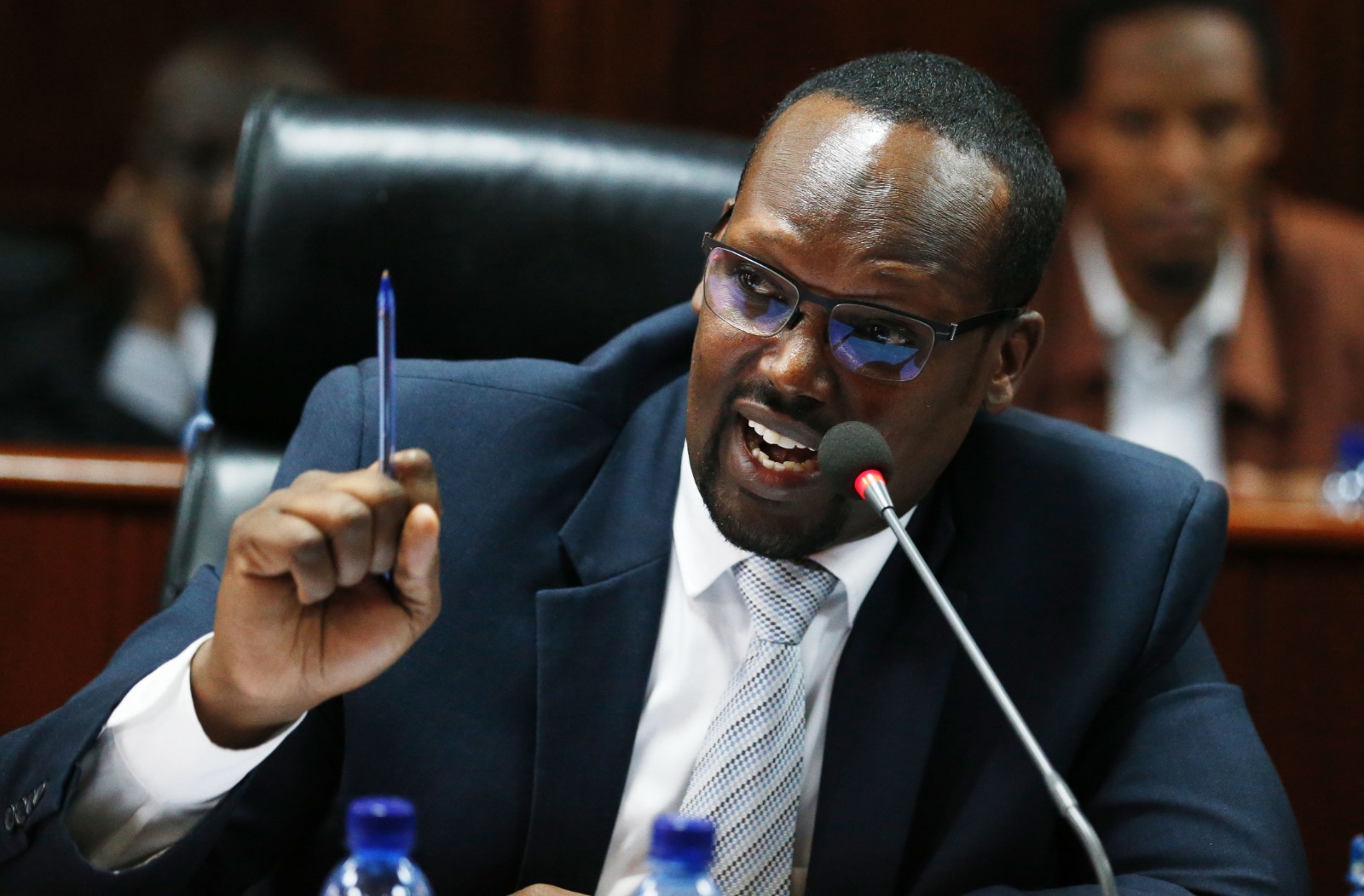
During a session chaired by Mandera Senator Ali Roba, senators scrutinised the two proposals, pushing for revisions that would ensure increased allocations for their counties.
The clash triggered memories of 2020, when the senators failed a record 10 times to approve the current formula.
It took the intervention of then-President Uhuru Kenyatta to allocate an additional Sh53 billion to the counties to ensure no county lost revenue, thus paving the way for the passage of the proposal.
Tana River Senator Danson Mungatana called for the inclusion of disaster as a parameter, citing the frequent flooding in his county and other lowland regions.
“Some counties are disaster-prone. I’m imploring the committee to introduce disaster as a parameter, even with a weight of just one per cent,” he said.
Kitui Senator Enoch Wambua urged the committee to increase the weight attached to geographical size, emphasising the logistical challenges in service delivery across vast areas.
“The distance, time and cost to deliver services must be considered. For example, drugs leaving Kemsa reach Nairobi within hours but take up to two weeks to reach Mandera,” he noted.
Elgeyo Marakwet Senator William Kisang’ proposed setting a minimum allocation of Sh6 billion for counties currently receiving less than that amount.
“Counties like Isiolo, Tharaka Nithi, Elgeyo Marakwet, Taita Taveta and Lamu receive under Sh6 billion. Without a minimum threshold, they can’t offer services or undertake meaningful development,” he said.
Isiolo Senator Fatuma Dullo called for the inclusion of livestock as a parameter to account for pastoralist communities.
“Why is CRA considering agriculture but ignoring livestock? We also need a budget to support our livestock sector,” she said.
In response, Senator Roba explained that his committee avoided sectoral parameters to prevent further disputes.
Instead, the committee recommended a complete overhaul of CRA’s proposal to ensure no county receives less than its current allocation.
The committee introduced a new baseline allocation and tweaked the parameters, removing some and adjusting the weights attached to them.
The committee set Sh387.42 billion—this year’s county equitable share—as the baseline allocation, guaranteeing that no county would receive less than this amount in future fiscal years.
The baseline would use the current formula, while any additional funds would be distributed using a revised formula.
“The committee recommends that the fourth basis for allocation of revenue under article 217 (1) of the constitution for FY 2025-26 to 2029-30 be approved as follows," the report states.
“The first Sh387.42 billion (being county equitable share for FY 2024-25) be shared among counties based on the baseline allocation factor derived from each county’s allocation for FY 2024-25.”
The committee has proposed that any extra allocation, beyond the baseline, be subjected to a new formula.
According to the committee’s new formula, the basic (equal) share has been weighted at 35 per cent, up from 22 per cent proposed by CRA.
The poverty index, which the commission had given a weight of 14 per cent, has been reduced to 12 per cent.
The committee has allocated geographical size a weight of eight per cent, capped at 10 per cent, down from nine per cent proposed by the commission.
Population, which has been the most controversial index in the political scene, has been retained at 45 per cent. The committee has dropped the ‘income distance’ index, which the commission had assigned a weight of 13 per cent.
“The data used to generate the Income Distance index is not directly derived from each county. The KNBS applies a top-down approach to determine each county’s contribution to GDP,” the report says.
In addition, the committee dismissed ‘a stabilising factor’ introduced by the commission to caution the counties from losing revenue.
CRA has fronted five parameters, down from the current eight, and varied their weights.
CRA has assigned the population the biggest weight at 42 per cent.
In the current formula, the population weighs 18 per cent.
Geographical size has been given a weight of nine per cent, up from the current eight.
The CRA has introduced the income distance index and assigned it a weight of 13 per cent.
In the proposed CRA formula, equal share has been given a weight of 22 per cent from the current 20, while the weight for poverty index has been retained at 14 per cent.
The commission proposed that the National Treasury and Parliament allocate the counties a minimum of Sh417 billion to ensure no county loses revenue.
“To facilitate service delivery, the recommendation provides for an equal minimum allocation across all counties, using population and geographical size of a county as the key transfer parameters,” CRA chairperson Mary Chebukati said.
However, the committee said it would be prudent to address the transition effects from one basis to another using a scientifically generated deviation parameter.
Already, the National Assembly has allocated Sh405 billion to the counties. The Senate, on the other side, has approved an allocation of Sh465 billion.
If approved by the House, the new framework will dictate revenue sharing among the counties for five years, from 2025-26 to 2029-30.
Article 217 of the constitution says the revenue-sharing formula should be reviewed every five years.
However, the Sixth Schedule of the Constitution further provides that the first and second determinations of the basis of the division of revenue among the counties be made at three-year intervals.
INSTANT ANALYSIS
In the first framework, there were five parameters, with the population given the heaviest weight. The population was weighted at 45 per cent, equitable share at 25 per cent, poverty level at 20 per cent, land area at eight per cent and fiscal effort at two per cent. In the second-generation formula, the population was weighted at 45 per cent, the basic share at 26 per cent and the poverty level at 16 per cent. Others are land area at eight per cent, fiscal responsibility at two per cent and development index at one per cent.