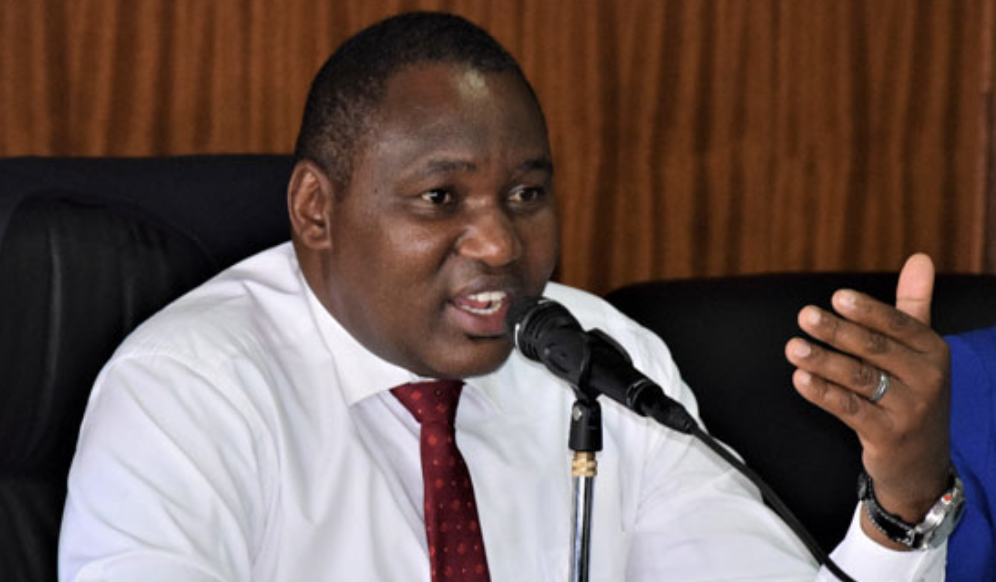
 Departmental Committee on Tourism and Wildlife chair Kareke Mbiuki
Kenyans awaiting compensation for losses caused by human-wildlife conflict may have to wait longer after the government slashed the budget for the State Department for Wildlife in the proposed 2025/2026 fiscal year.
According to the Departmental Committee on Tourism and Wildlife’s latest report on the budget estimates, the State Department has been allocated Sh13.169 billion—significantly below its request of Sh16.981 billion.
The allocation includes Sh11.805 billion for recurrent expenditure and Sh1.364 billion for development expenditure.
The committee noted that the budget shortfall will force the department to scale back or delay several key activities, including the verification and disbursement of human-wildlife conflict compensation.
“Consequent to this, the department has to reduce its planned activities, including extending the project’s completion period, reducing verification and payments of Human-Wildlife Compensation and others,” the report reads.
The committee has recommended an additional Sh1 billion to help the department address pending compensation claims, which currently amount to Sh2.7 billion.
Human-wildlife conflict remains a major issue in Kenya, especially in communities bordering national parks and wildlife corridors.
Data from the Ministry of Tourism and Wildlife shows that the government has spent Sh2.8 billion over the past two years on compensation, bringing the total payout since 2018 to Sh4.8 billion.
Between 2009 and 2024, the country recorded 57,006 incidents of human-wildlife conflict.
Tourism and Wildlife Cabinet Secretary Rebecca Miano revealed that as of February 2023, outstanding compensation claims exceeded Sh4.16 billion.
In an effort to improve the system, the government launched a Digital Compensation Scheme in 2024.
The initiative, currently being piloted in six counties, allows victims to file claims online. Small-scale compensations of up to Sh100,000 are being disbursed through the mobile money platform M-Pesa. The two-year pilot is expected to run until November 2025.
However, with the reduced funding and mounting pending bills, concerns are growing that even the new digital system may struggle to ease the backlog unless additional resources are secured.
Communities affected by wildlife invasions—often involving elephants, lions, and other large animals—say they rely heavily on the government’s compensation scheme for recovery and survival.
The budget estimates will now proceed to the National Assembly for further debate, where lawmakers could amend allocations based on the committee’s recommendations.