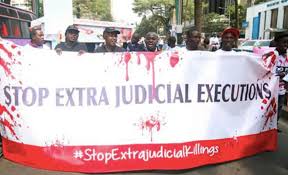
Kenya continues to face international scrutiny over its poor human rights record, with submissions to the UN Human Rights Council review process documenting various abuses emanating from June 2024 demos.
The report — a compilation of submissions by different lobbies and institutions — noted Kenya experienced unprecedented number of extrajudicial killings and enforced disappearances.
Kenya underwent the fourth Universal Periodic Review on April 28–May 9, a process in which each UN member state undergoes a peer review of its human rights record every four and a half years.
Various institutions in their submissions to the council's review said they had documented alleged abductions, enforced disappearances, detention and excessive use of force against activists, lawyers, medical professionals and human rights defenders.
The review relies on the national reports provided by the state, submissions by independent human rights experts and groups, as well as the Human Rights Committee, which monitors states' compliance.
Others that submit reports are UN entities such as Committee against Torture and national human rights institutions, regional organisations and civil society.
The council said it received a communication on October 1, 2024, from independent human rights experts expressing serious concern over the rights violations in Kenya.
The violations ranged from alleged abductions, enforced disappearances, detention to excessive use of force against activists, lawyers, medical professionals and human rights defenders.
The council was also informed of apparent retribution on Kenyans for exercising their rights, including to freedom of expression, peaceful assembly and association.
For instance, the UN country team based in Nairobi reported there had been an unprecedented number of cases of extrajudicial killings and enforced disappearance emanating from protests.
In its submissions to the council, the Committee against Torture expressed concern about allegations of extrajudicial killings, enforced disappearance and excessive use of force by law enforcement officers.
The Committee against Torture — made up of 10 independent experts to monitor implementation of the Convention against Torture — said Kenya should ensure prompt, impartial and effective investigations are undertaken into all the violations and perpetrators be prosecuted. It added that victims should adequately be compensated.
Additionally, the Committee against Torture submitted a proposal for the revision of the legal framework to ensure all forms of enforced disappearance are clearly defined in criminal law with associated penalties — proportionate to the severity of the offence.
However, the ODPP has blamed poor investigations by the police, lack of evidence and witnesses for the delayed justice for the victims of Gen Z protests for almost a year.
The Office of the Director of Public Prosecutions last month said it had since June 19, 2024, received inquiry files from the Independent Policing Oversight Authority on the deaths and other related injuries during Gen Z protests.
Upon the review of the files, the DPP said it had given various directions on the files. These include closure of some, direction for further investigations by IPOA and or the Inspector General of Police.
The same Committee on Torture reiterated its concern about reports of cases of lynching, in particular of older women accused of witchcraft in Kenya, noting the cases had not been effectively investigated, prosecuted and punished.
It said Kenya should amend the Prevention of Torture Act, 2017, to ensure the definition of torture was fully in line with Article 1 of the Convention against Torture.
It should also ensure penalties for acts of ill-treatment reflect the grave nature of the crimes in accordance with the Convention on Torture; and incorporation of absolute prohibition of torture into the law.
In its submission, the government said Kenya has made "significant strides" in advancing human rights through international commitments and national reforms.
To deal with police excesses, for instance, the government said it has made progress in reforming the police to enhance professionalism and accountability through the National Task force on Police Reforms that proposed key reforms. Implementation is underway, it said.
In dealing with torture, the government said it is strengthening the implementation of its Prevention of Torture Act through training programmes for prosecutors led by the ODPP.
Regarding the June protests, the state said it has condemned any excessive or extrajudicial action that failed to respect human rights with investigations underway into cases resulting from the demos.
This is yet another of a series of reports by local and international organisations’ queries on Kenya's human rights record.
Reports from organisations like US Department of State and Amnesty International have previously documented the violations, along with reports from the Kenya National Commission on Human Rights.