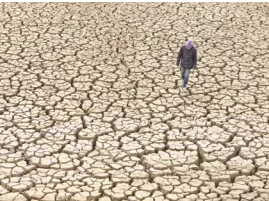
Some 2.8 million Kenyans face life-threatening starvation in coming months due to depressed rainfall in late 2024, an alarming increase from 1.9 million recorded the previous year, a new report has warned.
The 2025 Global Report on Food Crises, published by the Food Security Information Network, attributes the worsening situation to poor rains in the last quarter of 2024, which have plunged many into deep food insecurity.
More than 2.8 million people represent 17 per cent of the analysed population across the arid and semi-arid lands of Northern Kenya, parts of Rift Valley, and the Coast region. Of these, about 291,700 people are projected to experience extreme hunger emergencies, classified in the report as IPC (Integrated Food Security Phase Classification) Phase 4.
Phase 4 of five phases is classified as a humanitarian emergency. Phase 5 is called a famine/humanitarian catastrophe.
“The worsening situation is driven by below-average October-December 2024 rains negatively impacting crop and livestock production, elevating food prices, and causing conflicts related to resource management and human-wildlife interactions,” according to the report released this month.
Kenya had made significant progress in 2024 in fighting against hunger, following an improved rainy season.
Only 1.9 million people — or 12 per cent of the assessed population in the ASALs— faced high levels of acute food insecurity in ASAL areas last year.
This number was a 64 per cent drop from the 5.3 million people grappling with starvation in 2023, when the Horn of Africa experienced its worst drought in four decades.
According to the report, of the 1.9 million affected in 2024, “almost 0.3 million were in emergency (IPC Phase 4).
“The situation has significantly improved since the 2023 peak, as above-average rainfall improved harvests and livestock production. However, El Niño-induced floods and resource-based conflicts affected northern and eastern pastoral areas,” the report read.
In northern and northeastern pastoral regions, the heavy March-May long rains driven by El Niño helped communities recover from the devastating 2020-23 drought. However, the rains also triggered floods that killed more than 11,500 livestock and damaged farmland.
In addition to flood damage, hunger levels in 2024 were also influenced by poor maize yields in western and southeastern crop-producing regions. There, erratic rainfall caused maize production to fall 10-15 per cent below average.
Economic pressures further exacerbated the crisis. During the first quarter of 2024, high inflation and a weakening currency pushed up the cost of both food and non-food items, significantly eroding household purchasing power.
However, by the end of the year, conditions improved. Monthly food inflation fell from 7.9 per cent in January to 5.1 per cent in September, aided by an adequate domestic cereal supply and currency appreciation.
This led to a 25-35 per cent drop in maize prices compared with 2023.The decline in food vulnerability across Northern Kenya in 2024 helped reduce conflict and insecurity.
The report warned, however, that these gains are at risk of reversal with the projected surge in acute food insecurity this year.
“[On] conflict and insecurity, though the overall security situation was stable, Turkana and Marsabit continued to record frequent episodes of resource-based conflict over the control of water and grazing areas [in 2024, and this could escalate in 2025 in light of the projection of more people facing an emergency situation],” the report read.
Despite the progress made last year, key indicators remain troubling. The proportion of children consuming a minimum acceptable diet was alarmingly low in Turkana North (0.4 per cent) and Garissa (6.5 per cent).
Exclusive breastfeeding rates were also low, at just 15.2 per cent in Wajir.
Meanwhile, the March-May floods — especially in Garissa, Tana River, and Turkana South — damaged sanitation facilities, forcing communities to rely on untreated water and resulting in widespread disease outbreaks.
Malaria prevalence soared to 48 per cent in Turkana South, while cases of cholera and measles were reported throughout the year.