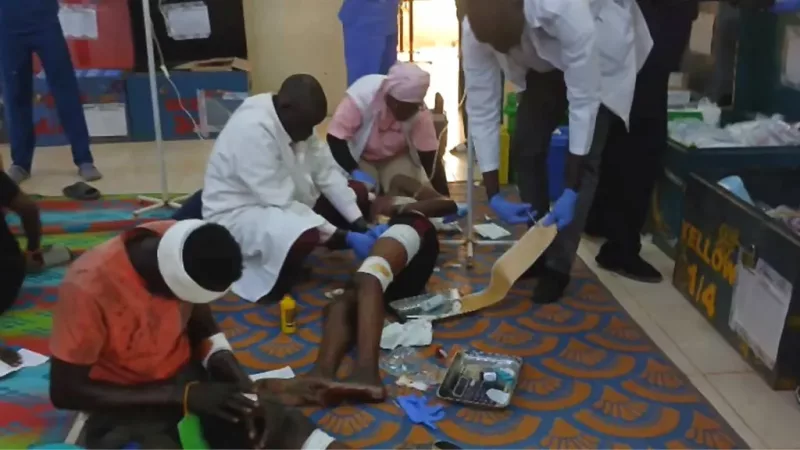
The national government has resolved to engage meaningfully and consistently with medical professionals who remain central to the realisation of the country’s Universal Health Coverage (UHC) agenda, Health CS Aden Duale has said.
The Cabinet secretary on Saturday outlined concrete steps the government is already taking to address long-standing grievances, including delayed salaries, stalled training programmes and internship bottlenecks.
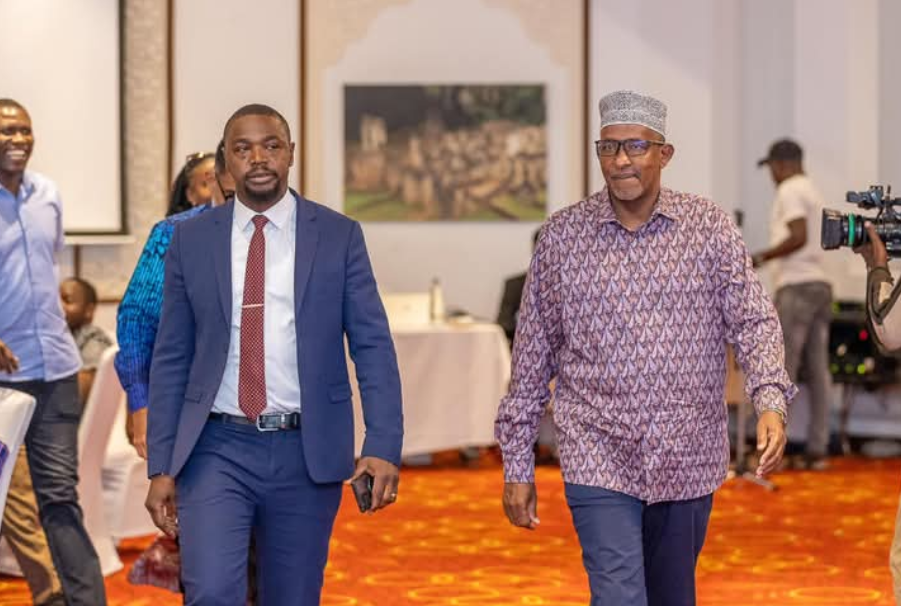
Speaking during the Kenya Medical Practitioners, Pharmacists and Dentists Union annual delegates conference in Mombasa, Duale promised far-reaching reforms to restore hope in the country’s ailing healthcare system.
“There can be no UHC without doctors, nurses and all healthcare professionals being fully equipped, supported and empowered to serve,” Duale said.
The ministry had fulfilled its initial promise under the 2024 Return to Work Formula by disbursing Sh1.75 billion, he added.
The remainder would be settled in the upcoming financial year, in line with President William Ruto’s directive.
Duale also acknowledged complaints from healthcare workers who struggle to access treatment through the Social Health Authority, calling the situation “unconscionable.”
“It is unacceptable that those who deliver care cannot themselves access quality care,” he said, promising urgent reforms through coordinated efforts with SHA, the Digital Health Agency, Treasury and other government bodies.
He promised to table before the Cabinet and the Council of Governors a proposal from Mombasa Governor Abdulswamad Nassir that statutory deductions like Social Health Insurance Fund should be deducted at source – the National Treasury.
“As much as there is delay in the disbursement of funds from the Exchequer, a long-lasting solution is required in solving the issue of statutory deductions like SHIF and KRA should be deducted at source, so that counties are not blamed for non-remittance,” Nassir said during the meeting.
On postgraduate medical training, Duale announced that the ministry had begun disbursing tuition for doctors pursuing specialist courses.
He said a total of 93 doctors have been selected for sponsorship across various universities, with a total allocation of over Sh142 million.
Already, more than Sh73 million has been paid to the first group of 54 doctors, while payments for the remaining cohort are underway.
“This effort reflects our broader goal of building a fit-for-purpose and adequately skilled health workforce. We are not just funding education; we are investing in Kenya’s future,” he said.
He urged a transition from ad hoc training sponsorships to a structured, strategic framework based on national health needs, budgetary realities and fairness.
The Health CS also acknowledged what he described as a “broken pipeline” in the medical internship process.
He cited delayed postings, poor supervision and overcrowded training institutions as key challenges undermining quality and morale.
“The ministry is committed to working with counties to expand internship centres and improve equitable deployment. In a few days, I will convene a multi-stakeholder forum to chart a sustainable path forward. KMPDU will be at the table,” he said.
Over 1,600 medical and pharmacy interns had successfully secured placements and would begin rotations in July 2025.
“Just last week, 1,035 medical officer interns and 83 dental officer interns successfully balloted for internship placements, and together with 503 pharmacists interns, will begin their rotations in July 2025. Our goal is to align internship numbers with our national budget and health service delivery needs,” he said.
He added, “This is not just about numbers—it’s about dignity, equity, and ensuring our doctors are trained and absorbed in ways that uphold professional standards and meet the healthcare needs of Kenyans.”
Duale however decried the increased number of unregulated medical training institutions.
“The truth is, we are seeing the effects of unregulated expansion in training institutions—some of which admit over four times their capacity. This threatens the quality and integrity of our healthcare system.”
He said the Kenya Medical Practitioners and Dentists Council must be empowered to enforce quality, not just quantity.
He emphasised the need for ongoing dialogue and partnership between government, counties and the medical community.
He urged doctors to stay engaged as the country works to build a health system that is “fair, responsive, and world-class.”
“The government is investing in its people—and you are that investment. With your input and partnership, we will make UHC a reality not just on paper, but in every clinic, ward and operating theatre in Kenya.”