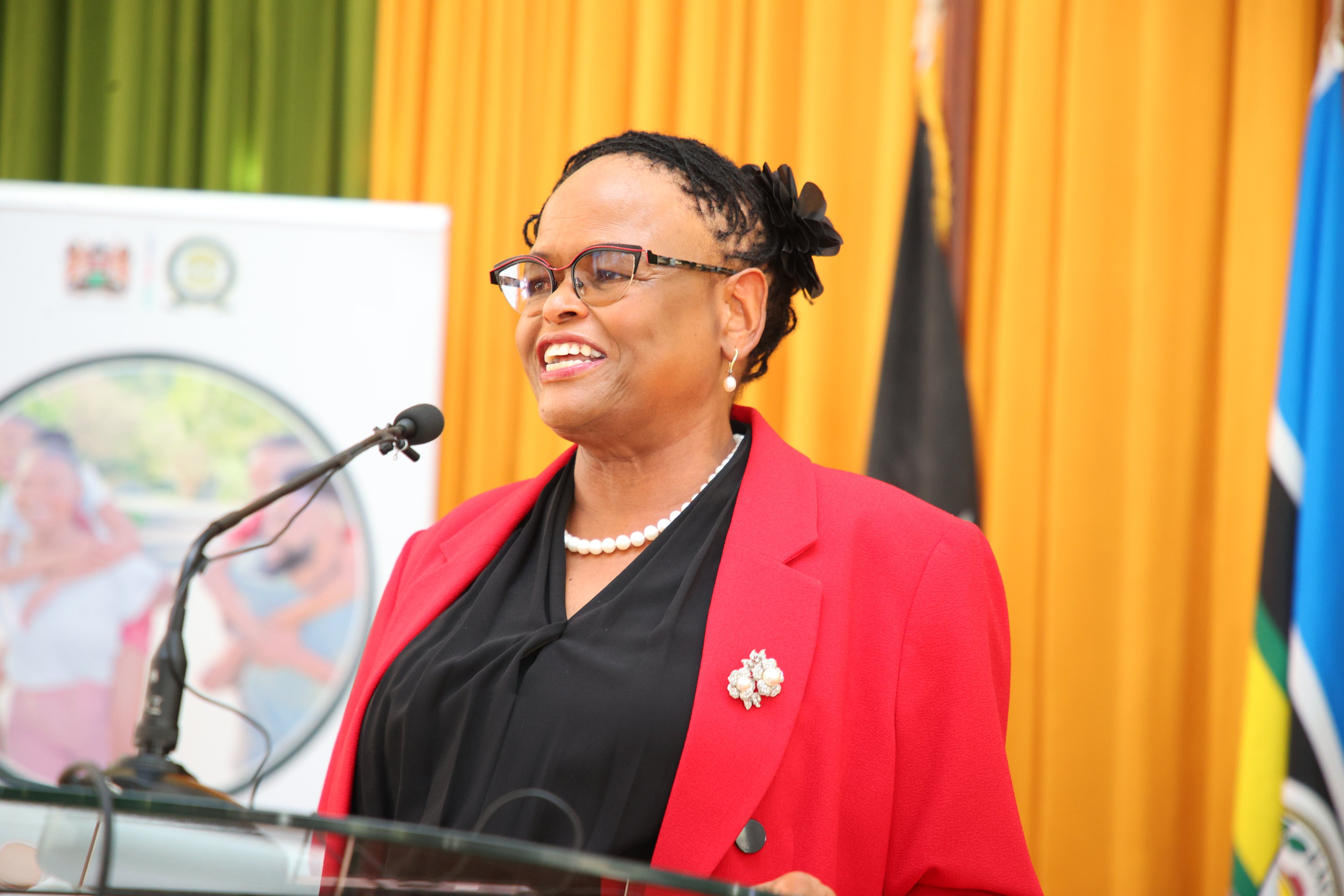
 Chief Justice Martha Koome. /JUDICIARY
Chief Justice Martha Koome is in the prevailing moment finding herself in the middle of a political storm following an appellate court’s verdict that a panel of judges her deputy empaneled to hear a case challenging the swearing-in of Kithure Kindiki as Deputy President was illegally constituted.
The Court of Appeal ruled that Deputy Chief Justice Philomena Mwilu did not have the power to constitute the bench that heard and determined petitions against the impeachment of Rigathi Gachagua as Deputy President.
Justices Daniel Musinga, Mumbi Ngugi, and Francis Tuiyott on Friday ruled that assigning judges is a constitutional mandate of only the Chief Justice.
Koome constituted the bench that heard cases challenging Gachagua’s impeachment, but after his ouster on October 17, 2024, more petitions were filed in the High Court in Kerugoya, where orders were issued stopping Kindiki from being sworn-in.
Orders were consequently issued stopping President William Ruto from replacing Gachagua.
Article 165(4) of the constitution dictates that any matter certified by the court as raising substantial questions of law, under specific clauses, must be heard by an uneven number of judges, not less than three, assigned by the Chief Justice.
But during that time, Koome was out of the country when the files containing orders requiring her to empanel a bench to hear the petitions were referred to her.
Mwilu then remitted the files to a three-judge bench comprising Justices Eric Ogola (presiding), Antony Mrima, and Freda Mugambi to hear the consolidated petitions challenging Gachagua’s ouster.
Lawyers representing Gachagua challenged the decision, but the Justice Ogola-led bench ruled that the files were properly before them, saying Mwilu had properly performed her administrative duty.
But Justice Musinga, Ngugi, and Tuiyott overruled the verdict, saying the DCJ can only act as CJ if and when the Chief Justice resigns, is removed from office, or dies in office.
“In this day and age, we do not think that the Chief Justice can be ‘electronically absent’ for an inordinately long period of time, such that she cannot empanel a bench or give appropriate directions,” the appellate judges observed.
They argued that Koome had the capacity to electronically empanel the bench from wherever she had traveled to, unhindered.
“In this case, there was no suggestion that the Chief Justice was electronically unreachable or physically unable to perform her constitutional administrative function,” the judges ruled.
The ruling sparked debate over the legitimacy of Kindiki as the DP with a section of opposition leaders calling for his resignation.
“With the Court of Appeal ruling, we have the politically unpalatable situation where our country now has two Deputy Presidents and we believe Rigathi Gachagua remains the legitimate Deputy President unless otherwise ruled by a superior court,” DAP-K Party leader Eugene Wamalwa said.
Speaking on Sunday after attending the thanksgiving service for the retirement Ven. Canon John Mungae Mutonga, the Vicar General Sigona ArchDeaconery in Nyeri, Wamalwa said the most honourable thing for Kindiki to do was to resign.
“You have been a lawmaker, you are a professor of the law; you are a teacher of the law. Your legal status today is that you are illegitimately in office; you are illegally in office. You’re therefore an illegitimate Deputy President, do the honourable thing Prof Kindiki and resign,” he said.
Wiper leader Kalonzo Musyoka who spoke at the same event equally called for Kindiki’s resignation.
On his part, Gachagua avoided commenting on his successor’s legitimacy, only stating that he trusts the Judiciary and its ruling.
“On what is going on in the courts, I want to really say I will let the lawyers do what they are good at. I want to focus on what I’m good at—mobilising the people of Kenya to liberate this country,” he said.
He spoke when he attended a church service at Full Gospel Church Magomano in Juja Constituency.
Kindiki also avoided wading into the specific matter regarding his legitimacy and blasted opposition leaders for advancing divisive politics.
“We are telling them from now on, there will be no room for inciteful and hate-filled politics for Kenyans.
Ruto has yet to speak on the issue since the court verdict.
But as debate rages on and focus is trained on Koome’s next course of action regarding application of Article 165(4) of the constitution, calls for Kindiki’s resignation may be a long shot.
In Kenya, a Deputy President can be removed from office through impeachment, similar to the process for removing the president.
The grounds for removal include physical or mental incapacity, gross violation of the constitution or other laws, serious reasons to believe a crime under national or international law has been committed, or gross misconduct.
The impeachment process is outlined in Articles 144 and 145 of the constitution.
Meanwhile, Gachagua on Monday resigned from the ruling United Democratic Alliance (UDA), in which he was removed as the deputy party leader back on January 22, 2025, and replaced with Kindiki.
In his resignation letter addressed to UDA secretary general Hassan Omar, Gachagua said:
“By a copy of this letter, you are notified that I have officially resigned from the UDA Party with immediate effect. I have made this decision in knowledge of the ideals of the party we believed in and so were millions of Kenyans, but now it has turned out as the most dangerous political moment for the people and the Republic of Kenya in retrogressive philosophy of an unfit class to govern our nation.”