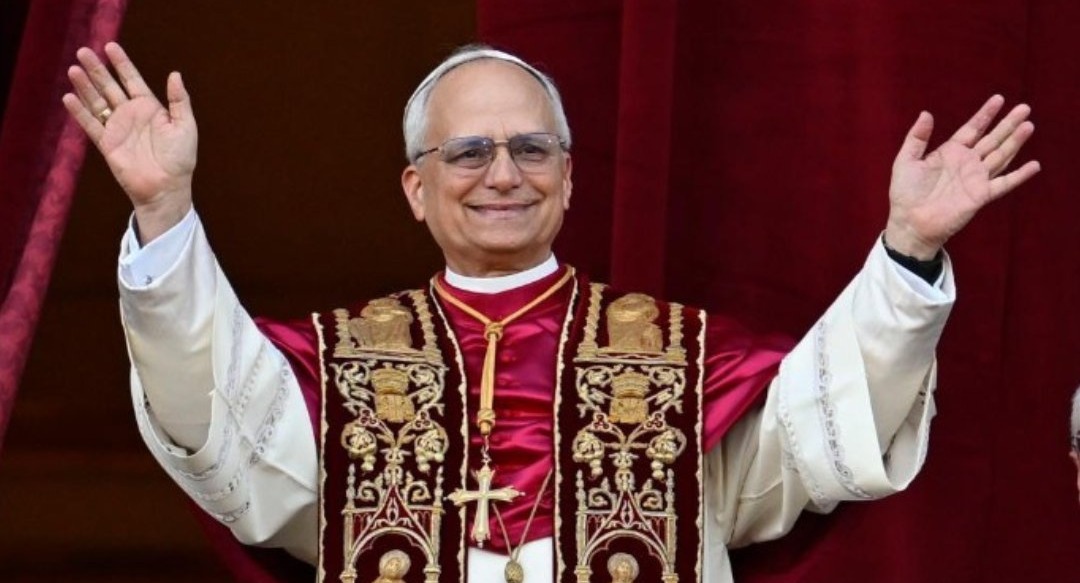
When Cardinal Robert Francis Prevost stepped onto the balcony of St. Peter’s Basilica Thursday night after his election as the 267th Pope of Roman catholic region, the world took note of his papal name Pope Leo XIV.
It was not chosen lightly.
Behind it lay centuries of tradition, inspiration, and subtle signaling.
Who was Leo?
The name Leo or lion in Latin evokes strength, courage, and leadership qualities traditionally associated with the papacy in turbulent times.
The first Pope Leo, Pope Leo I who reigned from 440–461, earned the title Leo the Great for defending Rome against Attila the Hun and articulating the doctrine of papal primacy at the Council of Chalcedon.
Attila was the ruler of the Huns, a nomadic warrior people from Central Asia, and one of the most feared enemies of the Roman Empire.
Under Attila, the Huns invaded large parts of the Eastern and Western Roman Empires, plundering cities and demanding tribute.
Leo famously rode out to meet Attila in 452, persuading him to turn back from his invasion of Italy.
So, by choosing Leo, Pope Leo XIV tied himself to this legacy of courage and doctrinal clarity.
He also aligned himself with a lineage of 13 previous Popes named Leo, the most recent being Leo XIII reigned from 1878-1903, who was known for Rerum Novarum, his encyclical on workers’ rights and social justice.
Leo XIII was a moderniser who sought to engage with the contemporary world while preserving Church doctrine.
Are there other Leos?
In total, 13 Popes have taken the name Leo before Leo XIV, making it one of the more popular papal names in history.
They are Leo II (682–683), remembered for his efforts to reform Church music and liturgy and Leo III (795–816) crowned Charlemagne as the Holy Roman Emperor, reinforcing the alliance between the papacy and European monarchs.
There was also Leo X (1513–1521), a Medici pope, famous for his lavish court and for excommunicating Martin Luther during the early Reformation.
Each Leo left a different mark, some as reformers, others as guardians of tradition, and a few as figures of controversy.
Why do Popes change their names?
The tradition of taking a new name began in 533 AD when Mercurius, elected pope, felt that a man named after a Roman god (Mercury) should not lead the Church.
He chose the name John II. Since then, popes have chosen new names to honor previous popes or saints they admire and to signal the priorities or themes of their papacy.
They also use it to distance themselves from their personal identity, symbolising a new role as bishop of Rome and servant of the servants of God. A papal name becomes a statement.
John Paul I and II invoked continuity, Benedict XVI signaled theological reflection, while Francis emphasised humility and service to the poor.
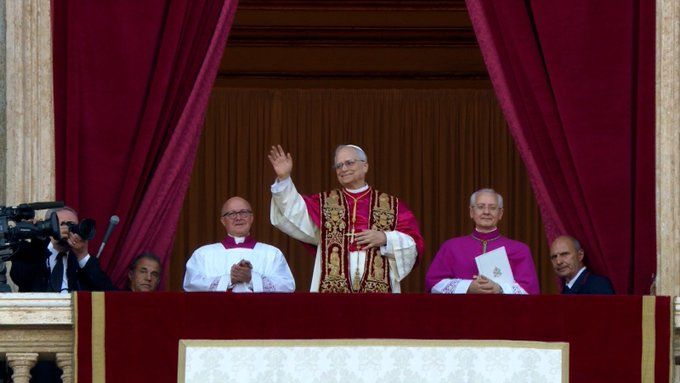
Why Leo XIV? What is the significance?
By choosing Leo XIV, the new pope likely aimed to channel the intellectual vigor and social engagement of Leo XIII, while invoking the fearless leadership of Leo I.
In a world grappling with modern crises as climate change, migration, and geopolitical tensions, Leo XIV’s name signals both strength and a readiness to defend the church’s moral voice.
It may also subtly critique or depart from recent papacies rather than a pastoral or humble image (Francis), it returns to the assertive, lion-like leadership embodied by earlier Leos.
Other notable Popes who changed their names include John Paul I (1978), Benedict XVI (2005–2013) and the late Francis, who took over in 2013.
John Paul I combined the names of John and Paul VI, symbolising continuity. Benedict invoked Benedict XV, a peacemaker during WWI and St Benedict the patron of Europe while Francis became the first to take the name, honoring St Francis of Assisi for humility and care for the poor.
In total, every pope since John II has adopted a new name, a tradition that has grown into one of the most symbolic acts at the beginning of a pontificate.