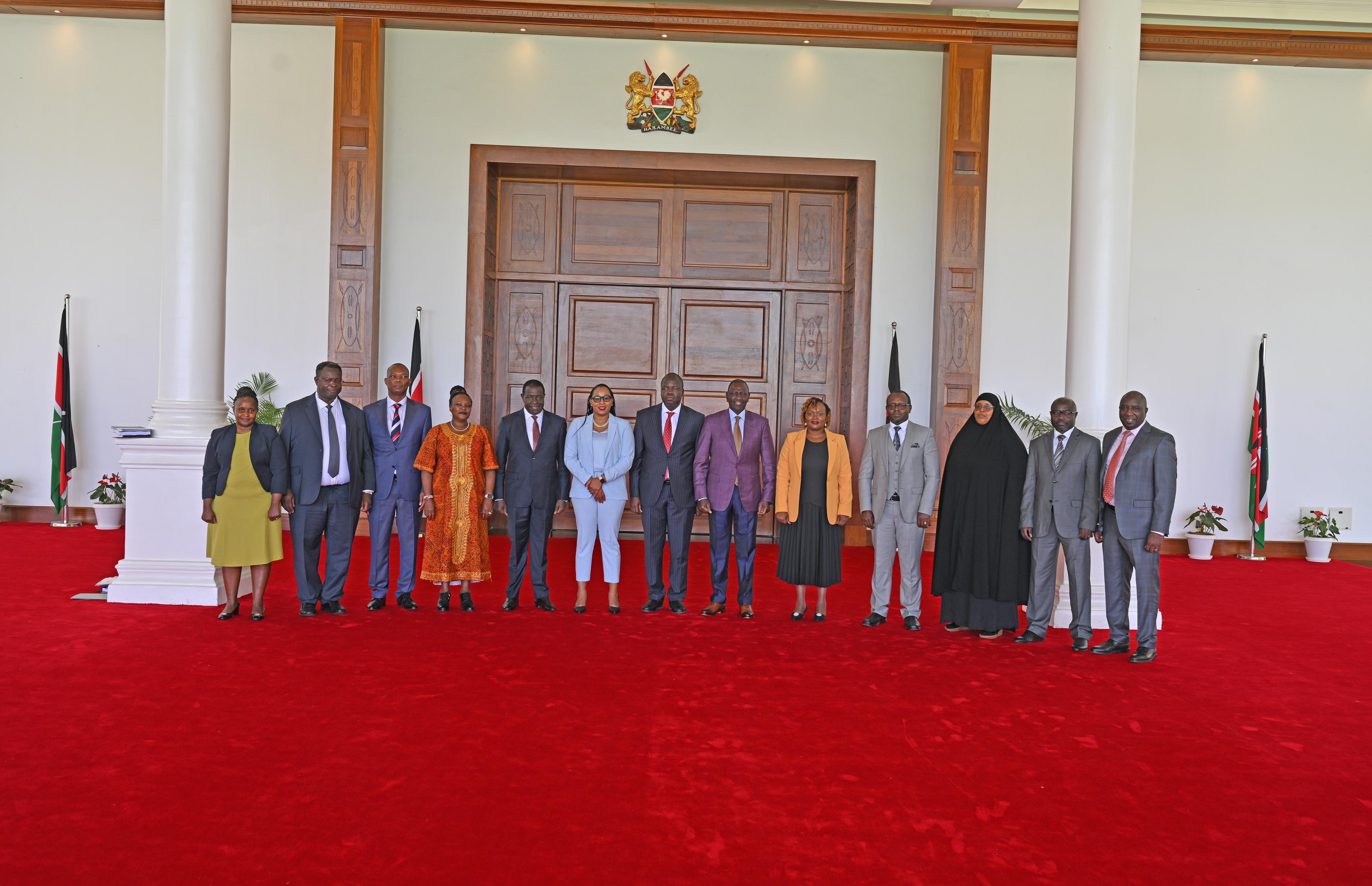
The reconstitution of the Independent Electoral and Boundaries Commission (IEBC) entered a critical phase on Tuesday after the Selection Panel for the recruitment of commissioners officially handed over its report to President William Ruto.
The submission of the report, which contains the names of successful candidates, marks the end of the panel’s mandate.
Attention now shifts to President Ruto and Parliament as the process moves to the next stage.
Although the panel’s term was initially set to expire on April 25, Members of Parliament extended it by two weeks on April 2 to allow the panel to complete interviews.
“Conscious that the selection panel is currently undertaking the interviews of the shortlisted candidates and given the interview schedule of all shortlisted applicants, the panel has inadequate time to conclude the recruitment process,” said National Assembly Minority Leader Junet Mohamed when he moved the motion for extension.
Ruto appointed the Selection Panel members on January 27.
With the receipt of this confidential report, which contains the names of nominees for chairperson and commissioners, the President is now expected to forward the list to the National Assembly for vetting.
According to the law, this submission must happen within seven days, meaning President Ruto has until Tuesday next week to unveil the list.
The report includes two names for the position of chairperson and nine names for commissioner positions.
From these, the President will nominate one individual to serve as chairperson and six others as members of the commission.
Parliament will then vet the nominees and forward the approved names back to the President.
Within seven days of receiving the approved list, the President is required to formally appoint the chairperson and commissioners through a notice in the Kenya Gazette.
Throughout the process of shortlisting, nominating, and appointing the chairperson and commissioners, the law requires that the Selection Panel, Parliament, and the President must ensure compliance with the constitutional requirement that no more than two-thirds of the commission members are of the same gender, while also upholding regional balance.
The appointment of the new IEBC commissioners is a critical step in restoring the commission’s full capacity, following the resignation and expiry of the terms of previous officeholders.
With several key electoral and boundary review functions stalled due to the lack of quorum, stakeholders are keenly watching how swiftly the remaining steps will unfold.
Political players and civil society groups have urged the President and Parliament to prioritise transparency, inclusivity, and adherence to the law in finalising the process, warning that any perception of bias could erode public trust in the electoral body ahead of future elections.
Already, speculation is rife over the possible nominees.
However, constitutional experts caution that the process should remain merit-based, guided by principles of fairness, competence, and integrity as outlined in the Constitution.
Once appointed, the new IEBC team will face an uphill task, including overseeing pending by-elections, delimitation of electoral boundaries, and addressing recommendations made after the last general election.
Observers say the new commission’s credibility will be vital in managing political tensions and preparing for the next electoral cycle.