
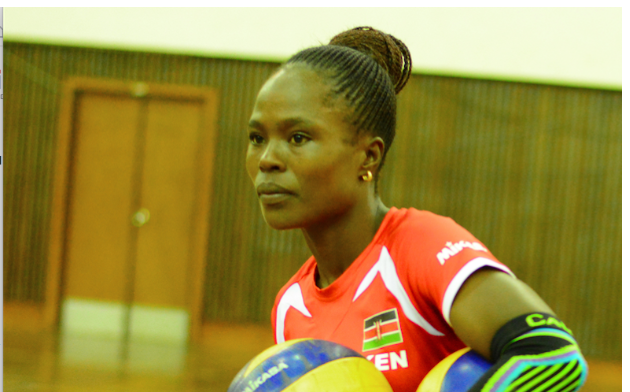
In a nation where athletic success often paints individual heroes onto the canvas of national pride, the Kundu sisters—Agripina and Annet—emerge as a masterpiece crafted from shared ambition and fierce sibling rivalry.
Their story isn’t just one of individual athletic prowess; it’s a testament to the enduring power of family, a Kenyan saga unfolding on the world stage.
Their journey isn’t a solitary ascent; it’s a climb undertaken hand-in-hand, pushing each other to greater heights, their rivalry sharpening their individual skills while strengthening their bond.
Their story is a compelling narrative of support and competition, a beautiful paradox of sisterhood and ambition.
They are not just athletes but each other’s fiercest critics and greatest cheerleaders. They stand as a powerful example of how family can be the greatest source of strength and inspiration, transforming individual dreams into a shared triumph.
The Kenyan sporting landscape is a tapestry woven with threads of familial athleticism. The Wanyamas, the Origis – names synonymous with sporting prowess. But amidst this rich tradition, the Kundu sisters stand out, not as a mere continuation, but as a vibrant, unique melody.
Agripina, the elder sister, a seasoned libero for the Malkia Strikers, commands the court with an unwavering grace. Her agility, her reflexes – honed not just through rigorous training, but through a lifetime immersed in the competitive spirit of her family.
Meanwhile, Annet, the younger sibling, guards the Harambee Starlets’ goal with a fierce determination that echoes her sister’s tenacity.
Their success isn’t accidental; it’s the culmination of a family legacy where sports aren’t just a hobby, but a cornerstone of their identity.
Their father, Reuben, a former footballer, and their mother, Jane, a retired athlete, instilled in their daughters a love for competition, a respect for discipline, and an unwavering belief in their potential.
The Kundu story is a powerful narrative of family, dedication, and the extraordinary heights achievable when passion meets unwavering support. Sibling rivalry is often portrayed as a source of conflict, but for the Kundus, it has been a catalyst for growth.
Their rivalry is characterised by mutual respect and admiration, a dynamic that drives them to excel in their respective sports. Annet candidly acknowledges the influence Agripina has had on her career trajectory.
“I am inspired by Agripina’s professional accomplishments,” she states, recognising the benchmarks set by her older sister.
Agripina’s qualification for the 2020 Tokyo Olympics is a milestone that Annette aspires to match as she works diligently towards attaining her aspirations.
Annet reflects on this relationship, stating, “We always try to outshine each other, even though we play different sports.”
This friendly competition has not only enhanced their skills but has also solidified their bond as sisters and athletes. Agripina, too, sees the benefits of this rivalry.
“I want to keep playing at the highest level to push my younger sister until she fulfils her ambition of becoming a ‘big’ player,” she asserts, highlighting her desire to inspire Annet to reach her full potential.
The journey to athletic success is rarely a straight path, and both Agripina and Annet have faced their share of challenges.
Annet’s transition from volleyball to football was not without its hurdles. The sting of being cut from the national team could have crushed her spirit, but Agrippina’s unwavering support acted as a lifeline.
“I encouraged her to keep going and use that as inspiration,” Agrippina recalls, illustrating the supportive nature of their relationship.
That perseverance culminated in a triumphant debut for the Harambee Starlets on November 7, 2018, against Ghana – a moment etched in the annals of their family history, a testament to their shared struggle and ultimate victory.
Annet: A Kenyan Goalkeeping Star
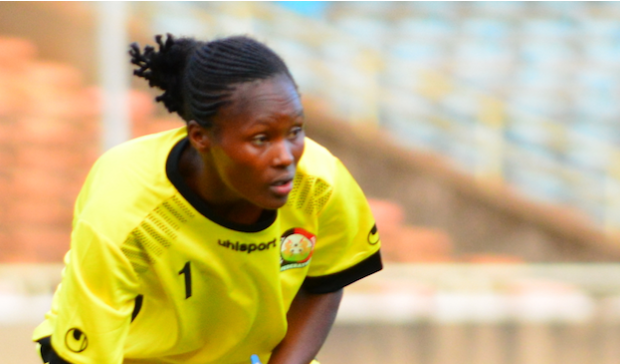
The roar of the crowd is a familiar lullaby to Annette. At 26, her hands, calloused yet graceful, have already deflected countless shots, a testament to her unwavering determination.
From the vibrant pitches of the Kenyan Women’s Premier League (KWP) to the international stage, her rise has been meteoric.
A recent stint with Lakatamia FC in Cyprus, followed by a triumphant return to Kenya Police Bullets, only underscores her talent and unwavering commitment.
The dust of Kakamega’s Ibinzo Girls’ pitch still clings to Annet’s cleats, a faint memory of her formative years. It was there, amidst the cheers and the scrapes, that her talent bloomed, a budding flower pushing through the rich soil of Kenyan football.
Her move to Eldoret Falcons in 2016 marked a pivotal shift, a leap from the familiar comfort of home to the demanding world of professional football.
Yet, even amidst the intensity of the Kenya Women’s Premier League, Annet found not just a challenge, but a surprising wealth of talent.
“My story demonstrated that the KWP, which is frequently disregarded, is a furnace for developing extraordinary talent,” she said.
She champions the league, believing it to be the bedrock of Kenyan women’s football, a place where dreams are nurtured and honed.
“The league is very competitive, with quality players,” she declared, her voice brimming with pride.
Annet’s journey to the national team wasn’t a straight path; it was a winding road, paved with both triumph and despair. She endured the sting of rejection twice.
The first call-up, the second, both ending in the crushing weight of exclusion. Making the final cut in the national team, seemed a distant, unattainable dream. Her almost-abandoned aspirations lay scattered like fallen leaves, a testament to the harsh realities of competitive sports.
The weight of those missed opportunities pressed down, threatening to extinguish the flickering flame of her passion.
“When I got my first and second call-up with Starlets, I couldn’t make the final list. I almost gave up,” she admitted.
But then, a guiding hand reached out. Eldoret Falcon’s head coach Joshua Ariko, a beacon in the storm of Annet’s doubt, rekindled her belief. His encouragement, a gentle yet powerful force, breathed life back into her ambition. Finally, the moment arrived.
The national team jersey draped her shoulders. The initial nervousness, a fragile butterfly fluttering in her chest, was quickly overshadowed by a burgeoning confidence.
“I was nervous at first, but my confidence became supreme from there onwards,” she recalls.
This wasn’t just a victory; it was a metamorphosis. The setbacks, the tears, the doubts – they all forged the steel of her spirit, shaping her into the player she is today.
Then came December 2022, a month etched in gold. The CECAFA Women’s Challenge Cup in Tanzania became Annette’s stage.
A flawless performance, a clean sheet, and the coveted Golden Glove award – a testament to her unwavering focus and skill.
Her confidence, a quiet fire burning within, propelled her and the Harambee Starlets to victory, silencing the doubters and celebrating a hard-fought triumph over formidable opponents like the Kilimanjaro Queens.
This was a collective exhale, a moment of redemption after the disappointment of the 2020 Tokyo Olympics qualifiers. It was a resounding declaration of the potential simmering within Kenyan women’s football, a potential that Annette embodies perfectly.
“I knew it. I knew I was going to be given the award because of the morale I had from the start of the games,” Annet reflected, vividly capturing the confidence that propelled her team, the Harambee Starlets, to victory against formidable opponents, including the Kilimanjaro Queens of Tanzania.
This triumph was a collective celebration for a team that had faced adversity in the past, particularly during the 2020 Tokyo Olympics qualifiers, where they fell short against Zambia.
“The CECAFA victory served as a much-needed consolation, a testament to the resilience and determination of the Harambee Starlets, and a reminder of the potential that exists within Kenyan women’s football,” she said.
Annette’s move to play for AEL Champions in the Cyprus Division One exposed her to a higher level of competition, which she acknowledged significantly improved her game.
“There is a huge difference between the level of competition in Cyprus and Kenya,” she remarks, underscoring the importance of challenging oneself in the pursuit of greatness.
“This transition not only enhanced my skills but also allowed me to support my family financially, a goal I cherish deeply,” she said.
The Libero’s Leap: Agripina’s Olympic Dream
The roar of the crowd, a blur of motion, the satisfying thud of the ball – this is Agripina’s world. Born on April 24, 1993, Agripina’s journey hasn’t been a smooth ride. Multiple national league titles and African Nations Cups are not mere trophies; they are milestones marking her unwavering commitment to excellence, each victory a hard-fought point in a lifelong match.
The Tokyo Olympics, however, represent the ultimate ace. “It was unbelievable,” she exclaims, her voice echoing the collective joy of a nation.
Her story, etched in the sweat and grit of countless practices and matches, is a compelling narrative of perseverance, ambition, and the unwavering flame of national pride. The squeak of sneakers on polished wood, the thunderous smack of the ball, the roar of the crowd – these were the sounds that shaped Agripina’s childhood. Her volleyball journey wasn’t a gentle serve; it was a powerful spike, a relentless drive fueled by passion.
Local clubs and school teams were her training grounds, each practice a step closer to her destiny. Then, 2014 arrived, a year etched in the annals of her life. The unexpected offer of a permanent job by the Kenya Pipeline Company team after a match solidified her path. Suddenly, the international stage beckoned.
The 2014 FIVB Volleyball World Grand Prix was her baptism by fire, her introduction to the global volleyball elite.
As a libero, her role was the unsung symphony of the game – the quiet grace of the perfect receive, the lightning-fast reflexes, the seamless transitions between defence and attack.
Her biggest moment arrived at the 2020 Tokyo Olympic Games. The roar of the crowd was a distant hum, a phantom sound compared to the pounding of Agripina’s heart.
For this young Kenyan volleyball player, it wasn’t just a competition; it was the culmination of a lifetime spent chasing a dream as elusive as a perfectly-placed spike.
Her selection to represent Kenya, a historic first for the women’s team since 2003, was a testament to years of sweat, sacrifice, and unwavering dedication.
She admits that the journey wasn’t paved with gold. “After a rigorous selection process, we were taken through a gruelling training regimen under the watchful eye of Brazilian coach Luizomar de Moura,” she said.
Sharing the court with seasoned veterans like Mercy Moim and the camaraderie forged with her fellow 2019 World Cup teammates created a bond stronger than any serve.
“The training wasn’t just about perfecting the perfect jump serve; it was about building resilience, fostering mental fortitude, and understanding the unspoken language of teamwork,” she added.
The Tokyo arena, a dazzling spectacle of light and sound, held both immense promise and daunting pressure. Their first match against Japan, a powerhouse team, ended in defeat.
The sting of loss was sharp, but it didn’t break them. “It refined us. It taught us the true meaning of competing on the world’s biggest stage – not just winning, but participating, learning, and growing,” she said.
The legacy of the Kundus family will undoubtedly inspire countless others to pursue their dreams, proving that athletic greatness can indeed be a family event.