The government has been implementing the Kenya Devolution Support Programme (KDSP), initiated in 2016 with a Sh25.8 billion support from the World Bank during the initial stage. The Kenyan government was expected to put in an additional Sh11.3 billion.
Currently in its second phase, the programme aims to strengthen county governments’ capacity to deliver devolved services effectively.
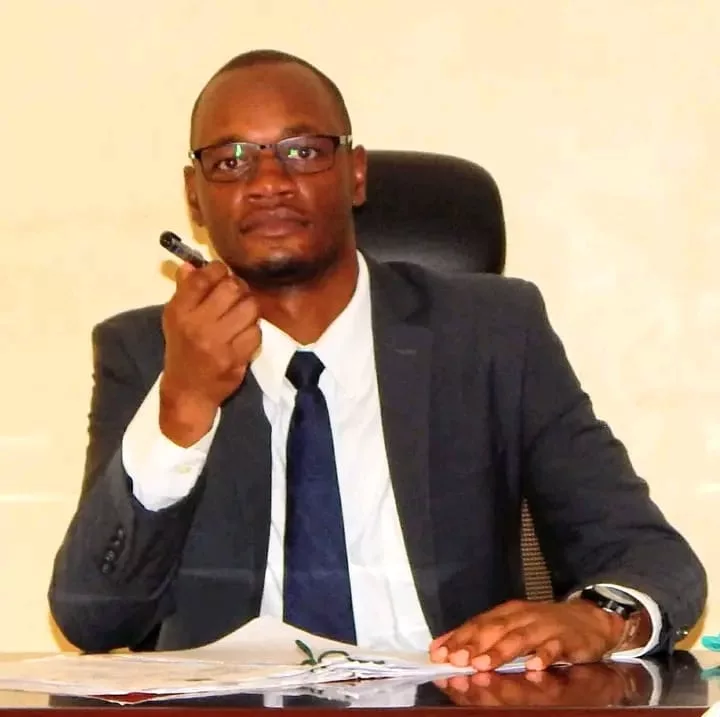
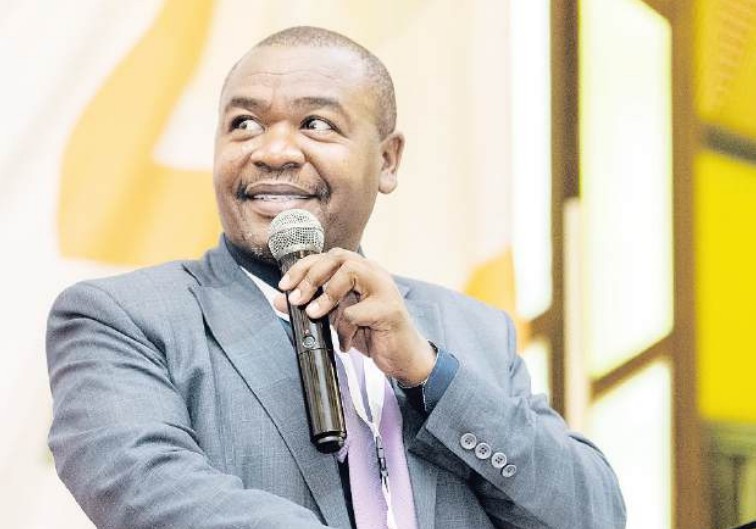
The Star spoke to the KDSP II programme Coordinator, Dr Samuel Nyaga, on the initiative, its success and what Kenyans should expect amid counties coming under sharp scrutiny over mismanagement of funds, retirees’ pension access dilemma, the issue of ghost workers and poor development track record by some counties.
Give us a background on the KDSP II programme?
The second Kenya Devolution Support program (KDSP II) is a four-year programme funded by the government of Kenya and the World Bank. It is designed to build on the achievements realised under the first phase of the Kenya Devolution Support Program (KDSP I), implemented between 2016-2021. KDSP II aims to strengthen counties’ performance in financing, management, coordination, and accountability for resources.
The reforms under the programme are implemented by the 47 county governments, supported by 19 Ministries, Departments and Agencies (MDAs). It has two financing instruments, which include the Programme for Results (PforR) and the Investment Programme Financing (IPF).
What impact was realised through KDSP I?
The first phase of KDSP greatly enhanced the capacity of counties to establish institutions and systems to manage finances, human resources, planning, monitoring, and evaluation. Through the programme, countries developed infrastructure, established investments and provided modern services never seen previously,y especially in marginalised regions and communities.
Out of 171 sub-projects supported by KDSP I, 44 per cent were in health, 19 per cent in water, nine per cent in trade, including rural markets, six per cent in agriculture, four per cent in education, and six per cent in rural roads. About 2.5 million people benefited from improved services.
Going back to KDSP II, how is the programme implemented?
The programme activities are coordinated by the State Department for Devolution. It brings together 19 MDAs and 47 county governments. The MDAs offer technical support to counties for the achievement of respective reform initiatives under the programme.
What are the key reforms being implemented under KDSP II?
KDSP II supports reforms under three key result areas. The first result area addresses issues in sustainable financing and expenditure management in counties. The second result area deals with reforms in Intergovernmental coordination, institutional performance and human resource management. The third result area focuses on oversight, participation and accountability.
You spoke about conditional grants to counties. Tell us more about this?
There are two grants under the programme, namely, Institutional Strengthening Grants (Level 1) and Service Delivery and Investment grant (level 2). Level 1 grants aim at incentivising and supporting counties to undertake core institutional reforms and finance institutional and capacity-building activities that will strengthen their ability to access level II grants.
Level II grants provide financing for investments in county infrastructure and service delivery to incentivise enhanced county performance. These grants will be allocated based on the performance of each county in meeting performance conditions and measures.
There have been concerns over ghost workers both at the national and county governments. How will KDSP II reforms address these?
The State Department for Devolution, in collaboration with the State Department for Public Service, has developed guidelines on staff establishment, organisational structures, and HR and skills audit.
These guidelines will assist counties to determine the number of staff in each cadre and how to effectively conduct their HR and skills audit. In addition, the Human Resource Information System -Kenya (HRIS-KE) has also been developed to assist in integrating the human resource records and payroll. With the unified payroll, the system will completely root out cases of ghost workers.
It is important to note that through the support of the KDSP II program, the country now has one unified payroll system. This was realised in December 2024 following a successful transition from the integrated payroll and personnel database (IPPD) to the new human resource information system.
What about pension, public sector staff have faced numerous challenges accessing their pensions. What should we expect from the reforms?
Technology is the intervention that has been adopted to cure the operational problems in processing retirees’ pensions. Under the Human Resource Information System -Kenya (HRIS-KE), a pension module is being developed.
As you are aware, public-sector retirees are required to submit physical copies of crucial documents such as pay-slips, employment or appointment letters, etc., for pension processing, which poses a challenge to many due to the inability to trace files for the retrieval of the required documents.
Under the pension module, all documents will be uploaded on the system, ensuring seamless processing of pensions. We believe this reform will streamline administrative procedures for processing and disbursement of retirement benefits.
Public participation is an important element in governance under the new constitution. How is this being entrenched by the programme?
KDSP 2 now seeks to strengthen and entrench public participation as a practice within the counties through the establishment of functional Project Management Committees complete with synchronised structures, guidelines, champions and a citizen-facing public investment management dashboard.
The PIM dashboards will be designed to be real-time and interactive, providing an opportunity for wananchi to interrogate a project of choice right from inception (development and inclusion in County Integrated Development Plans (CIDP) to annual plans), implementation and monitor progress of project milestones to completion.
How will the programme address the performance of the workforce in counties?
Counties will be incentivised to undertake monitoring of performance contracts and cascading of the performance contracts to the lowest level. The State Department for Performance and Delivery Management has developed guidelines on the integrated performance management for county governments. The performance management brings about rewards and sanctions to employees, hence enhancing performance.
What do you tell those who are not certain about the sustainability of these reforms? There will be regular monitoring and evaluation of reform outcomes during the life of the programme and even after the programme has ended.
We have witnessed cases of friction between the national and county governments. How can they be addressed?
The State Department for Devolution is developing a framework on the performance of concurrent functions. This framework will assign responsibilities between the National and County Governments to prevent functional overlaps. It will also provide a dispute resolution mechanism to address jurisdictional conflicts.
Counties have blamed the delay in exchequer requests for the mounting pending bills. Do you have a solution?
Yes. Under the programme, the National Treasury, the Office of the Controller of Budget and the Central Bank are working to automate the exchequer process. This is going to reduce the number of days taken to process an exchequer requisition once submitted by the counties.