Kenya's continued borrowing, piling pending bills and wastage of public resources amid high taxation has come under sharp criticism, with experts warning of “dire consequences” going into the next financial year.
This comes as the country’s proposed budget for 2025-26 starting July 1, to June 30, 2026 is set to hit a historic high of Sh4.3 trillion, up from Sh3.9 trillion in the current financial year, with recurrent expenditure taking the lion’s share of Sh3.2 trillion.
High taxation and delay in payment of pending bills worth Sh706 billion to suppliers are also expected to hurt economic growth and hit revenue collections, experts said during the unveiling of the Institute of Public Finance (IPF) shadow budget report in Nairobi on Tuesday.
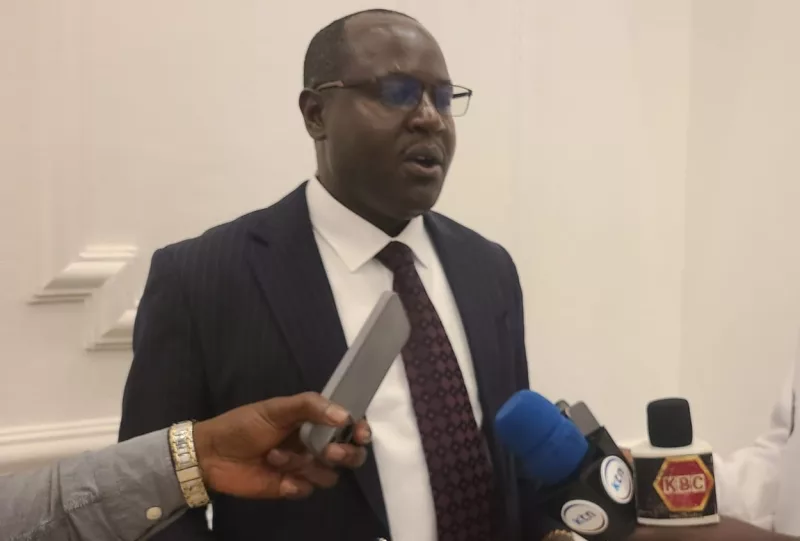
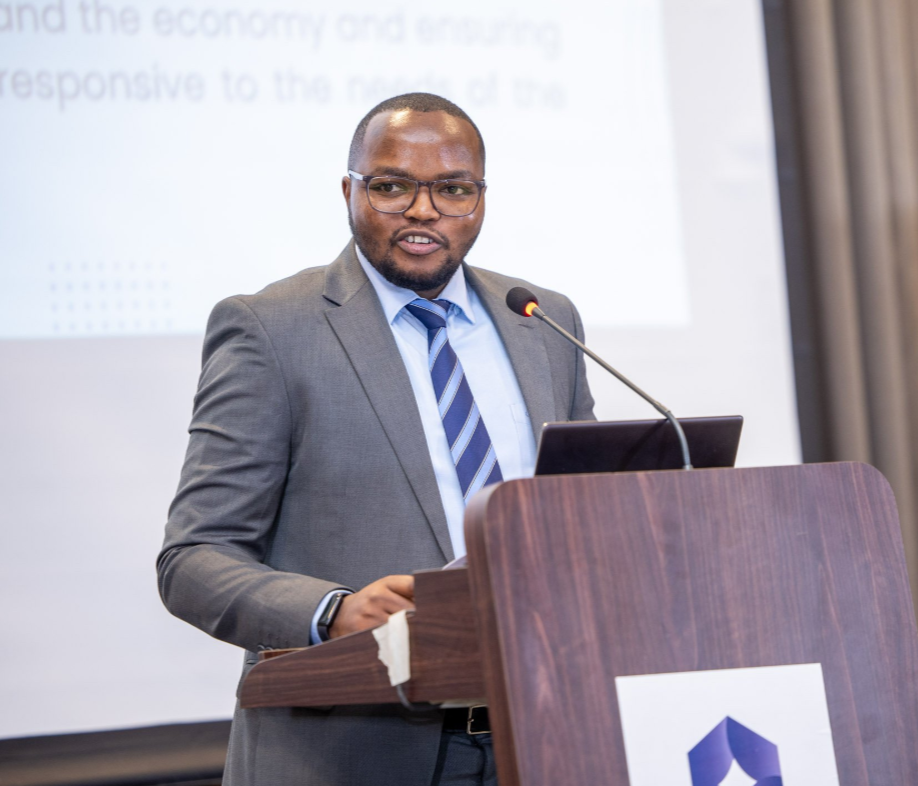
“Strengthening alignment between resource allocation and sector performance, while addressing these gaps, is critical as the government navigates a tight fiscal environment and seeks to deliver on its socio-economic transformation agenda,” said PF Country Lead Daniel Ndirangu
The high spending plans comes on the back of continued misses on revenue targets which have forced the government to accumulate more debt, which stood at Sh11 trillion as of December.
With this, financial experts are concerned that the country could be headed into a fiscal cliff mainly on the imbalance in revenues compared to its debt obligations.
In the 2025-26 financial year, the country is projected to spend approximately Sh1.9 trillion on servicing its public debt, including both principal repayments and interest payments.
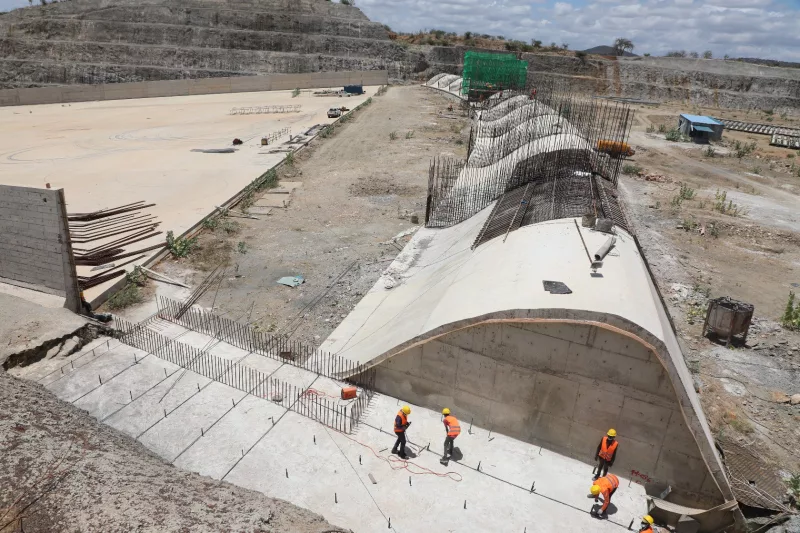
The IPF report indicated there still exists several systemic gaps, including low development budget absorption and continued overlaps and duplications in government functions across multiple sectors. Such inefficiencies undermine service delivery and slow progress on key national priorities.
Without addressing the challenges beleaguering the private sector, including tight monetary policies and delayed payments to government suppliers, the potential for economic and revenue growth could be compromised, IPF and scholars said.
“The government must cut on unnecessary spending and put money in the right sectors,” said Stephen Njaramba, senior lecturer in economics at Kenyatta University.
The high debt obligation comes against a projected total revenue (including appropriation-in-aid) of Sh3.4 trillion, up from the Sh3.1 trillion, with ordinary revenue collected by KRA expected to reach Sh2.8 trillion up from Sh2.6 trillion–2025 Budget Policy Statement.
Consequently, debt servicing costs are expected to increase further to Sh2.4 trillion by June 2027.
The budget deficit for 2025-26 is projected at Sh831 billion which can only be bridged through borrowing. Debt servicing expenses consume over 60 per cent of tax revenue.
The economy is projected to grow by 5.3 per cent in 2025, slightly above sub-Saharan Africa’s average of 4.2 per cent. However, macroeconomic risks remain.
Health economist John Nyangi called for proper funding in key sectors such as health which will ease out of pocket spending by Kenyans, which has hit households hard.
Former National Assembly Budget and Appropriations Committee chairman and Kiharu MP Ndindi Nyoro, who still sits in the committee, warned the country’s debt could get out of hand.
“You cannot borrow to repay loans. It will catch up with us. We have a lot to do as a country on debt management,” Nyoro said.
Kenya recently floated an 11-year $1.5 billion (Sh194.5 billion) eurobond to finance the early retirement of a $900 million (Sh116.7 billion note maturing in 2027.
A total of $593.3 million (Sh76.9 billion) from the proceeds of this issuance was used to partially buy back the $900 million note, while the balance was earmarked for the repayment of syndicated commercial debts, according to National Treasury.
The government has been urged to develop sound tax policies that will support growth of the private sector, which will translate to higher revenues, while cutting on wastage which continue to burden taxpayers.
“The persistent duplication of functions across national and devolved governments, and within national government entities, leads to wasteful spending and inefficiency,” Ndirangu said.
The budget continues to include allocations for functions that ought to be implemented by counties thus leading to inefficient use of public resources.
“These expenditures should either be justified or implemented at their appropriate level to avoid the duplication of functions and require rationalization,” he said.