
In the rapidly evolving global digital landscape, Kenya has emerged as one of Africa’s most promising frontiers for technology-driven transformation. From the bold steps taken in the digitalisation of public services to the strategic exploration of artificial intelligence, the country’s vision under the Kenya Digital Master Plan 2022-32 is nothing short of ambitious.
This forward-looking framework positions technology as a cornerstone of national development, with AI poised to be a key driver of change.
The Digital Master Plan outlines a multi-pronged strategy to revolutionise how government and society interact with digital tools.
It focuses on five pillars: digital infrastructure, digital services and data management, digital skills, digital entrepreneurship and effective policy and legal frameworks.
These pillars are not theoretical aspirations — they are a reflection of Kenya’s concrete efforts to build a society that is digitally empowered, economically resilient and globally competitive.
Crucially, the government is not only digitalising for convenience — it is digitalising for equity. The agenda seeks to close regional disparities in access to services and opportunities by ensuring that even the most remote parts of the country are connected and included in the digital revolution.
From e-Citizen services to smart agriculture and health records, the public sector is becoming a model of efficiency, responsiveness, and transparency.
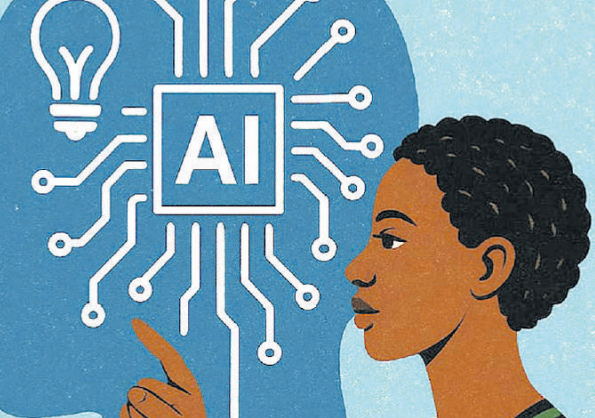
AI stands at the centre of this transformation. Globally, AI is reshaping industries, automating processes, and unlocking new frontiers in healthcare, finance, education and governance. Kenya, recognising the immense potential of AI, is embracing its integration not as a passive recipient but as an active innovator.
The country’s AI Taskforce, established to explore responsible AI deployment, underscores a commitment to ensure that AI development aligns with national values, protects rights, and promotes social good.
Yet, as AI takes root, ethical considerations become increasingly important. With great power comes greater responsibility.
AI systems can reinforce bias, invade privacy and displace livelihoods if not properly regulated. This is why ethical frameworks and governance structures must evolve in tandem with technological capability.
Kenya’s professionals, especially those in ICT and audit governance, have a critical role in ensuring that innovation remains human-centred and guided by integrity.
Speaking during the official opening of the 2025 ISACA Kenya Annual Conference at Pride Inn in Mombasa, the Chief of Staff and Head of Public Service Felix Koskei underlined this very point.
Koskei challenged ICT professionals to uphold ethical standards, collaborate with government and help shape policies that anticipate technological shifts while safeguarding public trust. “Ethics will determine the direction Kenya takes in its digitalisation journey and in harnessing the full potential of emerging technologies like AI,” he added.
The forum themed “Anticipating and Leveraging Disruptive Innovations” brought together IT professionals in governance, cybersecurity, audit and assurance, whose collective expertise is essential in supporting Kenya’s digital transformation.
It served as a platform not only for knowledge sharing but also for galvanising support around shared goals — enhancing accountability, building robust systems of digital trust, and co-creating a resilient public service ecosystem.
Kenya’s digitalisation agenda is already yielding visible results. Services that once required queues and physical paperwork can now be accessed online in minutes.
The Huduma Kenya initiative, for example, is digitalising thousands of government records and integrating service delivery platforms.
In education, the Digital Literacy Programme has seen hundreds of thousands of devices deployed to learners and teachers across the country. In agriculture, data and digital tools are helping farmers access real-time market information, weather forecasts, and extension services.
Meanwhile, in healthcare, digitalisation has enabled remote consultations, patient record management and improved drug supply chains. With AI applications in diagnostics, personalised medicine and disease surveillance are gaining traction globally; Kenya stands to benefit from partnerships that bring cutting-edge solutions to local problems.
For these gains to be sustained, however, Kenya must invest in the future workforce. Digital skills development is critical.
Programmes like Ajira Digital and Jitume are equipping youth with the capabilities to compete in global gig markets and thrive in digitally enabled workplaces. Institutions of higher learning are being encouraged to embed AI, data science and cybersecurity into curricula to build a strong pipeline of local talent.
Public-private collaboration will be key. The government cannot deliver the digital promise alone.
Industry players, academia, civil society and development partners must work in concert to ensure that innovation is inclusive, regulated, and tailored to national needs.
A strong regulatory environment, anchored in data protection, ethical AI, and cyber resilience, will also be vital to attracting investment and maintaining citizen confidence.