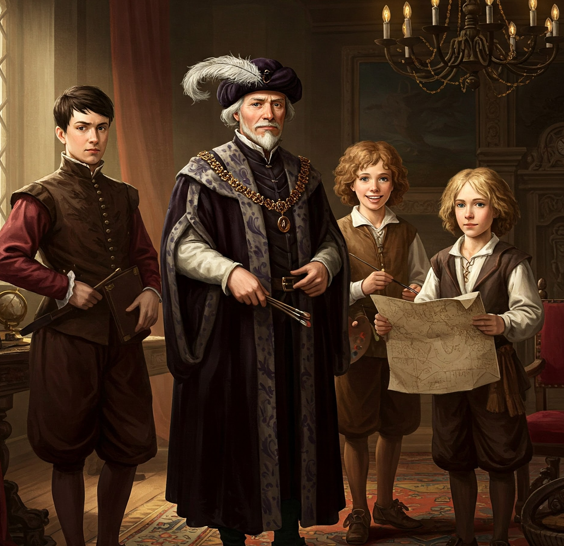
A story is told of a rich old merchant who had three sons with differing personality traits and ambitions.
The first son was an obedient man who always aimed to please his father by whatever means, be it flattery or by never being contradictory.
Despite displaying the wealth in the family by his lifestyle, he did not multiply the riches. A second son was a shrewd schemer, able to take advantage of circumstances for primarily personal gain.
His disruptive nature was evident in his ability to sow discord and suspicion between his father and brothers, connive with the staff to misrepresent accounts and he was adept at outwitting competitors of the family enterprise.
The third son was an intelligent, methodical, honest and focused worker with little regard for personal comfort. His work ethic made him less personable and likeable by most, although he increased the family’s fortunes.
While contemplating this story, I drew a direct parallel to three strategies aspirants in the upcoming general election may employ to secure wins, especially for the gubernatorial posts, the county executive positions critical for citizens’ livelihoods.
The first son is very representative of a strategy based on patronage. In this case, a candidate’s election bid is fully dependent on endorsement and support of a charismatic party leader with established irrefutable credentials.
Such a seal of approval would frame the gubernatorial election win as a necessary part of a bigger, more important objective, hence, the voting public would be urged to overlook any grave shortcomings inherent in the candidate.
This strategy is alleged to have been a significant factor in the election of Governor Cyprian Awiti to a second term in Homa Bay county with 52 per cent of the votes.
The second unscrupulous son, who was quick to see opportunity and take advantage to further his ambitions to me, is synonymous with a candidate employing a liberation strategy.
In this case, a prospective candidate schemes to rally his or her community or demographic by identifying and vilifying an opponent or the government in power.
By graphically defining ills and embellishing wrongs, the prospective candidate-turned-liberator strives to be the logical solution to the problems.
In Meru county, Kawira Mwangaza’s strategy is alleged to have effectively targeted an elitist demographic through her popular vernacular television station and random acts of generosity to garner 41 per cent of the votes to become governor.
The third hardworking son, who was visibly productive, is representative of a Grassroots Networking and Empowerment strategy.
In this case, there is grassroots participation in the evidence-based crafting of solutions to identified local needs and implementing solutions according to an agreed hierarchy. Success hinges on voters’ belief in the candidate’s ability to deliver a better livelihood for them.
In Makueni county, the networks established by Kivutha Kibwana got him 87 per cent of the votes and a second term.
As in previous elections, the same strategies shall be evident in the next. There is already posturing as foremost loyalists by prospective candidates in areas perceived as ODM spheres of influence in attempts to attain patronage. In parts of central Kenya, there seems to be an adoption of the liberation strategy, with voices competing to be the loudest critics of the government’s real or imaginary failings.
Lastly, there are those working in counties, creating grassroots networks for consolidating power and influence to secure victory, this may well be the trick up the Gen Z candidates’ sleeves or UDA with its all-encompassing pyramidal party election model.
In the story, the rich merchant decided to put his sons’ characters to the test by feigning a terminal illness and diminished wealth.
His first son drew away as there was nothing more to gain from his father, while the second tried to secure for himself whatever remnants of wealth he could find to attain a comfortable future for himself. The third son, distressed by this tragedy, set out to rebuild fortunes from scratch, not willing to have his previous efforts come to naught.
If you were the rich merchant in the story, to which son would you entrust your legacy?