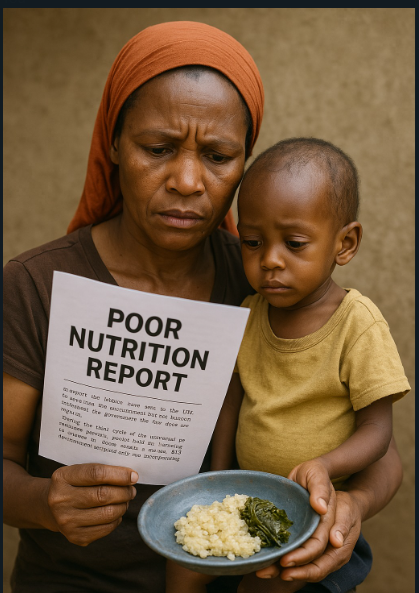
 AI GENERATED PHOTO
Human rights groups have raised a red flag over poor nutrition that has exposed many to poor health outcomes.
In a report the lobbies have sent to the UN, they say besides food inadequacy, the government has not done anything to encourage proper nutrition.
The shadow report is prepared by the Right to Food Coalition Kenya. Founded in 2021, the organisation has 50 civil society groups dedicated to the pursuit of and realisation of the right to food.
During the third cycle of the universal periodic review held on January 23, 2020, Kenya received 319 recommendations – six focused on the right to food.
The government accepted only two, incorporating them into its implementation plan. The report says the most affected are children under the age of five, pregnant and lactating women, elderly people and those living with disability.
“There are increasing levels of undernutrition in the population and the most affected are children under five, pregnant and lactating mothers, school children, elderly, persons with disabilities and urban and rural poor people,” they said.
These groups lack access to sufficient amounts of healthy food as indicated in the national food-based dietary guidelines.
The guidelines say children aged between six and 23 months should have two to five meals per day from at least four food groups.
Pregnant mothers should have four meals from four diverse sources and at least six meals from at least four food sources for lactating mothers, the report says.
“Despite the existence of the National Agri-Nutrition Strategy (2020-2025), dietary diversity is missing due to a focus on priority value chains that include maize, potatoes, bananas, pulses and meat products, with little promotion of vegetables and indigenous crops such as millets, sorghum and African leafy vegetables,” the activists say.
There is no guidance or enforcement in the procurement of diverse diets for public institutions such as all levels of schools, hospitals and prisons to promote healthy diets, the report says.
The lobbies say food production in Kenya faces threats from climate change given its reliance on rain-fed farming, external shocks and also sustained budget cuts by the government.
The high cost of inputs and lack of agricultural extension services for smallholders lead to sub-optimal production in the crops and livestock sectors, unstable food supply, and high cost of food, it says.
Further, they lead to poor livelihoods for smallholder/peasant farmers and reduced economic activities in rural areas.
“With only 2.3 per cent of public agriculture expenditure as a share of total public expenditure Kenya is failing to achieve the Malabo target of investing 10 per cent of the national budget in agriculture,” the report says.
The activists also took issues with high levels of pesticide residues and poor sanitation.
“Gaps in regulation, surveillance and enforcement in the use of agrochemicals in food production and marketing compromise the food safety.”