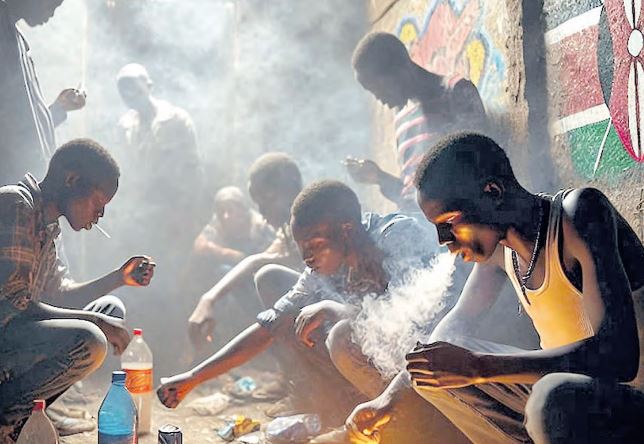
 Youth abuse drugs /AI
Some years back, we had the privilege of conducting training sessions on drug abuse and life skills in prisons across Kenya and in secondary and primary schools.
Working through a Catholic organisation with a structured and integrated programme to offer holistic guidance to young people, our engagement provided profound insight into the realities of substance abuse and crime.
Some of those we trained were already trapped in the cycle of addiction, while others stood at the precipice, vulnerable to the influences surrounding them.
These experiences revealed much and deepened our understanding of the crisis we face as a society. ey revealed one fundamental truth.
Every young person must make a deliberate and personal choice to stay away from drugs, and for those already entangled, the journey to recovery begins with the will to seek help. While support systems are essential, the most critical step must come from within.
Alcohol remains the most abused substance among Kenyan youth, as consistently reported by the National Authority for the Campaign Against Alcohol and Drug Abuse.
The prevalence of illicit brew, often laced with harmful chemicals, has led to countless deaths and irreversible health complications. In urban areas, counterfeit spirits sold at low prices have targeted young, unemployed individuals seeking an escape.
Beyond alcohol, the abuse of pharmaceutical drugs has surged, with painkillers such as Tramadol, Rohypnol and codeine-based syrups being widely misused.
Reports indicate these substances are easily accessed through unregulated pharmacies and black-market dealers, often disguised as over-the-counter medication.
The rising influence of social media and coded online transactions have further facilitated the distribution of these drugs, creating a complex challenge that requires urgent intervention.
While economic hardship and unemployment are significant drivers of substance abuse, these issues and taken steps to address them are clearly known.
Programmes such as the Hustler Fund are providing thousands of young people with skills and employment opportunities, reducing dependency on destructive habits.
Overseas job opportunities, particularly through bilateral agreements with nations such as Saudi Arabia and Germany, are also providing viable alternatives.
These initiatives, though impactful, must be complemented by strong individual will. The truth is that no policy, no amount of policing, and no number of awareness campaigns and opportunities can be as effective as personal determination.
Every young person must decide whether to be different, to reject peer pressure, to refuse easy escapes, and to actively seek a meaningful path.
From an observers’ perspective, the government appreciates the gravity of substance abuse as relevant authorities intensify efforts to curb its spread. Law enforcement agencies have dismantled illicit brewing networks, arrested traffickers of hard drugs, and seized significant quantities of narcotics.
Nacada continues to run national awareness campaigns targeting students, communities, and institutions. The expansion of rehabilitation centres, supported by both government and private organisations, has made treatment more accessible to those willing to recover.
Additionally, mental health services are being integrated into primary healthcare, acknowledging that drug abuse is often symptomatic of deeper psychological struggles.
Kenya has stringent laws on drug abuse, with severe penalties for trafficking, possession, and consumption.
The Narcotic Drugs and Psychotropic Substances (Control) Act, 1994, imposes heavy fines and life imprisonment for large-scale drug trafficking, while agencies like Nacada and the Anti-Narcotics Unit curb drug-related crimes.
However, enforcement remains a challenge due to corruption and gaps in regulation, allowing drug networks to thrive.
Despite ongoing government crackdowns on illicit brews, pharmaceutical drug abuse, and trafficking, the availability of narcotics in informal markets remains a growing concern.
The fight against drugs, therefore, requires not just tough laws but also integrity in enforcement and stronger rehabilitation programmes, and economic opportunities that deter vulnerable youth from falling into substance abuse.
However, the fight against substance abuse cannot be left solely to government agencies. Families, schools, and communities must step up.
Parents must take an active role in monitoring their children’s activities, instilling values that promote self-discipline and resilience. Schools should go beyond curriculum-based education to offer mentorship and practical guidance on making sound life choices. Religious institutions and community leaders must be vocal in shaping a society that discourages drug abuse.
Furthermore, the entertainment industry and digital platforms should be held accountable for content that glamorises substance use, luring young minds towards dangerous paths. is is a critical accelerator of recruitment of youths into drug use.
Strict regulation of pharmaceutical drugs and enforcement of anti-narcotics laws must also be prioritised.
The illegal sale of prescription drugs must attract heavy penalties, and rogue pharmacies that bypass regulations must be shut down. Border controls should be tightened to prevent the influx of illegal substances, while law enforcement agencies must enhance digital surveillance to curb online drug transactions.
At the same time, we must acknowledge that a young person’s environment significantly influences his and her choices. While personal responsibility is paramount, societal support is equally crucial.
A community that offers positive role models, safe recreational spaces, and constructive opportunities for growth is less likely to breed substance abuse.
Families, educators, religious leaders, and policymakers must work together to create an ecosystem that nurtures ambition and discipline while discouraging self-destructive habits.
Employers and industries should also contribute by creating inclusive workplaces that provide young people with a sense of purpose and dignity at work.
When society takes collective responsibility, young people are empowered to make better choices, knowing they have a strong support system to lean on.
The future of Kenya depends on the choices made by its young population today.
The government, communities, and institutions can only do so much; the ultimate responsibility lies with the individual.
The decision to stay away from drugs or break free from addiction is a personal one, one that requires courage, discipline, and a clear vision for a better tomorrow.
Only with such resolve and a society that actively fosters positive development can we secure a generation free from the grip of substance abuse, ensuring a prosperous and thriving nation for years to come.