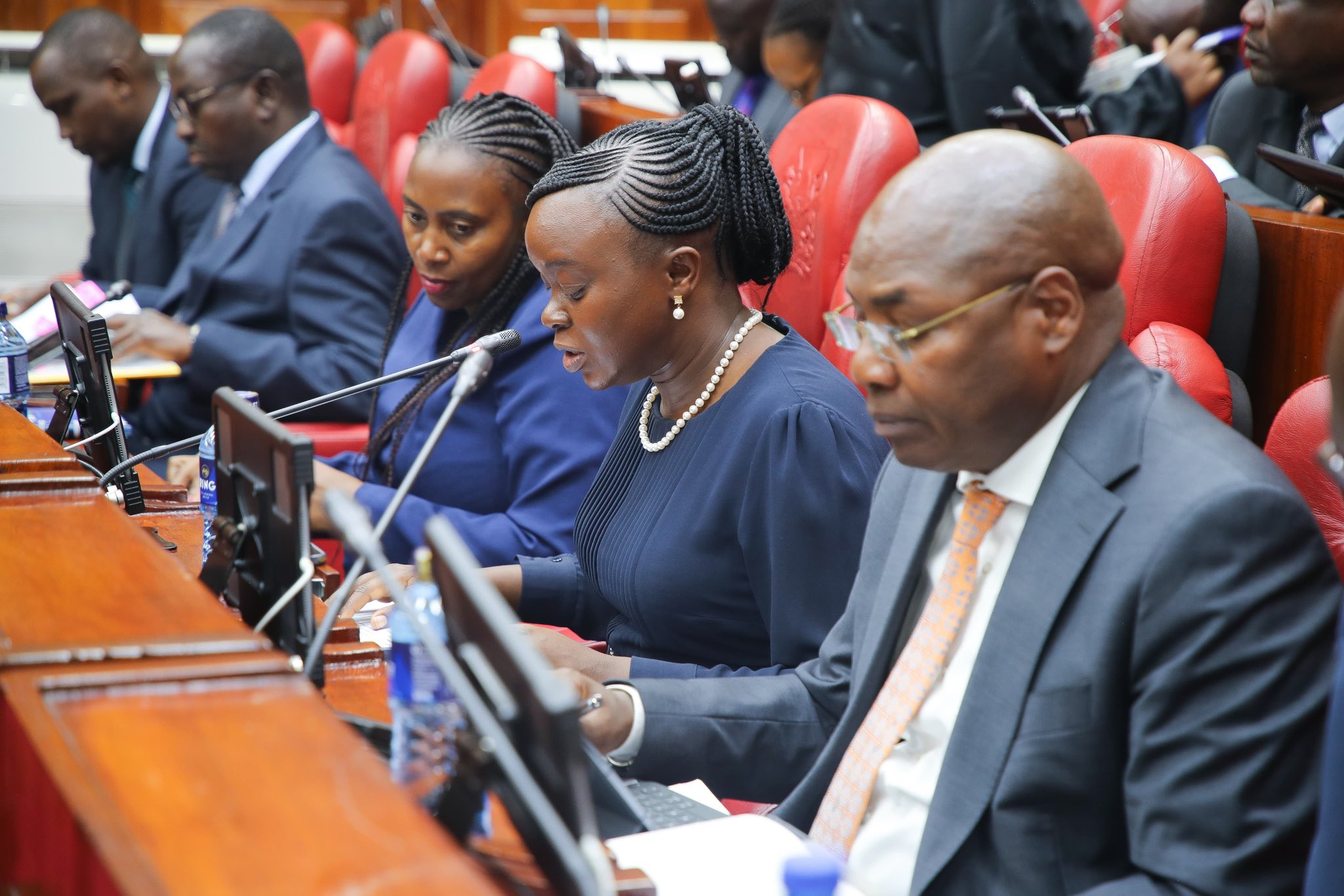
Parliament has raised concerns about the sustainability of the new health programme, even as senators pressed the agency’s ‘absentee’ CEO and senior ministry officials for answers.
In a report tabled in the Senate, lawmakers have questioned how the Kenya Kwanza administration plans to sustain the ‘expensive’ programme amid a massive financing hole.
The development comes after it emerged that there is a huge gap between those registered with the Social Health Authority to benefit from the programme vis-a-vis the contributors.
“Whereas 18 million people have registered with the Social Health Authority, only four million people are currently contributing to SHIF (Social Health Insurance Fund),” the Senate Finance and Budget Committee said in its report on the Budget Policy Statement.
“This will affect the funding trend for the fund and may occasion shortfalls in contributions,” the panel added, essentially doubting the sustainability of the programme.
There are concerns that the fund relies heavily on contributions from those in white-collar jobs who have protested the heavy burden on their payslips.
However, enforcing deductions from the informal sector has become a major headache for the state.
Initially, the law was to bar non-contributors from accessing government services as a way of enforcing compliance.
This was however challenged in court and order issued restraining the government from using the model.
This has left room for non-salaried Kenyans to dodge contributions, with MPs told that some only pay when they are sick and discontinue after treatment.
“This fund won’t become viable as the contributions are like a drop in the ocean. In the end, it will kill this fund. We need to look for ways to ensure that Kenyans make contributions to the fund. Is that sustainable? It’s a disaster waiting to happen,” Endebess MP Robert Pukose said last week.
The Senate report says that the government has not provided an allocation for emergency, chronic and critical illness – a key component of the programme – a move that would affect the implementation of universal health coverage.
“Additionally, the Social Health Authority continues to face challenges relating to the rollout and management of SHIF, such as the processing of claims primarily associated with system failures and pending bills,” the committee said.
According to the Budget Policy Statement, SHA anticipates raising Sh78.9 billion from contributions to the SHIF.
The concerns came barely two weeks after the Kenya Association of Private Hospitals chairperson Erick Musau warned that SHA could collapse in a year due to severe underfunding.
“We do not feel that sufficient safeguards have been put up to ensure that people continuously contribute to this kitty … if this trend goes on like this, we do not see this fund surviving beyond 12 months,” Musau said when he appeared before the National Assembly.
The concern comes even as the Health Cabinet Secretary Deborah Barasa, Medical Services Principal Secretary Harry Kimutai, his Public Health counterpart Mary Muthoni and SHA chief executive Robert Ingasira once again faced the wrath of the lawmakers over the controversial programme.
Appearing before the Senate Health Committee yesterday, the lawmakers pressed the officials to explain the huge gap between those registered, the actual contributors and the efficiency of the programme.
“You have registered 20 million but right now only four million people are able to pay the contributions. Is that right?” Kisii Senator Richard Onyonka said.
“If today I am in the Senate and I ask you a question, between NHIF (National Health Insurance Fund) and SHA which one is performing, who is performing? Would you give me a clear answer?” Ingasira told the panel, chaired by Uasin Gishu Senator Jackson Mandago, that about 20.5 million people have so far registered with the SHA.
According to the CEO, out of those registered, about five million are actual contributors.
They comprise 3.5 million formal employees who remit monthly deductions to the authority and 1.3 million in the informal sector.
“It is not true that the entire 20.5 million people are required to pay. Out of those, we have dependants and indigents (those unable to pay) who are paid for by the government,” he said.
The CEO said the authority targets to register all Kenyans, with the next phase of those targeted being school-going children.
Ingasira came under fire as senators accused him of being “absent and silent” as Kenyans seek answers about the programme.
“I am a senator and I don’t understand what you are doing. How do you expect a villager to understand what you are doing? And you are sitting there saying you have been on TV, you have never been on TV,” Onyonka said.
“I also want to confirm that the CEO SHA must be a very mysterious person because I have not seen him. I have not heard him say anything. Everything has been left to the CS, and I think there are some things that the CEO is supposed to clarify to the public,” Kilifi Senator Stewart Madzayo said.
CS Barasa and PS Kimutai found themselves under fire after it emerged that the ministry placed SHA under its ambit as a semi-autonomous government agency.
“Are you (SHA CEO) the one implementing SHA or is it the ministry doing it?” Mandago said. Narok Senator Ledama Olekina said, “I am not seeing where it is saying that it (SHA) should be domiciled under the Department of Medical Services. It is supposed to be an authority on its own.”
Kimutai, however, explained that the authority is merely performing the delegated function of the state department.
“The creation of SHA under the SHIF Act performs the functions that are delegated which are the functions of the State Department for Medical Services. But as an authority, they will be handling those functions as a state agency,” he said.