The government is exploring new ways of taxing small businesses to ease the burden on salaried individuals and corporates, key among them a plan that will see small businesses pay Sh1.5 for every Sh100 at the point of transaction.
Early this month, the revenue agency automated registration to the electric tax invoice management system, ensuring that invoices are captured in real-time for easier follow-up on collections.
Apart from this, Kenya Revenue Authority is further exploring ways to ensure taxpayers promptly remit taxes to limit defaults that have seen businesses lag on their tax obligations.
It notes that once taxes pile, the majority of businesses go rogue, passing the revenue collection burden to already overtaxed minorities.
Employees’ pay slips continue to shrink amid stagnated or reduced gross earnings with large businesses forced to scale down, reduce productivity, or close altogether as the tax burden mounts.
Some 2,000 companies folded over the last financial year due to high operating costs and uncompetitive taxes, data from the Business Registration Service shows.
KRA is also planning to step up scrutiny by working with financial service providers to get hold of landlords in the Micro Small and Medium brackets who avoid remitting 7.5 per cent of income as stipulated in the law.
Although Section 12 (C) of the Income Tax law commands a resident individual or business whose gross annual income is more than Sh1 million and not more than Sh25 million to pay a turnover tax of 1.5 per cent, the majority are not complying.
Early last month, the Kenya Revenue Authority unveiled a new department, Micro and Small Tax payers, a strategic department designed to simplify tax compliance, provide customised support, and stimulate economic growth among small businesses—a critical engine of Kenya’s economy.
Although some small traders, several tax experts and business leaders have cautiously welcomed the plan by the government to widen the tax bracket, hoping that the strategy will cut dependency on debt, others want the government to start by addressing corruption, a key revenue leak that is costing the country close to Sh700 billion every year.
They do not trust that the government will safeguard revenue collect ed and direct it into productive ventures, growing economic activities in the country.
Daniel Mutua who deals in motor spare parts in Machakos, Wote, Thika and Nairobi says he has no issue paying the turnover tax but wonders why the government should keep collecting when billions are embezzled in corruption schemes.
“While I must pay taxes, I get demotivated when most of it is looted, hindering service delivery. Hospitals are in bad shape, poor infrastructure in public schools and counties are doing little to collect garbage at my shops,’’ Mutua said.
Charles Kinyua, the chairperson of Kamukunji Business Community, echoes his sentiments.
He laments that while the majority of his members are targeted in the planned tax collection plan, their businesses are gaining little.
“We don’t have any problem paying taxes. We have a problem when our taxes are not working for us. The government is already collecting far too much from us with nothing to show for it. That is what leads to resistance,’’ Kinyua told the Star.
Others like Weldon Mugambi who runs a printing rm in downtown Nairobi are opposed to the turnover tax, saying they are already paying too much.
“As a registered business, I pay Value Added Tax, religiously remit Pay As You Earn, double Housing Fund for my employees, increased NSSF and SHIF. I also pay thousands in permit fees. It is immoral for the government to cripple our businesses to feed a corrupt few,’’ Mugambi said.
South African-based tax expert Elijah Kiliru agrees that the government must step up the fight against corruption if it wishes to court small businesses into the tax bracket.
“President William Ruto’s government must tread carefully on tax matters, especially when dealing with small businesses. While setting up a speci c department to address their tax needs is commendable, they will voluntarily pay if they see revenue collection working for them,’’ Kiliru said in a virtual interview.
“Tax is an emotive issue. The unfortunate bloody Gen Z protests in June last year were sparked by proposed taxes. The government must demonstrate that it is keen on sealing corruption loopholes before demanding more from already overtaxed population.”
He adds that KRA must loosen a little bit when dealing with MSMEs.
“It must simplify payments and adopt a friendly tone when widening the tax bracket. Those businesses have irregular earnings, KRA must factor that too.”
Serrari Financial analyst, Montel Kamau, says the establishment of the MST Department comes at a pivotal time.
By tailoring its services to the needs of small businesses, KRA aims not only to enhance voluntary tax compliance but also to foster trust between the tax authority and the entrepreneurial community.
“The MST Department is envisioned as a one-stop solution that will empower MSMEs to navigate tax obligations more ef ciently, thereby unlocking their potential for growth and innovation,’’ Kamau said.
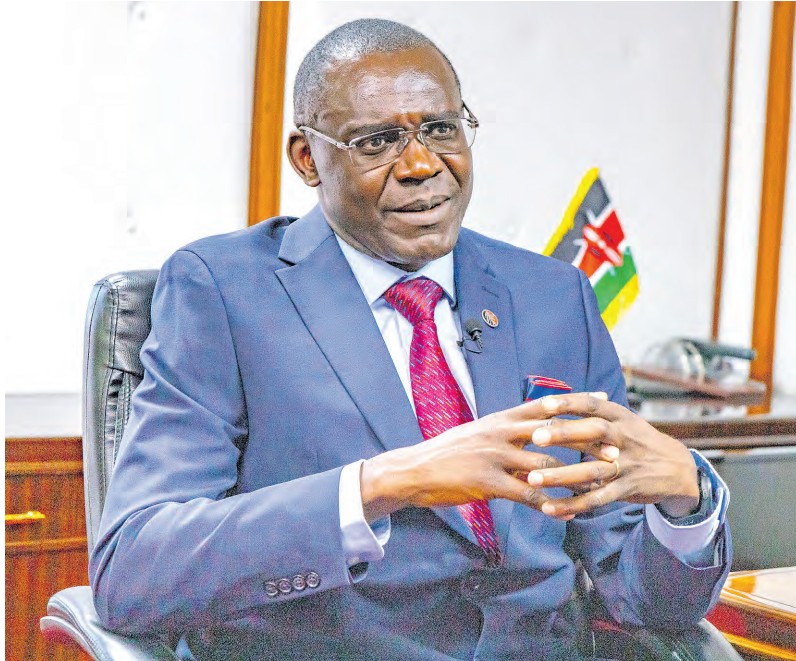
The revenue authority has tapped the services of George Obell as a commissioner for the new entity, a veteran tax expert with close to 30 years of experience to lay a foundation for a more friendly and mutual relationship between the taxman and small businesses who largely remain outside the tax bracket.
Obell told the Star in an exclusive interview that his team is expected to address unique challenges and barriers hindering small businesses from meeting their tax obligations.
“We have an ambitious roadmap that includes targeted tax education campaigns, digital compliance solutions, incentives for compliant businesses and sector-specific tax strategies.”
He says that apart from regular recruitment drives to bring more small businesses into the tax fold, his department targets to collect at least 25 per cent of the overall domestic revenue. In a period between July 1 and December 31, 2024, small enterprises paid at least Sh1.4 billion in turnover tax, an amount too low for over 21 million registered businesses.
According to Obell, a major barrier to compliance has been the lack of timely and accurate information.
“By launching digital platforms and maintaining active communication channels through social media and mobile networks, the MST Department will ensure MSMEs have immediate access to critical updates, policy changes and compliance deadlines.’’
He adds that this real-time information flow is expected to reduce instances of inadvertent non-compliance and enhance overall trust in the tax system.
Obell recognises that a one-size-fits-all approach does not work for the diverse MSME landscape.
According to him, the MST Department will offer sector-specific support services.
For instance, an agribusiness might bene t from guidance on seasonal tax adjustments and input tax credits, while a tech start-up may require advice on research and development incentives and capital allowances.
“By working closely with industry experts, the department is poised to deliver tailored solutions that address the nuances of each business sector.”
The work is cut for Obell who took over the new department on March 1.
The government depends on him to ensure that enough revenue is collected to ensure that, going forward, PAYE and Corporate Tax is reduced to give employees and big businesses a breathing space.
This is even as the state data shows that KRA missed half half year collection target of Sh163.5 billion, managing Sh1.07 trillion in six months to December against a target of Sh1.23 trillion.