

Details have emerged of the financial mess at the country’s public universities and national polytechnics that could affect the quality of education.
A new report reveals that the cash-strapped institutions owe suppliers and contractors Sh67.81 billion.
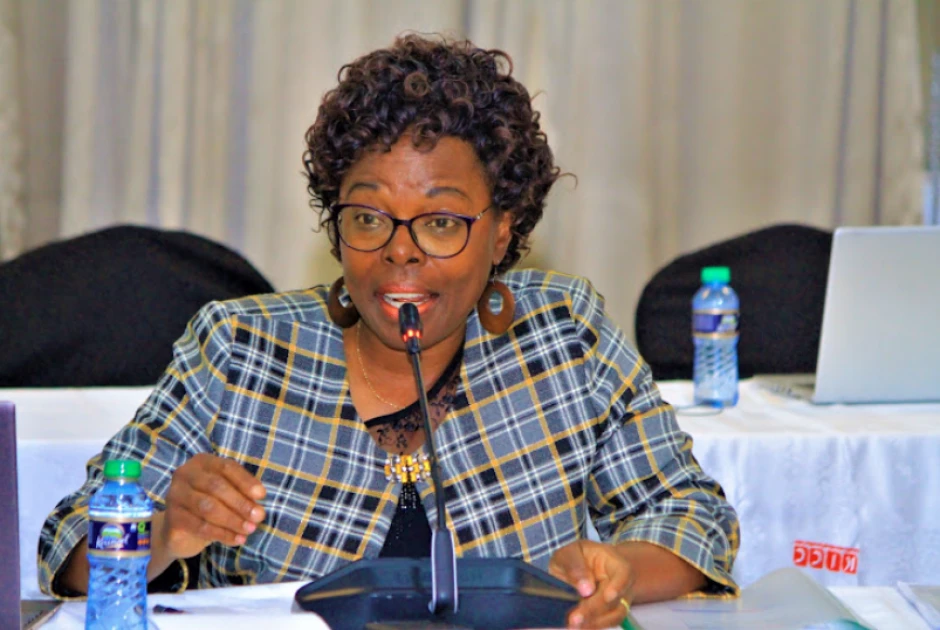
Controller of Budget Margaret Nyakang’o reports that at least 28 public universities and five national polytechnics were yet to settle their dues as of December 31, 2024.
The University of Nairobi, Kenyatta University and Jomo Kenyatta University of Agriculture and Technology accumulated the highest amounts.
Kenyatta University owed Sh12.38 billion, including to statutory bodies such as NSSF, KRA and pension schemes. This means the staff may not get clearance for certain services and jobs that require compliance.
A number of civil servants are also defaulting on their remittances to Saccos and lenders.
“The pending bills include payments due to contractors/projects, suppliers, unremitted statutory and other deductions, and pension arrears for Local Authorities Pension Trust,” the report states.
The University of Nairobi – the country’s oldest and most prestigious public institution of higher learning – on the other hand owed its suppliers and contractors Sh12.22 billion.
Technical University of Kenya and Jomo Kenyatta University of Science and Technology were yet to pay Sh9.26 billion and Sh9.13 billion respectively at the time of the review.
Moi University, which has been in the limelight in recent months following a lecturers’ strikes, has accumulated a Sh7.83 billion debt.
The university was closed for three months after teaching and non-teaching staff downed tools following months of nonpayment.
The government pledged to allocate Sh2.9 billion to breathe a new lease of life to the institution headquartered in Eldoret City.
“Some Sh300 million will go towards scholarships this October, in addition to Sh217 million disbursed in August,” National Assembly Education Committee chairman Julius Melly said during the panel’s visit to the university last November.
“Another Sh219.9 million will cover tuition, adding to the Sh127.2 million allocated in August, while Sh89 million will be allocated as capitation for current students, complementing the Sh269 million disbursed in August,” he added.
The huge debts have hampered operations in the affected universities. Currently, academic activities at the Technical University of Kenya are paralysed due to a lecturer’s strike at the institution.
The strike started on January 23. Meetings called to broker a deal between the lecturers and the university management are yet to materialise as members of the Universities and Academic Staff Union TUK chapter boycotted them.
Uasu officials argued that the university administration, backed by the Ministry of Education, had failed to address their core grievances, making negotiations futile.
At the heart of the strike is the university’s failure to remit more than Sh300 million in statutory loan deductions dating back to January, a situation that has left lecturers in financial jeopardy.
Masinde Muliro University of Science and Technology owes Sh1.25 billion, Tom Mboya University has yet to clear Sh832.21 million, Kisii University owes Sh1.04 billion, and Maasai Mara University has accumulated Sh805.09 million in debt. Nakuru-based Egerton University owes a mindboggling Sh7.69 billion.
A report by the Parliamentary Committee on Education released in July 2022 showed that many public universities could end up insolvent unless the government increased financial allocation to them.
“The committee has, however, not been able to fully intervene in tackling systemic challenges facing the higher education sector, especially public universities,” the report stated.
“Most of the public universities are in dire need of finances to sustain their operations and the envisaged university reforms being undertaken have been inordinately slow,” it added.
In the financial year 2019-20, the Auditor General declared 12 public universities technically insolvent. The situation seems not to have changed as Kibabii University owed Sh455.31 million at the time of the review while Meru University of Science and Technology has yet to pay Sh426.69 million.
Laikipia University for its part owed Sh283.60 million, and Taita Taveta had an outstanding debt of Sh415.17 million. The University of Kabianga had not cleared its Sh466.52 million debt, with South Eastern Kenya University owing Sh320.385 million.
Other universities with huge debts are Jaramogi Oginga Odinga University of Science and Technology (Sh215.62 million), Kaimosi Friends University (Sh46.88 million) and Karatina University (Sh35.84 million).
Others are Murang’a University of Technology (Sh711.68 million), Turkana University College (Sh10.82 million), University of Eldoret (Sh43.43 million) and Chuka University (Sh902 million).
Others are Garissa University (Sh112.51 million), Allupe University (Sh16.29 million), and Cooperative University of Kenya (Sh86.26 million).
The report reveals that Eldoret National Polytechnic owes Sh576.18 million, Kisumu National Polytechnic owes Sh103.50 million, and Kabete National Polytechnic owes Sh14.97 million.
Sigalagala National Polytechnic and Meru National Polytechnic owe Sh14.97 million and Sh33.45 million respectively.
According to the report, the State Department for Higher Education and Research was allocated Sh125.39 billion, revised to Sh120.46 billion in the first supplementary budget.
This was a reduction compared to the Sh159.68 billion allocated in the 2023-24 financial year. The report shows that the department’s overall performance was 81 per cent, which is above the 50 per cent target at the end of the first six months of financial year 2024-25.
“University education sub-programme under university education programme recorded the highest absorption rate of 93 per cent,” the report states.
The government has attempted to introduce new funding for students and the institutions of higher learning, but the move has been thwarted by the court.
Last December, High Court Judge Chacha Mwita ruled that the new education funding model was unconstitutional, adding that it was discriminatory since students in Kenya have a right to education.
“It should have been subjected to the public so that the public comments before its implementation,” the court noted.
The court further said that it’s the government’s responsibility to fund public universities, adding that passing the responsibility to parents was a violation of the constitution.
President William Ruto launched the new model, dubbed the Variable Scholarship and Loan Funding, in May 2023.
It categorised students into five
bands, with those from vulnerable
and extremely needy households
eligible for full funding, while less
needy students could receive up to
90 per cent funding.







