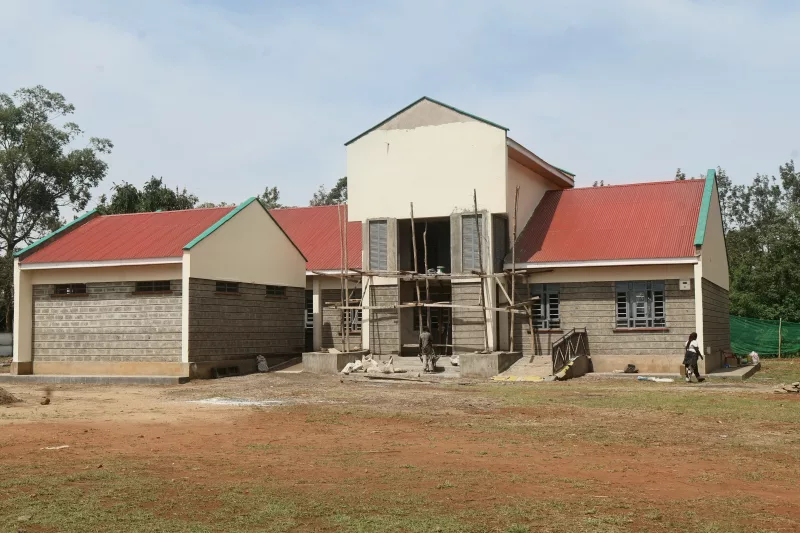
With meals served at the school, students have more time to eat and relax before embarking on their lessons.
The effects have been clear: retention rates have improved and the school has sent more students to national secondary schools.
“We’ve seen improved academic performance as students are more focused and energetic after receiving regular meals,” Odero added.
A FEEDING REVOLUTION
The Tap to Eat initiative uses technology to streamline the feeding process. Parents contribute Sh15 daily per child for their meal, making payments through a mobile money system linked to NFC-enabled wristbands (near field communication technology that enables wireless communication).
These wristbands are linked to virtual wallets, where parents deposit the payments. Pupils then tap their wristbands at designated points to receive their meals, making the process efficient and easy.
For many children like Otieno, the initiative is sponsored by well-wishers, as some families cannot afford the lunch fee.
RELIEF FOR PARENTS
The programme has been a godsend for parents. “The community has fully supported the programme. Many of the children who participate in the initiative bring food home to their younger siblings, ensuring they don’t go hungry,” the deputy headteacher says.
Wilkister Olang’, a parent, attests to this. Olang’ said paying the Sh15 per meal is a more affordable alternative to preparing food at home.
“For Sh45 a day for all three of my children, it’s a relief because we can hardly afford that amount for a meal at home,” she said. Benta Nyakie shared her experience, saying the initiative has saved her time.
“I used to wake up early every day to prepare food for my son to carry to school. Now I can rest easy knowing he’ll be fed at school.”
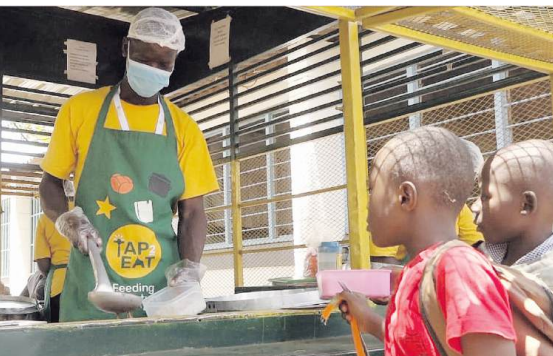
EXPANSION
Since its launch in July 2022, the Tap to Eat initiative has expanded to 24 schools across Kisumu, serving over 21,000 meals every day.
Michael Njiru, the programme lead for Kisumu, stated that over 500,000 students across 10 counties are now part of the initiative, with plans to reach one million students by 2027.
Njiru highlighted the success of the programme at Kosawo as an example of how the initiative’s success.
The programme’s impact aligns with the celebrations of the 10th African Day of School Feeding, which took place in Bangui, Central African Republic.
The event, organised by the African Union Commission’s Department of Education, Science, Technology and Innovation, in collaboration with the World Food Programme, focused on the role of school feeding programmes in promoting education, nutrition and community development across Africa.
The Tap to Eat programme is proving that providing a simple meal can make a huge difference in a child’s education and future.