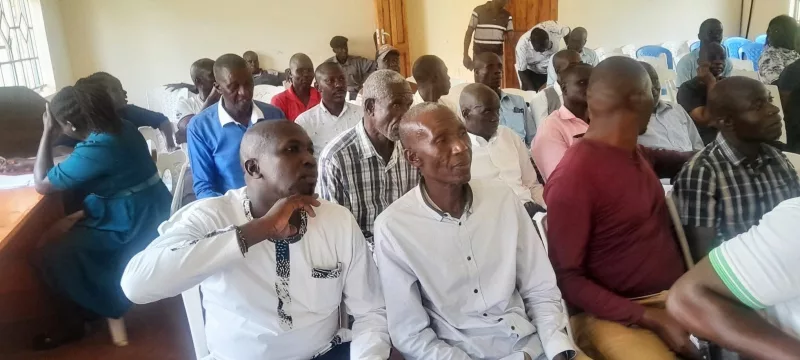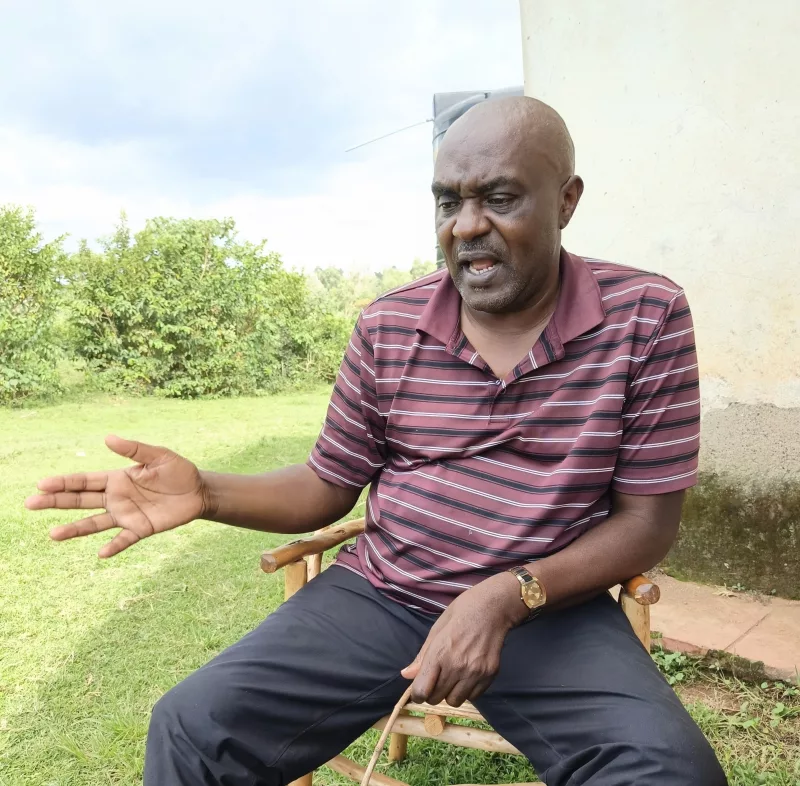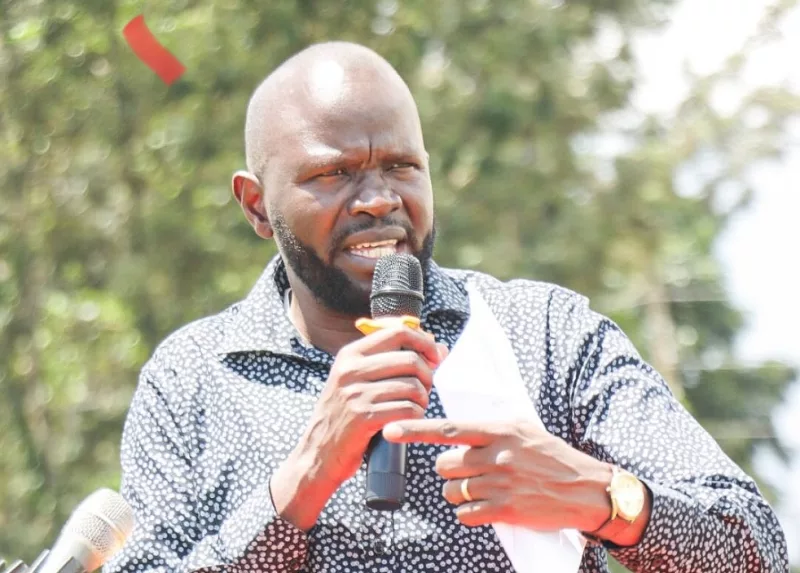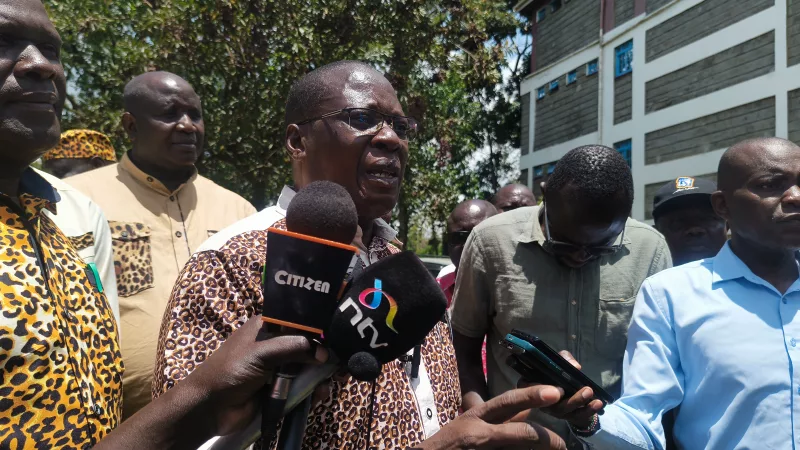
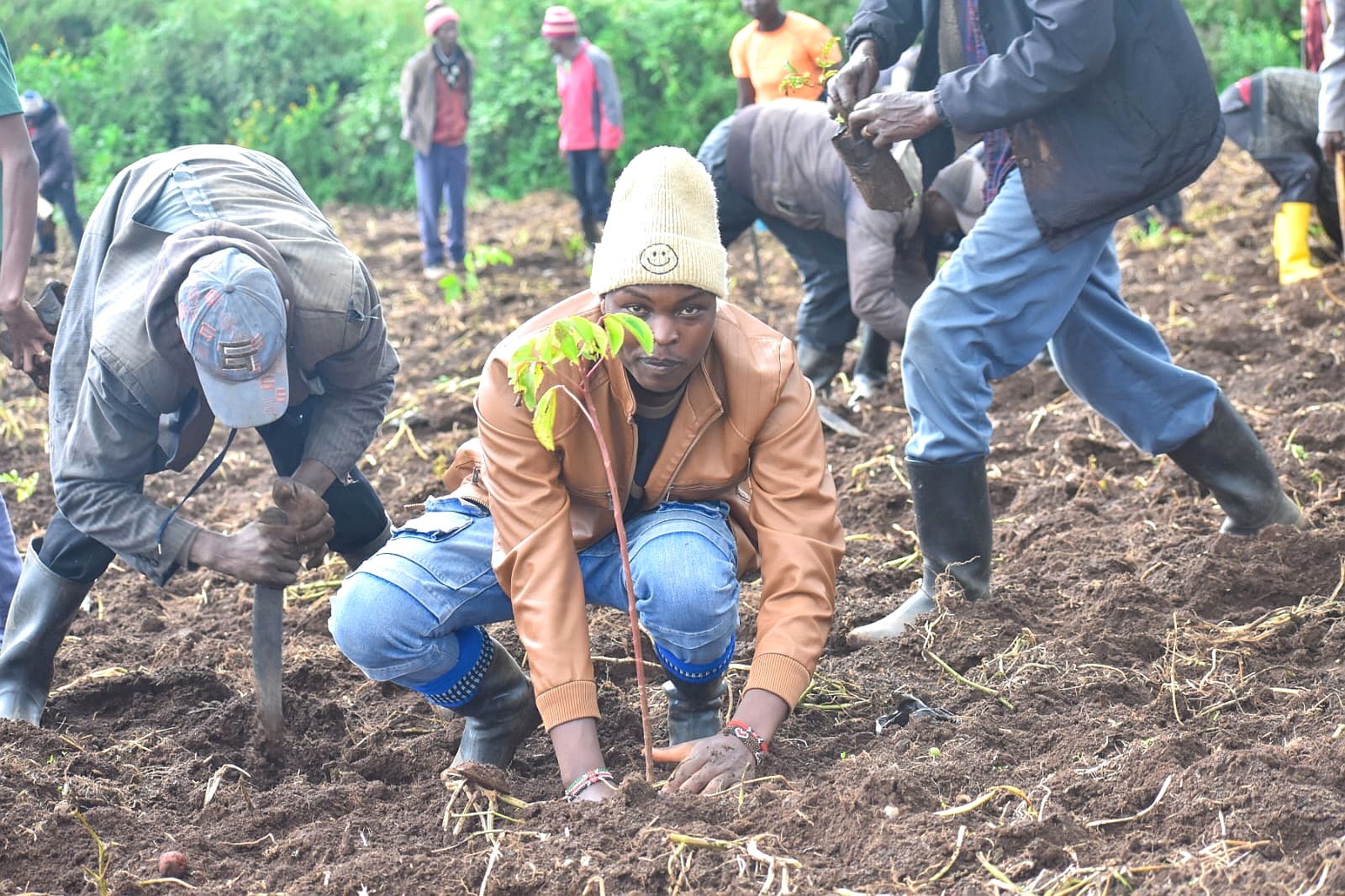
 The community taking part in restoring the degraded Baraget Forest during a tree planting exercise on Tuesday/IMAGE /HILTON OTENYO
Students from Egerton University have joined hands with Youths for Green Action Kenya (YGAK) in an environmental restoration drive aimed at planting 200,000 trees in the degraded Baraget Forest in Nakuru County.
The initiative is part of the efforts to revive the forest’s shrinking cover and restore biodiversity to mitigate the growing impacts of climate change.
The youth-led conservation initiative seeks to breathe new life into the once-thriving Baraget ecosystem, which has undergone significant degradation due to human activities and environmental pressures that threatens it's status as a water catchment and habitat for wildlife.
Speaking to journalists after a tree planting exercise, Fabian Mugambi said the exercise has provided students with an opportunity to apply practical skills beyond classroom learning.
“As Egerton University students, we have come to participate in community-based activities aimed at restoring the degraded Baraget Forest while gaining hands-on experience,” Mugambi said.
YGAK executive officer and co-founder Dennis Asiya said that participation by the students was a strong example of youth involvement in environmental conservation.
He said the 200,000 tree seedlings will be planted in the forest in four phases to ensure proper monitoring and higher survival rates.
Baraget Forest, which spans 10425 acres, is part of the Mau Forest complex that stretches across Kericho, Bomet and Narok counties.
Asiya said the ongoing restoration efforts seek to rehabilitate the forest ecosystem, improve soil stability and enhance water infiltration to help revive both seasonal and permanent rivers.
“Our effort here today is to breathe life into the largely deforested Forest so that it can give us life by cleaning the air and absorbing carbon dioxide,” he said.
Asiya linked changing weather patterns and shifting seasons to widespread deforestation of major water towers, noting that the disruption has negatively affected farming calendars and food production.
The government is running a tree planting initiative that aims to plant 15 billion trees by 2032 to enhance tree and forest cover. YGAK has been involved in several tree-planting initiatives across the country since 2018.
“Apart from focusing on forests, we also run an initiative dubbed ‘Greening Schools Initiative’ where we partner with learning institutions to plant tree seedlings and instil a culture of environmental conservation among young people,” Asiya said.
He said the organisation works closely with Kenya Forest Services (KFS), local communities through Community Forest Associations (CFAs) to achieve at least an 85 per cent survival rate of planted seedlings through continuous monitoring and care.
KFS coordinator for Nakuru county, Bena Ngenywa, said the restoration efforts align with President William Ruto’s directive to plant 15 billion trees by 2032.
He urged members of the community who have been allowed to grow crops within designated forest areas to ensure the survival of the planted trees by taking responsibility for their care.
“Even if you plant potatoes in the forest, make sure that the trees we have planted today survive,” Ngenywa said.
Paul Rob, an elder and former Community Forest Association chairperson, appreciated YGAK’s focus on increasing indigenous tree cover, noting that such species are vital for water conservation and long-term ecosystem stability.