The Senate Trade Committee has opened the lid on how Kenyan taxpayers lost Sh6.6 billion out of the Sh9 billion that had been earmarked for the importation of edible oil.
In a case of deep-rooted corruption and mismanagement in the country’s procurement system, the Kenya National Trading Corporation found itself at pains to explain how, among other things, it was forced to re-sell edible oil imports below local market prices to be re-exported.
A probe by the Senate Committee on Trade, Industrilisation and Tourism revealed that some 797,564 twenty-liter jerrycans that had been imported to cushion Kenyans from high commodity prices were diverted and sold to two companies called Environ Pro and EnBV Kenya to be re-exported.
Documents tabled before the committee showed that for a 20-litre jerrycan, the corporation sold it for Sh3,028, way below the price at which locally sold cooking oil was retailing for.
In the period, a 20 litre container in Kenya was retailing for about Sh5,000, and under the programme, KNTC was to sell them for about Sh4,800 if they were to recoup the amount that had been channeled towards the provision of the affordable edible oils.
Legislators were keen to understand precisely how much was recovered from the sales of cooking oil that were imported under the programme.
The corporation acknowledged that Kenyans lost Sh6.6 billion and that the process was “messed up” and they were going to use it as a learning lesson.
KNTC said that it made Sh25.975 billion from the sale of 1,687,083 jerrycans of cooking oil. This was almost half of the 2.2 million 20-litre litre jerrycan that were to be imported under the programme.
Marsbit Senator Mohamed Chute questioned KNTC why it resorted to reselling the products that had been imported under the duty-free plan by the government.
The investigation highlighted a lack of responsiveness from management regarding various issues, including the absence of detailed contractual agreements that directly impacted pricing decisions.
“Now that is where the question is a very big question mark you are talking about. He is talking about taxes. You have not been paying taxes on all other goods. You have not paid any taxes. You have been cleared. You are given an exemption. But chair, the question is, can the acting MD tell us these goods were sold to who, at what price, and where they are now and where is the money?” Chute posed.
However, in their defense, KNTC, through its acting managing director, Peter Njoroge, claimed that it is only the import duty that had been waived, so they were not able to pay the other taxes that were involved.
“You know, the exemption from KRA was only for import duty. These other taxes were supposed to have been paid. So what we are saying is that it is the VAT that we have not been able to pay,” said Njoroge.
Documents before the committee showed that KNTC contracted suppliers and later paid them amounts higher than the contractual agreement.
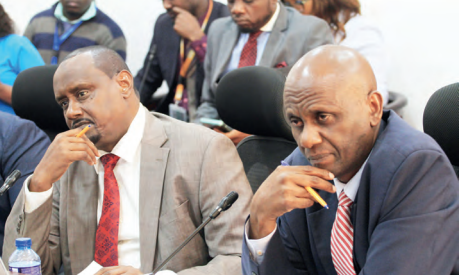
The Committee chaired by Senator Lenku Ole Kanar heard that firms such as Multi Commerce and Charma Holdings were paid $30 (Sh3,871 ) per jerrycan against an agreement of between $23 (Sh2,967 ) and $26 (Sh3,355 ).
“In the process of issuing and procuring, I was not part of that, so I came to learn of the variations after investigations were opened on the matter,” said KNTC finance and accounts manager Lucy Anangwe.
From the session, it emerged that KNTC had overpaid Multi-Commerce by approximately $10 million (Sh1.2 billion), something the company has yet to satisfactorily address.
The committee pressed for details concerning the total financial exposure and loss linked to these transactions, especially referencing payments documented at Sh69 billion compared to what was reportedly derived from received supplies valued at Sh59 billion.
The senators pressed KNTC to clarify how the company planned to recoup losses estimated at Sh6.6 billion—a figure indicating outstanding recoveries and unaccounted funds in the organisation’s financial records.
KNTC chairman Hussein
Dabasso said part of the losses were
attributed to currency fluctuations,
considering during the importation
period, the local currency was trading at around Sh150 against the
dollar.