

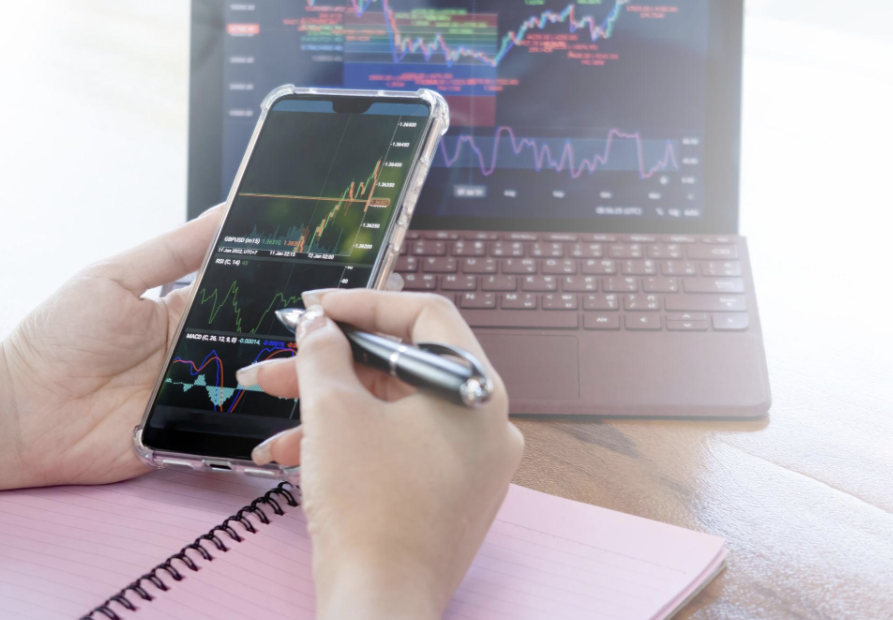
The currency market or foreign exchange market is one of the largest and most liquid (financial) industries globally. With an average daily trading volume exceeding $6 trillion, it presents unique opportunities as well as challenges for traders and investors alike. If you're enthusiastic about forex and want a share in this global fund, but you're unsure how to begin, then this guide is for you. Keep reading to learn how the currency market operates, identify the variables driving currency movements, and what resources to consider when starting currency trading.
Understanding the Currency Market
The currency market is a virtual marketplace for trading national currencies against one another. It is made up of many participants ranging from individuals to companies, and financial institutions operating worldwide. Unlike a standard stock exchange, the currency or forex market operates 24 hours a day, 5 days a week. As a result, one can buy, sell, and exchange currency almost any time of the day.
Currency Pairs
Currencies are always sold in pairs. The first currency in a currency pair is called the "base currency" and the second one weighed against the first; is called the "quote currency." For instance, forex trading in Kenya would mean having a currency pair like KES/EUR, with the Kenya Shillings (KES) as the base currency against the Euro (EUR), quote currency.
Important Forex Terms
Here are important technical Forex terms every beginner should know.
Bid/Ask Price: The bid price is the price that a buyer is willing to pay for a currency, and the ask price, is the price that a seller will sell at. The difference between these two prices is called the spread.
Leverage: A method that allows traders to control a larger position with a relatively small amount of traded capital. This amplifies the potential for profits or losses.
PIP: This is simply a unit of measuring price changes for a given exchange rate in the forex market. PIP is an abbreviation for price interest point or percentage in point. It usually indicates the smallest price movement in a transaction.
Stop-Loss Order: An order to sell a security when it reaches a certain price. This is intended to limit an investor's loss of a position.
Market Order: An order to purchase or sell a currency at the current market price.
Volatility: Volatility, at varying degrees, denotes risk and can be used to quantify the degree of risk thought to be evident, based on the security or market's price variance.
How Currency Trading Works
Currency trading involves speculating and leveraging the changes in exchange rates to make profits. To make money from forex trading, you will have to enter or exit a trade using either fundamental analysis or technical analysis, both of which have their advantages.
1. Fundamental Analysis: A fundamental analysis involves researching various factors that relate to price changes, including economic indicators and interest rates, as well as geopolitical events. Traders will analyze economic indicators, government policies, and news that may affect the supply and demand of currency.
2. Technical Analysis: Technical Analysis involves analyzing the historical price trends of a currency, to predict future price action. Technical analysis will rely on specific data such as moving averages, Fibonacci retracements, and previous levels of support or resistance that are visual representations of price levels where the price may turn or stall.
Key Factors Influencing Currency Value
Many factors influence the value of a currency or exchange rate in the currency market.
1. Interest Rates: The interest rates set by a nation's central bank affect the valuations of their currency. If a country increases its interest rate, it attracts more foreign exchange. Once the demand for that country's currency increases, so does its value. If that country lowers its interest rate, it could become less attractive to investors.
2. Economic Data: Economic data encompasses many different things such as GDP growth, employment reports, inflation rates, and manufacturing outputs. This range of data serves as a pointer to the country's economic health and in turn its currency’s value
3. Political Stability: Political events, government stability, and government policies ultimately impact a country's foreign exchange. Generally, stronger currencies and economies are associated with stable governments.
4. Market Sentiment: Trader or market sentiment impacts the value of a currency. If traders perceive that a currency strengthens based on newly emerging news or a social trend, its demand and price will increase.
5. Trade Relations: When a country exports more than it imports, the value of its currency stays high. This is because trade surpluses as opposed to deficits strengthen a currency.
Beginning Your Forex Trading Journey
1. Learn First
If you've read up till this point, then you're right on track towards succeeding in the currency market. However, you should expand your knowledge bank with more learning materials like online courses books, and webinars. So you can learn more about trading platforms, tools, and various trading strategies.
2. Select a Reputable Broker
Choosing a broker is one of the most important things you need to do. You should not only choose a broker with a good reputation and proper regulation, but you should also seek a broker that offers competitive spreads and an easy-to-use trading platform. Additionally, verify that they offer a demo account so you can practice trading without financial risks.
3. Create a Trading Plan
Like any other venture, to succeed in forex you must have a plan and your plan must have the following components:
- Your goals: You need to determine what your goals are for taking trades, whether you are looking for short-term profits or long-term investment purposes, or something in between.
- Risk Management: You should determine how much of your trading capital you are willing to risk on any one trade, and have a solid understanding of how to stop losses.
- Strategy: Determine your strategy based on your trading style. This can be scalping, day trading, swing trading, or position trade.
4. Use a Demo Account
Use the demo account that your broker has provided to practice trading without making a financial commitment. That experience will also help you get more comfortable with your strategies and platform, before risking trading in the general market.
5. Start Trading in a Real Account
After your confidence grows and you feel equipped to trade for real money, try trading with a small amount first, and when you gain more experience, you can increase your trading size.






