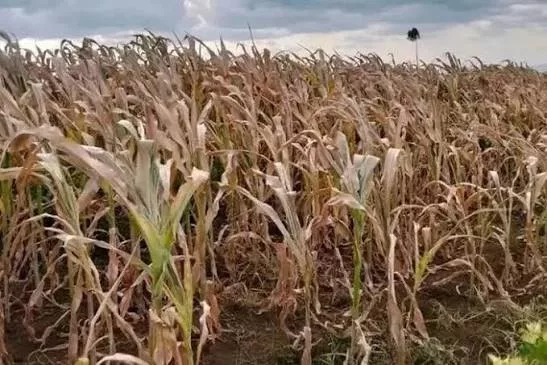
Kenya will need to import an additional 1.98 million tonnes of maize to meet national demand in the 2026-27 marketing year after drought cut production by 39 per cent to 2.2 million tonnes, according to a new report by the United States Department of Agriculture and the Global Agricultural Information Network.
The projected deficit raises concerns about the country's ability to secure enough maize for human consumption and animal feed, particularly as its strategic grain reserves are depleted and supplies from neighbouring countries become increasingly limited.
The report, titled Severe Corn Production Deficit Triggers Import Plans in Kenya, attributes the sharp decline to prolonged dry spells in June and July, which affected crops during critical growth and grain-filling stages in major producing counties, including Uasin Gishu, Trans Nzoia and Nandi.
This comes against an annual national maize consumption estimated at 4.5 million tonnes, with the National Cereals and Produce Board's strategic food reserves reportedly depleted, leaving the country with limited capacity to cushion consumers against supply disruptions and rising prices.
Agriculture CS Mutahi Kagwe had earlier assured Kenyans that the government was prepared to manage the anticipated shortage through imports.
"We will import maize. We have already made arrangements for that. We will manage the country. Our people are not going to go hungry," Kagwe said on August 19, during a government consultative meeting in Mombasa.
He announced plans to import 25 million 90kg bags of maize to bridge the production shortfall and stabilise supplies.
But the USDA assessment indicates that securing sufficient quantities could prove more complicated than anticipated.
Kenya imported 321,575 tonnes of maize between July and September 2026, representing a 112.5 per cent increase from the 151,318 tonnes imported during the same period in the previous marketing year.
Imports peaked at 115,023 tonnes in August, nearly three times the volume recorded in August 2025, before easing to 92,237 tonnes in September.
The report shows that despite the increased import activity, the country still faces an estimated annual net import requirement of 2.3 million tonnes, leaving an additional 1.98 million tonnes to be sourced to meet human consumption and animal feed requirements.
The report warns that depleted public reserves and declining commercial inventories could exert upward pressure on domestic maize prices, with short-term supplies increasingly dependent on imports.
"With minimal stocks available to buffer the market, the domestic supply deficit is projected to exert upward pressure on local grain prices. Short-term supplies will depend on imports," the report states.
Kenya has traditionally relied on neighbouring Uganda and Tanzania to bridge domestic maize shortages. However, this option is becoming increasingly constrained by drought-related production losses in Uganda's eastern maize-producing regions and limited exportable surpluses in Tanzania.
Kagwe had previously indicated that the government would source maize from the East African Community and the Common Market for Eastern and Southern Africa to meet the country's requirements.
Last month, the CS said the government had undertaken a maize mop-up exercise, with the NCPB buying maize from farmers at Sh4,000 per 90kg bag, up from Sh3,800.
"I gave a two-month notice to the farmers for the maize mopping exercise," he said, explaining the government's efforts to secure locally available stocks before turning to imports.
The government has also negotiated an arrangement with Zambia, allowing private-sector players to import 540,000 tonnes of maize in phased shipments over 18 months.
The deal, valued at about Sh26 billion, involves Kenyan firm Baita Trading Company and Zambia's Food Reserve Agency.
However, the arrangement is facing a legal challenge at the High Court over procurement transparency, tariff structures and its potential economic implications for local producers, and so far, no maize had been shipped under the agreement.
The country's import options are further complicated by restrictions on commercial imports of genetically engineered maize. Major global producers, including Brazil, Argentina and the United States, predominantly grow genetically engineered varieties, limiting their ability to supply the Kenyan market.
Although Ukraine produces non-genetically engineered maize, the ongoing conflict and unreliable Black Sea shipping routes pose additional logistical challenges.
The USDA warns that the combination of regulatory restrictions, technical requirements and transport constraints could narrow the number of suppliers capable of meeting Kenya's import needs and potentially increase procurement costs.
Beyond human consumption, the shortage also threatens the livestock sector, particularly poultry and dairy production, which depend on maize-based feeds.
The report estimates feed and residual maize consumption at 350,000 tonnes in the current marketing year, noting that feed manufacturers are already experiencing severe shortages of raw materials.
In July 2026, the East African Community Secretariat approved duty-free imports of 450,000 tonnes of maize allocated to designated Kenyan feed millers to ease shortages in the livestock feed sector. The arrangement runs until June 30 next year, subject to regulatory controls, including aflatoxin testing and restrictions on genetically engineered products.
In January, the government set a long-term target of building strategic reserves to four million bags.
"Our first option is not to import, it is to buy from our farmers," Kagwe said during a visit to NCPB stores in Sagana, Kirinyaga county.
He has also called for increased investment in irrigation to reduce the country's dependence on increasingly unpredictable rainfall.
During an August visit to Trans Nzoia, the CS reiterated the need to move towards irrigation-fed agriculture to protect food production from changing weather patterns.