The National Land Commission (NLC) has moved to clarify its role in land valuation and compensation under the multi-billion Horn of Africa Gateway Development Project (HOAGDP).
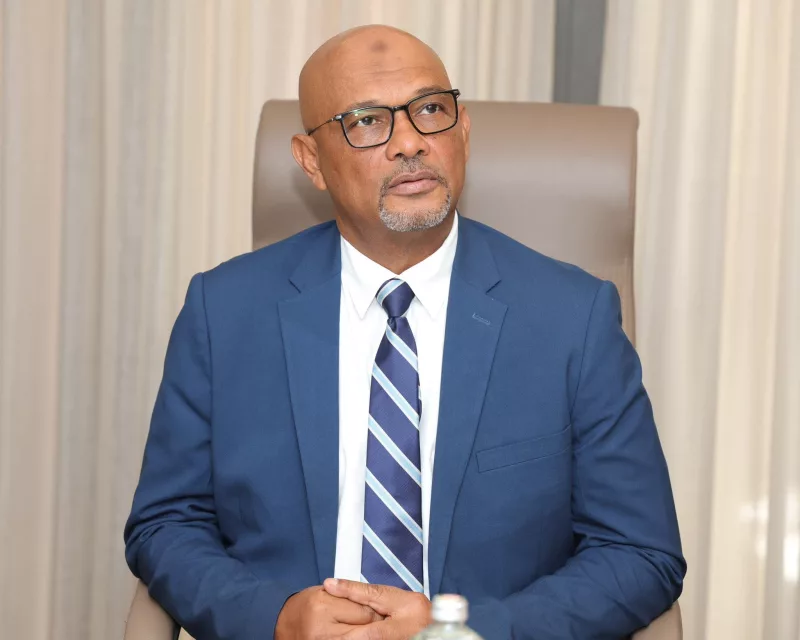
Through its Chairman, Abdillahi Saggaf Alawy, NLC disputed reports suggesting that delays in compensating project-affected persons (PAPs) have stalled implementation of the regional infrastructure project.
Alawy said the commission had made substantial progress in land valuation, asset verification, disclosure and preparation of compensation schedules across various sections of the project.
The clarification comes amid concerns raised by the World Bank over alleged delays in land valuation and compensation.
But the commission sought to distinguish its statutory responsibilities from those of the implementing agency, Kenya National Highways Authority (KeNHA).
NLC said its mandate under the project is limited to undertaking land valuations and preparing compensation schedules.
KeNHA, NLC said, is responsible for processing and disbursing compensation payments to affected persons, in line with World Bank directives and the project's implementation arrangements.
The commission maintained that the distinction was important in understanding the status of compensation, noting that outstanding payments in several project sections were dependent on funding arrangements, approvals and other administrative processes.
Under Package One, covering the Isiolo-Kulamawe-Modogashe section, NLC said compensation payments were ongoing, with KeNHA awaiting the World Bank's no-objection approval to pay 1,280 project-affected persons.
This would cost a total of Sh554.9 million.
An additional 111 affected persons had also been forwarded to KeNHA for payment.
The commission said it had completed a compensation schedule addressing grievances involving 255 PAPs.
For Package Two, covering the 119-kilometre Wajir-Kotulo section, NLC said it had approved compensation awards for 1,619 affected persons amounting to Sh824.8 million.
The approved schedules had already been forwarded to KeNHA to facilitate payment.
The section traverses seven settlement areas, including Wajir, Lafaley, Tarbaj, Hungai, Wargadud, Kotulo Wajir and Kotulo Mandera.
Progress has also been reported on Package Three, covering the 56-kilometre Dimu-El Wak stretch.
Between October 12 and 23, 2026, the commission undertook disclosure and asset validation involving more than 1,105 affected persons across seven settlements: Majani, Dimu, Garsesala, Dabacity, Kobo, Borehole 11 and El Wak town.
NLC said the valuation exercise for the section was scheduled for completion by the end of November 2026.
However, the commission acknowledged that some project sections remained at different stages of the land acquisition process.
For the Modogashe-Samatar-Wajir section, NLC said it had requested facilitation from KeNHA to undertake the necessary inspections and was awaiting a fresh formal request to resume the process.
Meanwhile, for the Isiolo-Kachuru section, the commission had granted initial approval for compensation involving 296 affected persons, with awards amounting to Sh497.07 million.
“The commission awaits on KeNHA to deposit compensation funds for disbursement by the commission,” Alawy said
Despite the progress, NLC identified several challenges affecting the timely completion of compensation processes.
These include ongoing litigation at the Garissa Magistrates Court concerning payment responsibilities, insecurity along parts of the project corridor, particularly between Wajir town and El Wak, and speculative developments by some project-affected persons.
Other challenges include missing affected persons, uncollected compensation offers and awards, as well as unresolved succession cases involving deceased landowners.
The commission said land acquisition and compensation are multi-agency processes requiring statutory approvals, availability of funds, resolution of grievances and, where applicable, clearances from development partners.
It pledged to continue working with KeNHA, the World Bank and other stakeholders to resolve outstanding issues, accelerate compensation and safeguard the rights of affected landowners.