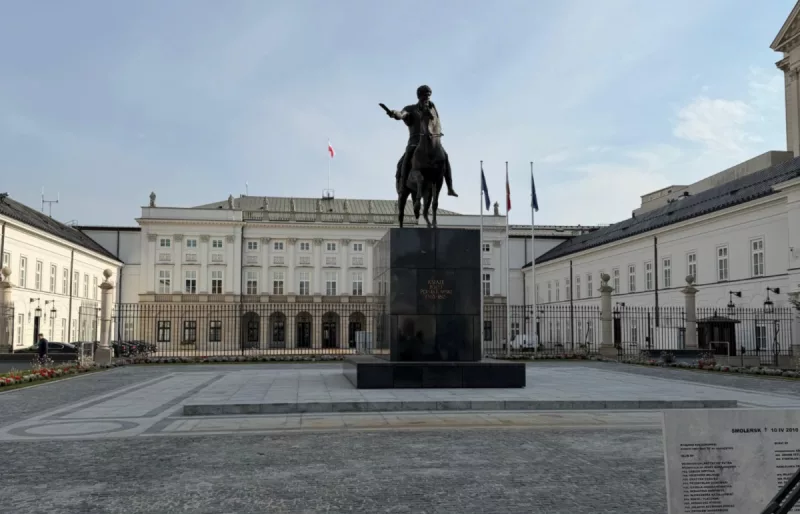
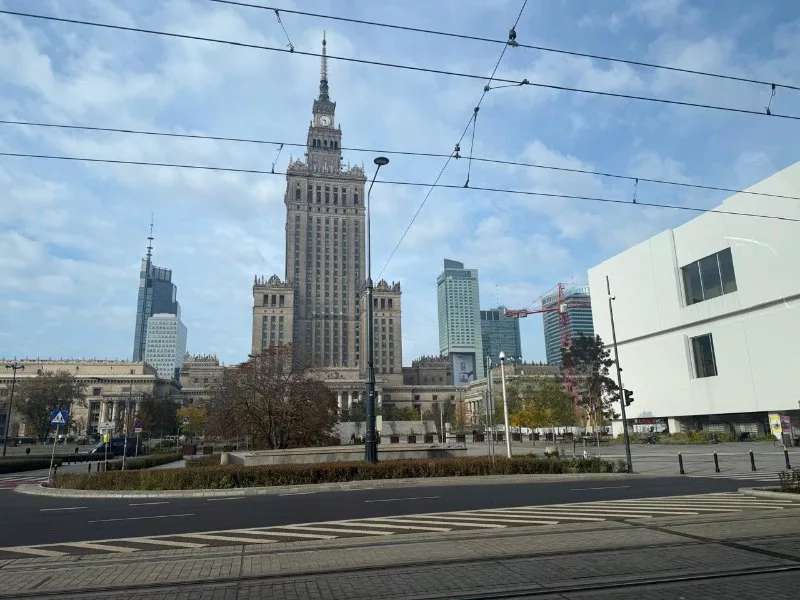
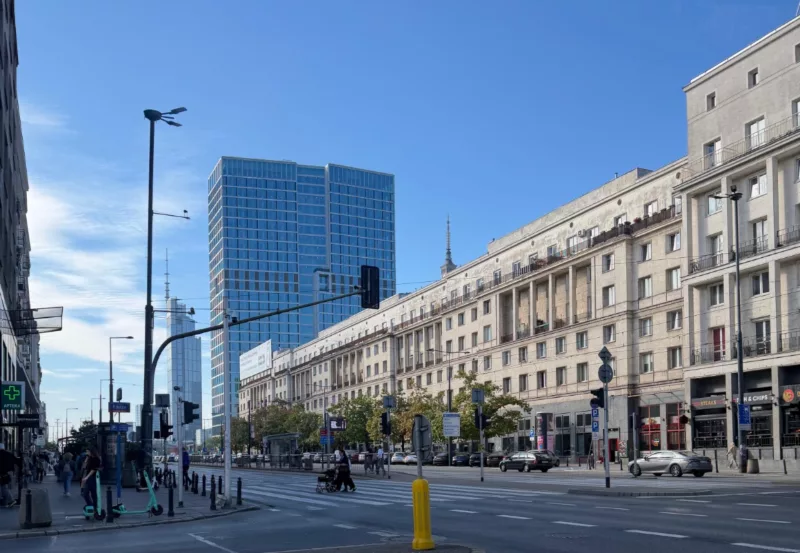
A morning walk through Warsaw, the capital of Poland, introduces visitors to a city defined by beauty, calm and a striking blend of medieval and modern architecture.
Every Varsovian, the name given to people who live and work in the city, you encounter along its streets offers a warm glance that almost feels like a personal welcome. The city, which underwent massive reconstruction following the Second World War, presents an image of tranquillity despite the political and security challenges facing the country.
Behind the beautiful buildings and the busy streets, however, Poland is fighting another battle, one that is largely unfolding online. The country is grappling with the growing threat of misinformation and disinformation, largely linked to the ongoing Russia-Ukraine war and tensions along its borders with Russia and Belarus.
Although the physical conflict is being fought on Ukrainian territory, Poland has increasingly found itself at the centre of an information war because of its geographical proximity to the two countries, its support for Ukraine and its role in hosting millions of Ukrainians who fled the Russian invasion.
According to Poland's Department of Strategic Communication and Countering Foreign Disinformation, Russian interference takes the form of hybrid warfare, involving information overload, hacking of personal accounts, espionage and other tactics designed to influence public opinion.
The department also identified emotional manipulation, particularly targeting young people, as one of the methods used to spread propaganda and create divisions within society.
"They even use 'whataboutism' to spread the propaganda among the masses, where they just point fingers at certain people and blame them for certain outcomes. This started as early as 2014 and it's still being done today," an official from the department said.
Whataboutism involves responding to criticism or allegations by drawing attention to the perceived wrongdoing of others rather than addressing the original issue. According to the department, the tactic has remained part of the information campaigns targeting Poland.
To respond to the threat, the Polish government has adopted what it describes as a whole-of-society approach, bringing together public research institutions, media organisations, non-governmental organisations and civil society groups.
The department said the scale of the challenge required cooperation beyond government ministries, with different institutions playing a role in identifying and countering misleading information.
"We work in an interministerial way, but also, extremely important to us, is a whole-of-society approach, because the scale of what we're dealing with requires all hands on board," the department said.
Among the measures introduced by the government is the establishment of a new Centre for Countering Disinformation, a centralised unit under the Ministry of Digital Affairs and headed by a deputy minister.
The centre is part of a wider institutional framework aimed at strengthening Poland's ability to identify foreign interference and respond to information threats.
However, the challenge goes beyond identifying false information. It also involves dealing with the impact of propaganda on public attitudes, particularly towards Ukraine and the Ukrainian community living in Poland.
Milosz Bartosiewicz, a research fellow at the Centre for Eastern Studies (OSW), said continued Russian disinformation campaigns had affected how some sections of Polish society viewed Ukraine.
He attributed this largely to attempts to exploit tensions involving the Ukrainian community in Poland to create divisions between the two populations.
"There has been the entire domain of Russian disinformation and influencing campaigns in the case of Poland. It is directed mostly towards the Ukrainian community. They know that by doing this, the Polish will turn more sceptical about Ukrainians in their country," he said.
Bartosiewicz said the campaigns were, in some instances, amplified by opposition politicians who criticised the government over its decision to host Ukrainian refugees.
Poland hosts the largest number of Ukrainian refugees who fled their country following Russia's full-scale invasion, making public attitudes towards the community an important part of the wider debate surrounding the war.
Despite the measures being implemented, Bartosiewicz acknowledged that Poland had yet to establish an effective response to Russian disinformation.
"Unfortunately, we haven't still found an effective way to counter Russian disinformation," he said.
Another institution playing a significant role in identifying foreign information threats is the National Research Institute (NASK).
The institution conducts research into foreign influence operations targeting Poland, with particular attention to Russia, Belarus and China.
Its work includes investigating bot campaigns, identifying networks operating within Poland's information environment and examining foreign information manipulation and interference, commonly referred to as FIMI.
A senior FIMI analyst at NASK told The Star that the institution also monitors information circulating within the countries suspected of conducting influence operations.
"We also pay attention to what they say and do in their own infospheres. Yeah, because that can give us a bigger picture of what information and cognitive operations they undertake," the analyst said.
The Polish Institute of International Affairs (PISM) is another institution contributing to the country's understanding of international developments and foreign policy challenges.
The state-owned institute, which operates independently of direct government control, has a team of experts conducting foreign policy research, foresight studies and public diplomacy.
According to Jędrzej Czerep, head of the institute's Middle East and Africa Programme, PISM primarily plays an advisory role by providing recommendations on foreign policy rather than directly implementing government decisions.
The institute also advises the Polish government and contributes to discussions on international relations both within Europe and beyond.
The media is equally involved in efforts to counter disinformation. The Polish Press Agency (PAP) is actively engaged in fact-checking activities.
According to the agency, much of its attention is increasingly focused on Chinese disinformation, which it describes as the new frontier of Russian disinformation.
Meanwhile, tensions along Poland's borders have added another dimension to the country's security concerns.
Although Poland and Russia are not engaged in direct military confrontation, relations remain strained, with reports of drones crossing into Polish airspace and allegations of interference through online platforms.
Russia has repeatedly denied allegations of involvement in such incidents.
There have also been concerns over the use of social media platforms to amplify anti-government and anti-Ukrainian narratives, raising questions about the vulnerability of public debate to foreign influence.
For Poland, therefore, the war in Ukraine is not only a military confrontation taking place across its border. It is also an ongoing contest over information, public opinion and national security, with government institutions, researchers, media organisations and civil society increasingly involved in defending the country's information space.