The fight against corruption is only one part of China's strategy to strengthen political leadership, improve governance and sustain the Communist Party of China's (CPC) capacity to govern.
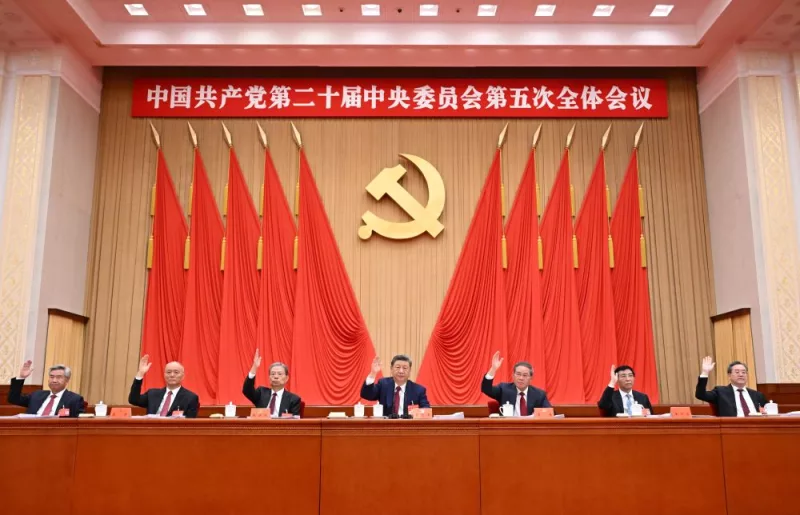
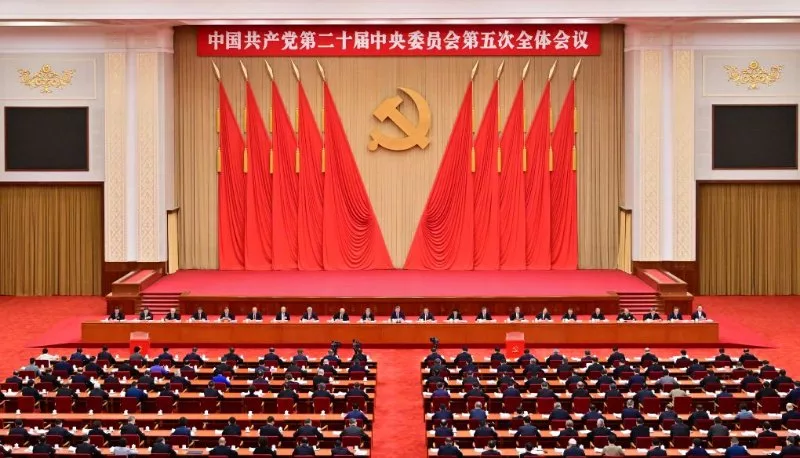
This is the message emerging from the Fifth Plenary Session of the 20th CPC Central Committee, which adopted a resolution on persevering with full and rigorous party self-governance.
The session, held in Beijing from October 26 to 29, examined how the party can strengthen itself, address internal weaknesses and maintain its leadership role as China pursues national modernisation.
The communique and resolution provide guiding principles and a programme of action for strengthening party institutions, membership, discipline and oversight structures.
The conviction that a governing party's long-term strength depends not only on its ability to lead the country but also on its willingness to examine, regulate and reform itself stands out.
The resolution rides on a governance philosophy that President Xi Jinping has consistently advanced since becoming CPC general secretary in November 2012.
In his writings compiled in Xi Jinping: The Governance of China, particularly Volumes I and V, Xi argues that the party must maintain discipline, remain connected to ordinary citizens and prevent the abuse of public authority.
The latest resolution gives this philosophy a comprehensive institutional framework.
It identifies key priorities to include strengthening party spirit, observing democratic centralism, improving officials' conduct, reinforcing grassroots organisations, tightening discipline and improving supervision.
These measures seek to ensure that the CPC maintains its organisational strength and capacity to implement decisions across all levels.
An important feature is the emphasis on democratic centralism, which the CPC regards as its fundamental organisational principle.
The resolution calls for stronger internal democracy alongside centralised and unified leadership.
It also seeks to improve decision-making procedures, regulate the exercise of authority and strengthen collective responsibility within party structures.
Another major component is strengthening party rules and regulations. The resolution identifies institutional development as a foundation for full and rigorous self-governance.
It calls for better enforcement of regulations, stronger internal supervision and closer coordination between Party oversight and state accountability systems.
The objective is to make supervision part of the regular functioning of institutions rather than an exercise undertaken only after misconduct occurs.
This is where the anti-corruption campaign fits into the grand strategy.
In Xi’s view, corruption is not simply a question of individual officials taking bribes. It threatens institutional credibility, weakens public confidence and undermines the relationship between the party and the people.
In Volume I, under the chapter 'Combat Corruption', he warns that corruption could destroy a political party and bring down a government.
He argues that the party must improve its capacity to prevent corruption, resist degeneration and protect itself against risks that could undermine its leadership.
The latest resolution advances this thinking through an integrated approach addressing both the causes and consequences of corruption.
In Volume V, under 'Redouble Our Efforts to Eliminate the Breeding Grounds of Corruption', a speech delivered on January 8, 2024, Xi emphasises the need to eliminate conditions that allow graft to thrive.
He argues that the campaign must go beyond pursuing individual offenders to addressing institutional weaknesses and loopholes.
The approach also targets those who offer bribes, recognising that corruption can involve both public officials and private individuals or businesses seeking influence.
Xi has previously used the expression 'tigers and flies' to describe the need to pursue corruption among senior officials and lower-ranking bureaucrats.
The principle is that discipline must apply across the organisation, including institutions responsible for justice, security and national defence.
The resolution also makes self-governance a collective responsibility, requiring CPC members and leadership structures to uphold discipline and fulfil their supervisory duties.
The aim is to protect the party from the historical cycle of political rise and decline. The ability to identify weaknesses, correct mistakes and undertake self-reform has been central to the development of the CPC over more than a century.
It links this capacity to its commitment to serve the interests of the Chinese people.
The communique reiterates that the party has no special interests of its own beyond those of the working class and the possible majority of the people.
Under CPC leadership, China has undergone rapid economic and social transformation in industrialisation, infrastructure development and sustained economic growth.
The party regards these achievements, alongside long-term social stability, as evidence of the importance of consistent leadership, institutional coordination and long-term planning.
Its governance model places considerable emphasis on policy continuity and implementing national development priorities beyond short-term political considerations.
The latest resolution seeks to preserve these organisational attributes as China enters another phase of modernisation.
Kenya and other developing countries, could use the lessons to examine the relationship between institutional development, leadership responsibility and national progress.