Kenya’s low-cost green technologies promoting sustainable water service delivery in the country are among innovations being showcased at the ongoing UN climate change talks in Antalya, Turkiye.
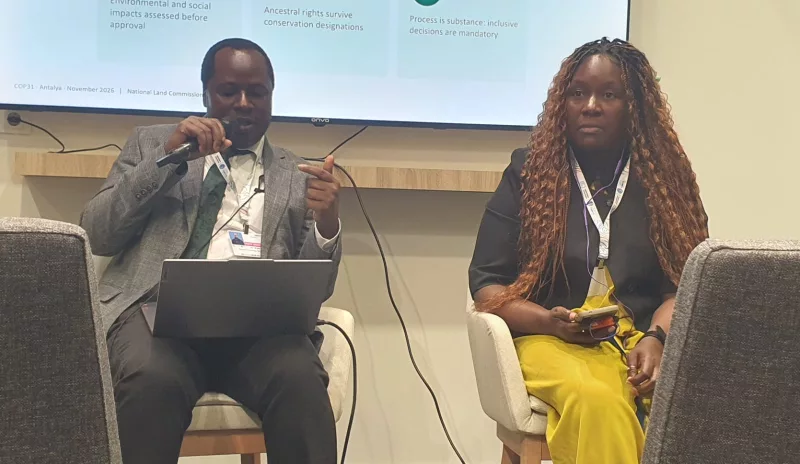
The Water Sector Trust Fund showcased the technologies during a side event: Catalysing Low-Cost Green Technologies for Sustainable Water Service Delivery in Kenya.
The event sought to show case how low-cost technologies can provide sustainable water service delivery.
Water Fund Principal Programme Officer, Climate Change Ann Nabangala said most of the available technologies needs resources for scaling up.
Nabangala said ramping up resources will help improve services to Kenyans.
“It started as a small project to research into why things are not sustainable. We studied technologies and made recommendations. It is not just about technologies but we need to catalyse climate finance,” she said.
Water Fund is a Kenyan State Corporation under the Ministry of Water Sanitation and Irrigation (MWSI) with a mandate in financing the provision of water services to areas of Kenya which are without adequate services.
The climate action is core in the fund’s approach working in collaboration with target County Governments and implementation through existing Water Fund procedures.
Governments of Sweden, Denmark, Finland, EU, KfW, World Bank, IFAD, Saudi Fund for Development, Kenya Markets Trust, Water and Sanitation for the Urban Poor (WSUP) are among the donours of the fund.
Nabangala said the projects that have been rolled out have helped improved lives and livelihoods of communities, thanks to lost cost technologies.
Some of the technologies studied by the fund include solar water system pumping, wind power pumping system, sand dam, Djabias and water pans.
Some of the technologies have since been deployed in areas where the availability of water resources is inadequate, unsafe and unsustainable with a view of improving water access to underserved communities.
They have also been deployed in areas with unsustainable technologies.
The technologies have also been deployed in arid and semi-arid areas where availability of water is never assured due to the impacts of climate change.
Nabangala said before low-cost green water technology is adopted, feasibility is determined before the private sector engagement and public-private partnership potential.
She said a public private partnership business model is then developed before funding opportunities are catalysed.
The selection of technology depends on the cost, its potential to improve livelihoods and contribute to local economy.
Availability of skills for installation, operation and maintenance as well as the capacity to enhance water quality and quantity are also part of the things to be considered.
The selected technology should also have a potential to be deployed across the country.
Some of the case studies showcased during the event include improved water access and resilience to droughts (Water and Livelihood Projects (WLP)- DANIDA) vegetable farming in Kakuma, Turkana County.
Others are fecal sludge management (Decentralized Treatment Facilities (DTFs) in Machakos, improved Water access- Ending Drought Emergencies- EDE CIPRA- European Union Nyangoro- Maktau water supply rehabilitation Project- Kwale county.
WASH in schools for Lokorkor primary school quenching thirst at a yard tap- Kangitit Division-Turkana County as well as WASH in schools for drinking and hand washing in Kiunga-Lamu and Nanghi Primary (Girls hand washing- Tana River Counties among others.
Solar panels have also been installed in Lamu, Kasuku water supply in Nyandarua, Loturtur in Kerio South and a climate proofed water pan in Lower Thiba.
Nabangala said a number of projects are ongoing while others have since been completed.
Water Sector Trust Fund has since inception to 30th June 2023, mobilized about Sh.36.6 billion (USD 360 million) from over ten (10) Development Partners and budgetary allocations from Government of Kenya.
Out of this, Water Fund has so far cumulatively received Sh.26.7 billion (USD 267 million) for water supply, sanitation and water resources management projects.
The projects financed and implemented have increased access to water and sanitation for over 7.6 million underserved Kenyans, and contributed to conservation and rehabilitation of about 512 water sub-catchment areas.
In the Strategic period 2018-2022, Water Fund increased Access to Water Services to 1.2 million Beneficiaries and Improved access to Sanitation services to 0.9 million beneficiaries.
The fund seeks to increase access to safe water and dignified sanitation to additional 3.2 million people by 2027, mobilising Sh52 billion to finance water, sanitation, Integrated Water Resources Management, climate change and research and innovations by 2027.
It also seeks to enhance climate change resilience by financing Integrated Water Resources Management and Climate Change Initiatives to increase water storage capacities by 0.55 million M³ and conserve 2,500 square Kms by 2027.