When 19-year-old Esther Walima discovered she was pregnant ten months ago, fear was her immediate reaction. Beyond the uncertainty of becoming a mother at a young age, she worried about how she would break the news to her strict parents, with whom she lived in Uasin Gishu County.
She kept up appearances at home, attending to her chores and supporting her parents while doing everything she could to hide her pregnancy.
The situation was unfolding differently for her 21-year-old boyfriend, who lived with his parents in Navakholo, Kakamega County.
Walima says stories she had heard about the difficulties young girls experience during childbirth only heightened her anxiety.
She had also heard accounts of nurses being harsh towards mothers during delivery and feared that she might develop complications while giving birth.
Determined to avoid finding herself in a difficult situation, she notes, “I decided to start the antenatal care (ANC) visits early to avoid finding myself in a difficult situation when giving birth. The doctors guided and encouraged me.”
However, her situation at home took a turn for the worse during her last trimester. Despite her efforts to conceal the pregnancy, her parents eventually discovered it, and their reaction was far from what she had hoped for.
“My parents were ashamed of me. They loathed the fact that I was pregnant, and I was scolded for it. They felt as if I had tainted their reputation in society for getting pregnant outside wedlock,” she recalls.
The experience made her even more conscious of how the community perceived her. She began concealing her ANC visits, fearing that people around her would discover her pregnancy and add more firewood to the fire burning at home.
Around the same time, she began experiencing difficulties with her pregnancy, which affected her mobility.
“The baby was positioned in a way that affected my right leg, which made me walk as if I had a broken hip. My movement was completely affected. But I’m grateful that through the ANC visits, the doctors attended to me on time. I even delivered safely, and now my child is doing fine,” she says.
Her pregnancy eventually strained her relationship with her parents to the point that she was kicked out and forced to join her boyfriend in Kakamega County. There, she says, she has found support from his family, who have taken them in despite the couple having no source of income.
“Here, I get the required support from my boyfriend’s family. They take care of us fully because my boyfriend and I have no source of income. We therefore rely on his parents and family. They are welcoming,” she adds.
Walima's experience also sheds light on the challenges adolescent girls face during pregnancy, particularly stigma, fear and a lack of support from family members to seek timely medical care.
These circumstances often hinder mothers' ability to seek and continue receiving essential healthcare.
She is not the only example of adolescent pregnancies affecting young girls in Navakholo more broadly.
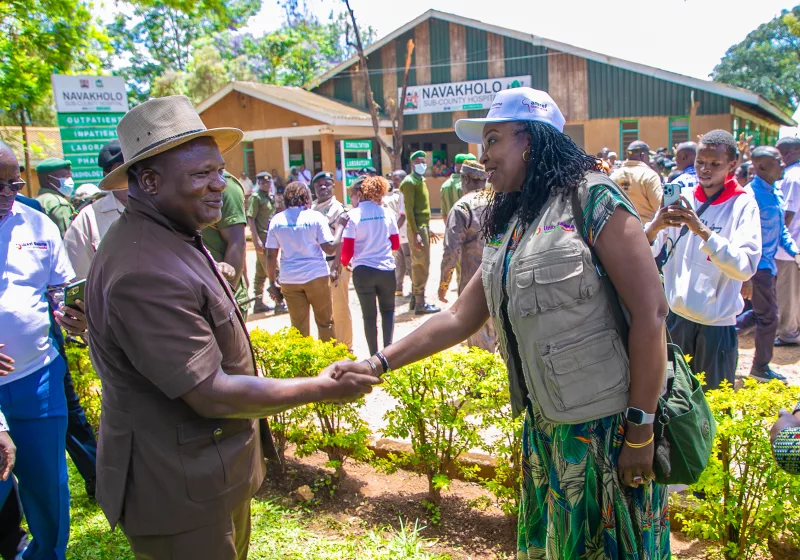
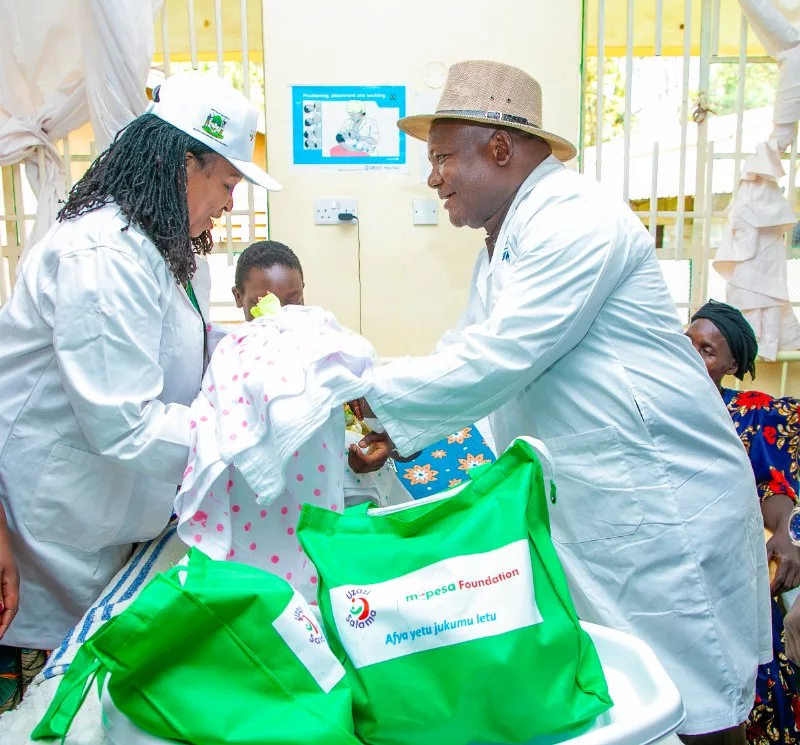
At the launch of the Uzazi Salama programme in Kakamega County, officiated by Governor Fernandes Barasa, Sub-County Reproductive Health Coordinator Ebby Shisia outlined the extent of adolescent pregnancy in the area.
Navakholo’s statistics from October 2025 to October 2026 reveal that 17 girls aged 10–14 and 1,214 adolescent girls aged 10–19 became pregnant.
These figures are concerning, says Shisia, especially because many of these girls are still under 20.
In addition to teenage pregnancies, the sub-county also faces challenges in ensuring that mothers receive and continue to receive antenatal care.
“4,597 mothers attended their first antenatal care visit during the reporting period, but attendance fell to 2,752 at the fourth visit and 255 at the eighth,” Shisia says.
She adds: “There exists an urgent need to strengthen Reproductive, Maternal, Newborn, Child and Adolescent Health (RMNCAH) services.”
According to her, these services should range from ensuring that adolescents have the right information about adolescent health and support to make important health decisions to providing expectant mothers with access to timely and appropriate health services in the country.
She believes the programme will make a meaningful difference to the health of mothers and newborns by improving access to quality healthcare and reducing delays in seeking medical attention, reaching health facilities and receiving appropriate treatment.