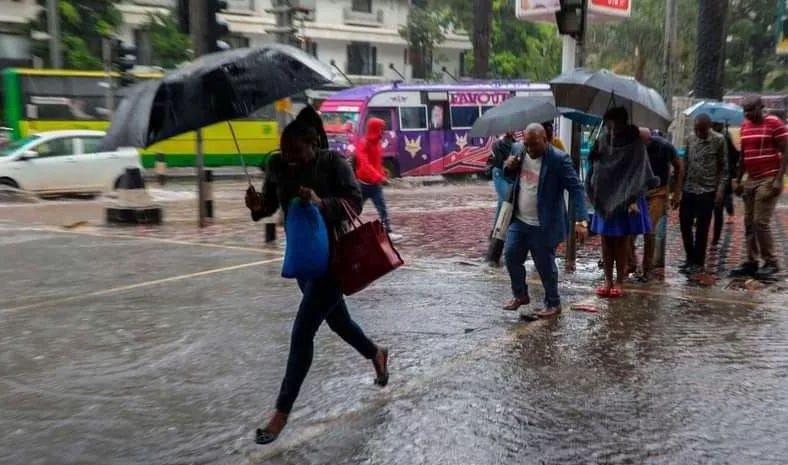
The Kenya Meteorological Service has forecast rainfall over parts of several counties between November 3 and 10, as the country enters a month expected to receive above-average rainfall.
The weekly outlook indicates that rain is expected in parts of Baringo, Bomet, Bungoma, Busia, Elgeyo Marakwet, Embu, Garissa, Homa Bay, Isiolo, Kajiado, Kakamega, Kericho, Kiambu, Kilifi, Kirinyaga, Kisii, Kisumu, Kitui, Kwale, Laikipia, Lamu, Machakos, Makueni, Mandera, Marsabit, Meru, Migori, Mombasa, Murang'a, Nairobi, Nakuru, Nandi, Narok, Nyamira, Nyandarua, Nyeri, Samburu, Siaya, Taita Taveta, Tana River, Tharaka-Nithi, Trans Nzoia, Uasin Gishu, Vihiga, Wajir and West Pokot.
The weekly outlook follows a monthly forecast issued on November 2, in which acting director of the Kenya Meteorological Service Authority Edward Muriuki said most parts of the country were expected to receive above-average rainfall in November and December.
Muriuki warned that the increased rainfall could cause flooding, damage roads and raise the risk of diseases such as malaria, cholera and typhoid.
He said the rains were expected to affect agricultural regions as well as parts of northern Kenya, although rainfall distribution would vary across the country.
The forecast comes after much of Kenya received below-average to near-average rainfall in October, despite some areas recording significant amounts.
An automatic weather station at Ng'iya Primary School in Siaya recorded the highest monthly rainfall total in October, at 264.4mm, according to the meteorological authority.
Some stations in Marsabit, Garissa, Mandera, Kisii, Kisumu and Lamu also recorded rainfall above their usual October amounts.
Muriuki said November was an important month in the October-November-December short rains season because rainfall supports agricultural activities, replenishes water resources and sustains livelihoods.
The expected rains could improve soil moisture and pasture availability following the dry conditions experienced in recent months.
However, he cautioned that excessive rainfall could disrupt farming activities and the transportation of produce from farms to markets.
Rural access roads are particularly vulnerable to deterioration and may become impassable after prolonged rainfall, affecting the movement of people, goods and essential services.
Urban areas could also experience traffic congestion and transport disruptions where drainage systems are overwhelmed.
The authority further warned that accumulated water could create breeding grounds for mosquitoes, potentially increasing malaria transmission in susceptible areas. Flooding and poor drainage could also contaminate water sources and increase the risk of cholera, typhoid and diarrhoeal infections.
The rains are also expected to replenish rivers, dams, water pans and groundwater sources, potentially improving water availability for households, farmers and livestock.
However, increased river flows could result in localised flooding, particularly in areas near rivers and other low-lying locations.
The meteorological authority has advised Kenyans to use the weekly forecast alongside shorter-term updates, which provide more specific information on expected weather conditions.