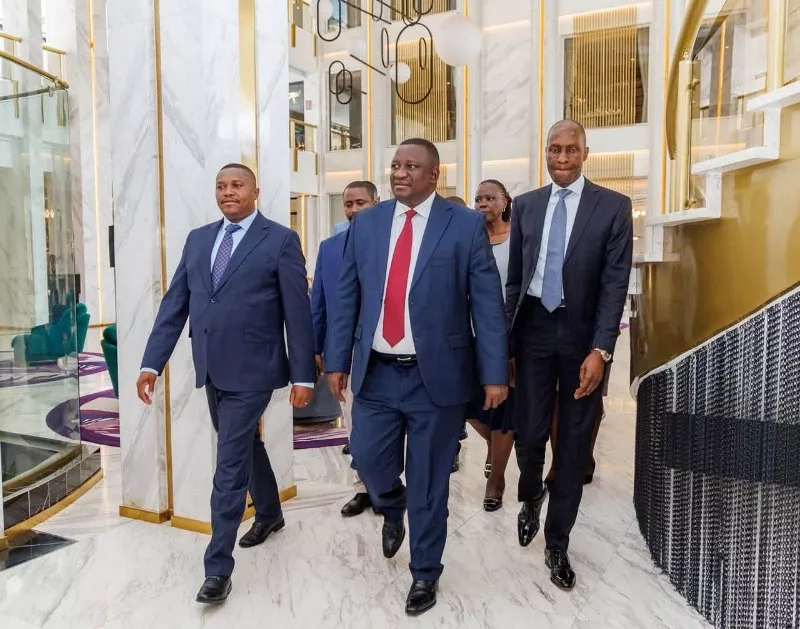
Sports Principal Secretary Elijah Mwangi has called for stronger anti-doping institutions and regulatory frameworks to protect Kenya's reputation as a global athletics powerhouse, as the government moves to tighten the country's fight against performance-enhancing drugs.
Mwangi made the call during an engagement with the National Assembly Departmental Committee on Sports and Culture, where he accompanied Cabinet Secretary for Youth Affairs, Creative Economy and Sports Salim Mvurya to deliberate on the proposed Anti-Doping (Amendment) Bill, 2026.
The push for tougher anti-doping measures comes at a particularly delicate time for Kenyan athletics following the Athletics Integrity Unit's (AIU) provisional suspension of reigning world marathon champion Peres Jepchirchir over an adverse analytical finding for erythropoietin (EPO) in an out-of-competition sample collected in Kenya before her win at the Sydney Marathon.
The high-profile case has once again placed Kenya's doping problem under international scrutiny, reinforcing the need for more effective testing, stronger enforcement mechanisms and sustained investment in athlete education to protect the integrity of competition.
Mwangi noted that safeguarding Kenya's sporting reputation requires more than its celebrated performances on the track and roads, insisting that strong institutions and effective regulatory systems are essential in confronting emerging doping threats.
"As a global sporting powerhouse, Kenya remains at the forefront of championing clean sport. Protecting this reputation requires strong institutions, effective regulatory frameworks and sustained investment in systems that safeguard the integrity of our sporting achievements," Mwangi said.
The proposed amendments seek to strengthen anti-doping programmes, enhance testing and education across sports organisations, while protecting athletes from exploitation and exposure to doping risks.
Of particular importance is the focus on young and upcoming athletes, with the government seeking to embed anti-doping education early in their careers to help them make informed decisions and resist the temptation of performance-enhancing substances.
"Emphasis is placed on educating young and upcoming athletes, empowering them to make informed decisions early in their sporting careers," he added.
Beyond testing and education, the proposed reforms also seek to strengthen the investigative and enforcement machinery by deepening collaboration between the Anti-Doping Agency of Kenya (ADAK), law enforcement agencies, intelligence services, investigative bodies and prosecution agencies.
The multi-agency approach is expected to improve the detection and investigation of doping violations while helping dismantle networks involved in facilitating the use and distribution of prohibited substances.
Mwangi further underscored the importance of strengthening ADAK's institutional capacity and operational independence, noting that the reforms would be critical in enhancing accountability, protecting athletes' rights and ensuring Kenya remains aligned with international anti-doping requirements, particularly ahead of the 2027 World Anti-Doping Code.
"Strengthening the institutional capacity and operational independence of the Anti-Doping Agency of Kenya (ADAK) will be critical in improving enforcement, enhancing accountability, safeguarding athletes' rights and ensuring Kenya meets international anti-doping standards, particularly ahead of the 2027 World Anti-Doping Code," he said.