In political discourse, the term “mole” is used to describe an individual suspected of secretly working with an opposing political camp or passing information to political rivals.
As Kenya's political landscape shifts towards the 2027 General Election, the phrase “mole politics” has become increasingly prominent, amid questions about politicians' loyalties and movements between political camps.
The term has particularly gained prominence amid political defections, with politicians moving from the ruling United Democratic Alliance (UDA) to opposition parties and vice versa.
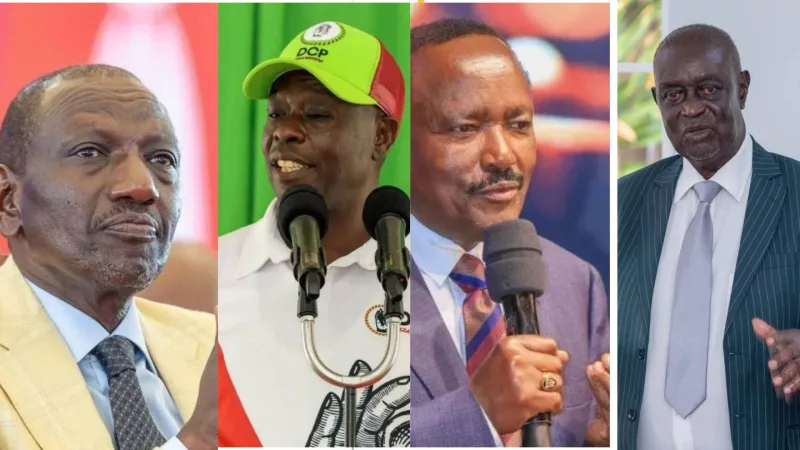
The political figures positioning themselves ahead of the 2027 elections include President William Ruto, former Deputy President Rigathi Gachagua, Wiper Patriotic Front (WPF) leader Kalonzo Musyoka and ODM leader Oburu Oginga.
However, the political use of the term is not new. It dates back to the onset of multiparty politics in Kenya in the 1990s.
Following the repeal of Section 2A of the Constitution in December 1991 and the restoration of multiparty democracy, politicians in newly formed opposition parties frequently accused one another of acting as secret agents or informants for the ruling Kenya African National Union (KANU) regime.
The accusations of infiltration and betrayal have continued through successive election cycles, featuring in political rivalries during the 2013, 2017 and 2022 General Elections.
During the 2013 elections, accusations of political infiltration featured in the political contest between the Coalition for Reforms and Democracy (CORD), led by the late Raila Odinga, and the Jubilee coalition of Uhuru Kenyatta and William Ruto.
CORD supporters and allies raised concerns about alleged leaks of campaign itineraries, internal polling information and rally logistics to their political opponents.
Similar suspicions emerged during the 2017 election cycle as Odinga's National Super Alliance (NASA) faced Jubilee.
NASA sought to establish a parallel national tallying centre to independently monitor election results. However, allegations emerged that information about the facility had leaked, raising concerns about possible interference with its operations.
The election also saw intense scrutiny of the Independent Electoral and Boundaries Commission (IEBC), with rival political camps questioning the integrity of information emerging from the electoral body.
NASA successfully challenged the August 2017 presidential election at the Supreme Court, which annulled the results and ordered a fresh election.
The political climate was also characterised by Odinga's lamentation that some of his closest allies would “eat with us during the day and dine with our enemies at night”.
The remark reflected the mistrust and suspicion that had come to define relationships within opposition political formations.
The 2022 elections brought another dimension to the political debate following the fallout between former President Uhuru Kenyatta and his then Deputy, William Ruto.
Uhuru backed Odinga's Azimio la Umoja coalition, while Ruto led the Kenya Kwanza Alliance after falling out with his boss.
The political rivalry was accompanied by concerns about the loyalty of individuals within competing campaign formations.
With the next General Election approaching, accusations of political betrayal are once again featuring in political discourse.
Political analyst James Wangai argues that the mole narrative could become an effective political tool, particularly in shaping perceptions of MPs who cross over from one political camp to another as campaigns gather momentum.
Former Deputy President Rigathi Gachagua and his allies have, for instance, used the term against politicians perceived to be sympathetic to the administration, particularly those defecting from UDA to opposition formations.
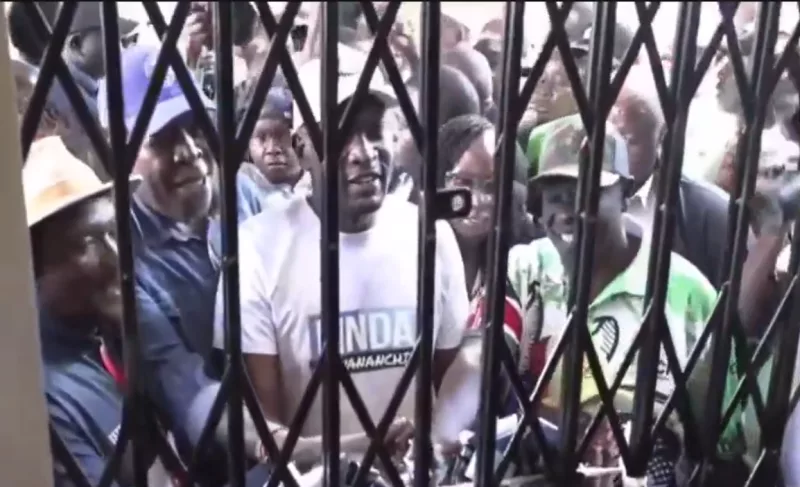
One of the politicians caught up in the debate is Kiharu MP Ndindi Nyoro, who announced his departure from UDA and move to the People's Party of Kenya (PPK).
Nyoro has dismissed claims portraying him as a political mole, describing them as attempts to taint his political standing.
Politicians moving in the opposite direction, from opposition formations towards the government side, have equally faced questions about their loyalty and political motivations.
Wangai says the accusations are likely to feature prominently in political discourse as parties and coalitions intensify their preparations for the 2027 elections.
“We are going to see this strategy and narratives for months to come. It will be adopted by both sides of the political divide,” he said.
However, political analyst Martin Andati believes the effectiveness of the mole narrative could be limited by an increasingly informed electorate, particularly the growing influence of young voters.
He argues that access to information through digital platforms has made voters more capable of evaluating political developments independently rather than relying entirely on narratives advanced by political leaders.
“We have a very enlightened populace, comprising a large percentage of the youth. These are people who easily access information through the internet and can make independent political choices devoid of prevailing political narratives,” he said.