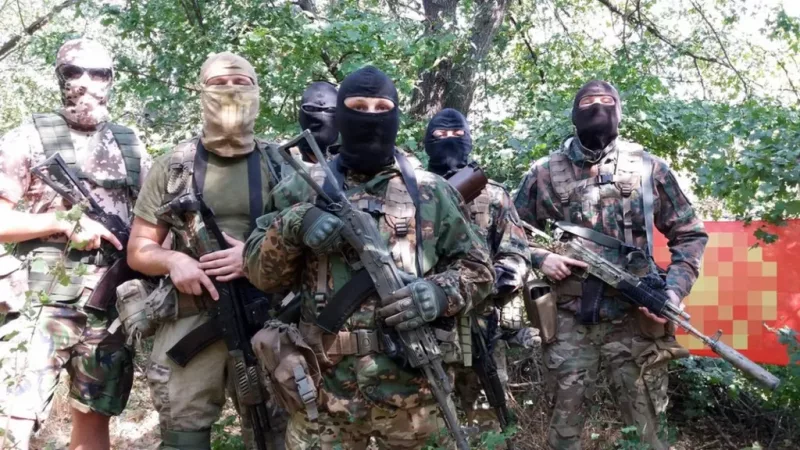
A new investigation has revealed that recruitment agencies, brokers and intermediaries extracted more than Sh 6.5 billion ($50 million) from African men recruited to fight for Russia in its war against Ukraine, raising questions about the protection of citizens as African leaders deepen ties with Moscow.
The investigation by Journalist For Justice (JFJ), released on Thursday as African leaders meet Russian President Vladimir Putin in Moscow, identified at least 3,034 Africans from 40 countries recruited into Russia’s armed forces since October 2022.
At least 502 recruits had been documented as killed in action by the end of June 2026, with investigators warning that the actual numbers could be higher.
Kenya accounts for the largest documented contingent, with 841 identified cases, followed by Egypt with 407, Cameroon with 383, Ghana with 337, Nigeria with 214 and Uganda with 108.
In its report, The Death Contract, JFJ found that financial incentives were the main attraction for many recruits, but recruitment agencies and Russian handlers deducted substantial fees from the payments promised to them.
According to the investigation, recruits were promised signing bonuses of approximately 1.9 million roubles, equivalent to $23,400.
However, agencies and Russian handlers deducted between one million and 1.4 million roubles, leaving recruits with about 900,000 roubles, or $11,100.
The deductions, made directly from recruits’ Russian bank accounts within 35 days of signing their contracts, represented between 58 and 66 per cent of the signing bonus.
JFJ documented the fee structure using contracts obtained from Global Face Human Resources Limited, a Kenyan recruitment agency at the centre of the investigation.
The organisation estimates that Global Face may have earned more than $8.9 million in agency fees from 500 Kenyan men sent to Russia between May 2025 and February 2026.
Recruitment fees involving other Kenyan agencies and intermediaries exceeded a further $18 million, while informal payments to brokers ranged between Sh50,000 and Sh200,000 in Kenya.
In Ghana, Sierra Leone and Cameroon, some recruits reportedly paid between $5,000 and $7,000 to intermediaries.
The investigation found that the recruitment network operated across Africa and beyond, targeting jobseekers, migrant workers in Gulf countries, students in Russia facing visa difficulties and, in some cases, prisoners.
JFJ described Kenya’s recruitment pipeline as a substantial commercial operation that allegedly operated in plain sight, with institutional acquiescence at multiple levels.
The report documents at least 500 Kenyan men recruited through Global Face and says officials from immigration, criminal investigations, intelligence and employment services were named in Parliament in connection with the facilitation of the recruitment operation.
JFJ found that none of the officials identified had been prosecuted.
A director of Global Face is facing prosecution under counter-trafficking laws, although the report notes that the charge does not invoke Section 68 of the Penal Code, which criminalises enlisting or assisting a Kenyan citizen to enlist in a foreign military.
The investigation also raises concerns about the conditions recruits faced after arriving in Russia. A survey of families of 57 Kenyan recruits found that the average period between arrival in Russia and death, hospitalisation or disappearance was just 44 days.
JFJ further found that some Kenyan recruits received as little as three days of military training before deployment in 2025, compared with up to six weeks for some recruits in 2023.
The findings come months after Prime Cabinet Secretary Musalia Mudavadi travelled to Moscow in March 2026, securing a Russian commitment to stop recruiting Kenyans through its Ministry of Defence.
However, JFJ said the commitment did not appear to cover recruitment by private-sector enterprises supplying the war effort.
The organisation urged African governments to investigate recruitment agencies and brokers, hold officials who facilitated the networks accountable, strengthen protections for jobseekers and establish effective mechanisms to repatriate affected citizens.
It also criticised African governments for prioritising bilateral diplomacy over collective action, noting that, as of May 2026, no African government had completed a formal prisoner-of-war exchange or established a repatriation fund for victims.
JFJ said it would continue investigating the fate of Africans reported missing, killed or held as prisoners of war.