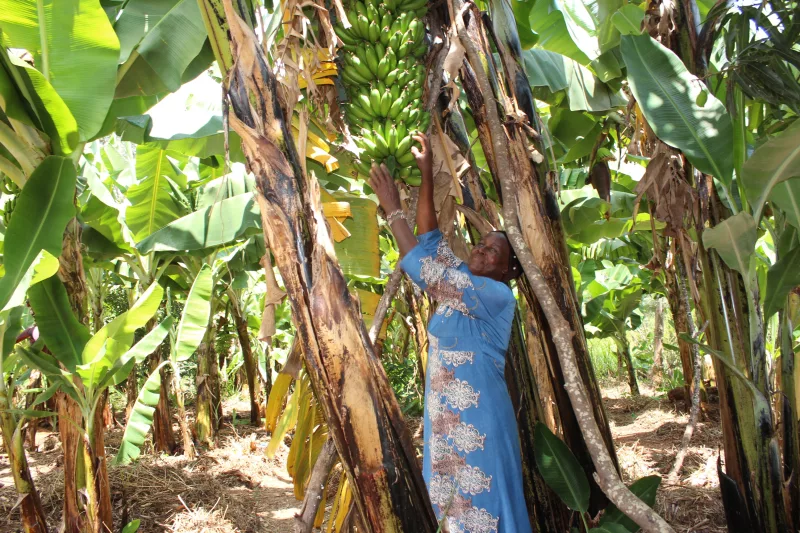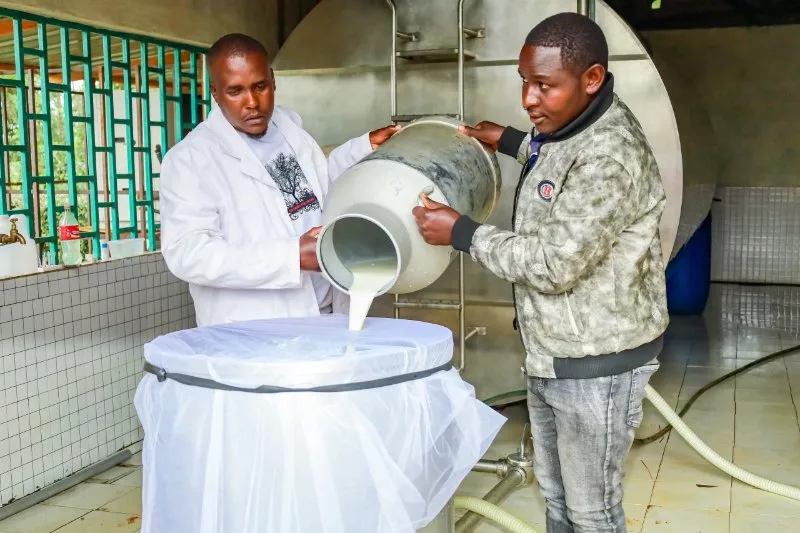
Dairy farmers in Kirinyaga are benefiting from expanded milk cooling facilities with reduced post-harvest losses.
The county government has partnered with the national government to distribute 29 milk coolers to dairy cooperatives and farmer groups, raising the county’s milk cooling capacity to more than 70,000 litres.
The initiative is extending dairy support to smaller producer organisations through the provision of milk coolers and backup generators, easing the burden of transporting milk over long distances and protecting farmers from losses caused by inadequate storage.
These efforts have led to iincreased production and improved incomes.
At New Ngariama Farmers’ Cooperative Society, the impact is already evident with the number of farmers supplying milk rising from about 400 to more than 600, while daily milk collection has increased from 2,000 litres to more than 7,000 litres.
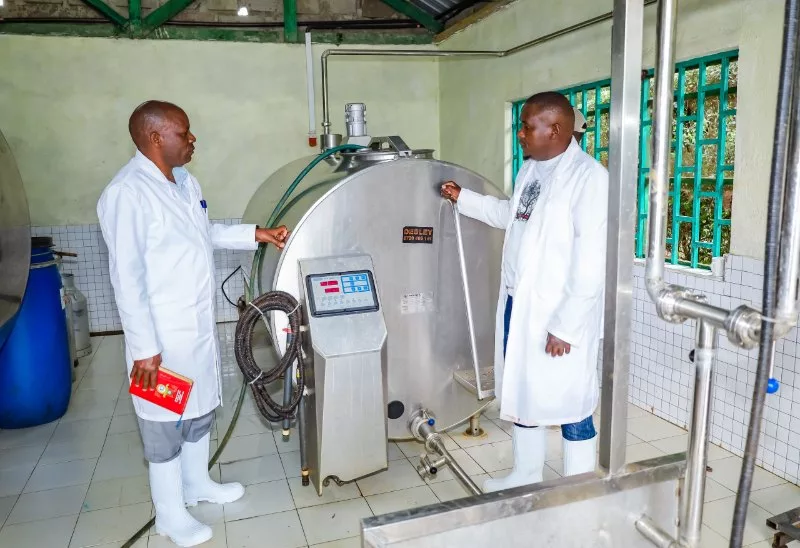
The growth follows the installation of a modern 10,000-litre milk cooler and a 100 KVA generator by the county government.
“We were provided with a modern and efficient milk cooler that safely stores our farmers’ milk, and a generator which ensures that even during power outages, we do not experience losses,” cooperative chairperson Phineas Ngari said.
The facilities have improved storage capacity and strengthened farmers’ confidence in dairy farming.
The cooperative can now handle up to 12,500 litres of milk, allowing it to expand operations and attract farmers from beyond the Ngariama area. The growth has also created employment, with the number of milk collectors increasing from four to 10.
Ngari said the cooperative was targeting 1,500 farmers within the next two years, with continued technical assistance from the county government expected to support its expansion.
He said new facilities had eased the financial burden on the cooperative, noting that purchasing similar equipment independently would have cost more than Sh16 million.
Individual farmers are also increasing production as improved storage facilities provide a more reliable market for their milk.
Farmer Munene Shem said his daily milk production has risen from about five litres to more than 40 litres.
“This project has created employment and shown that dairy farming can be a sustainable source of income,” he said
Anne Kabari said the improved market had significantly increased her household income, enabling her to meet essential expenses.
“Through the efforts of the county government that provided us with this milk cooler, I have become a successful dairy farmer. I now deliver at least 30 litres daily and earn over Sh40,000 every month,” she explained.
Kabari said the earnings had enabled her to comfortably meet household expenses, including rent and university fees for her child.
At Kirinyaga Dairy Cooperative, the intervention has similarly transformed operations after the society struggled to accommodate its growing membership using an inadequate cooling facility.
Cooperative chairperson Kennedy Ngigi said they previously relied on a 3,500-litre cooler that could no longer meet its storage needs.
“We took our request to the governor and we were given a cooler with a capacity of 9,000 litres and a solar system. We were paying a bill of between Sh80,000 and Sh100,000 but now we pay slightly less than Sh10,000,” Ngigi noted.
The cooperative’s membership has grown from about 1,000 farmers to nearly 2,000 since the new cooler was installed.
The increased capacity has also eased pressure on farmers, allowing milk to remain safely stored for three to five days before transportation.
Anthony Muriuki, who produces about 22 litres of milk daily, maintained that the facility had renewed farmers’ confidence in dairy farming and encouraged them to expand production.
“We are now proud of being farmers. There is motivation to rear dairy cows and farmers are working towards adding more cows, hoping to produce over 35 litres of milk a day,” Muriuki said.
Anne Wairimu said milk losses had declined significantly since the cooler was installed.
Farmers previously lost large quantities of milk when they lacked adequate storage.
Wairimu said they can now deliver their milk with greater confidence, with assurance that it would be safely stored until collection.
About 123,000 litres of milk are collected through the co-operatives in the county daily.