Cabinet Secretary for Mining, Blue Economy and Maritime Affairs Hassan Ali Joho has unveiled new reforms aimed at transforming Kenya’s mining industry, setting an ambitious target of increasing the sector’s contribution to Gross Domestic Product (GDP) to as much as 10 per cent by 2030.
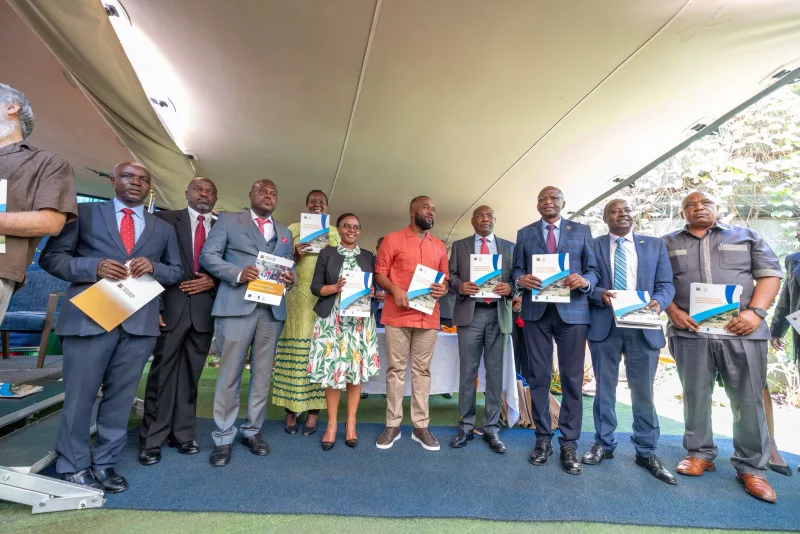
Joho announced the target during the Annual Mining Policy Brief and Stakeholders’ Forum at Radisson Blu Hotel in Nairobi, where he presided over the launch of two key documents designed to strengthen mining governance, improve safety and promote environmentally responsible mineral extraction.
The documents, the Artisanal Mining Committee Manual and the Environmental and Social Impact Assessment Guidelines for the Mining Sector, are intended to support formalisation, attract responsible investment and ensure communities benefit from mineral development.
“Mining is a frontier sector for Kenya’s transformation,” Joho said, emphasising the industry’s potential to create jobs, expand exports, support industrialisation and strengthen county economies.
He said mineral-rich counties, including Migori and Taita-Taveta, could benefit from improved production, processing and marketing of gold, gemstones and other minerals.
Joho identified artisanal and small-scale miners as important contributors to rural employment but acknowledged that unsafe working conditions, environmental degradation, limited financing and inadequate access to markets continued to constrain their growth.
The ministry plans to strengthen training, formalisation and safety programmes while promoting mineral marketing cooperatives to help miners consolidate production, improve bargaining power and access better markets.
The new committee manual is expected to improve accountability, dispute resolution and coordination among miners, communities and government agencies.
Joho also emphasised that mining expansion must go hand in hand with environmental protection, worker safety and community participation.
The new assessment guidelines provide a framework for identifying and managing environmental and social risks, involving the public in decision-making and rehabilitating mining sites.
Among the experts at the forum, Gladstone Muyanga Kithome, a physical planner in the Department of Lands, Housing and Urban Development, stressed the importance of integrating land-use planning into mineral development.
Representing Principal Secretary Nixon Korir, Kithome said mining was not merely an economic activity but a land-use decision with implications for human settlements, infrastructure, agriculture, water resources, biodiversity and cultural heritage.
He called for stronger coordination between physical planning and mining policies to minimise land-use conflicts and ensure mineral extraction does not undermine food security, ecological protection and community livelihoods.
The ministry will support implementation of the new documents through training, county-level dissemination, capacity building and monitoring arrangements.
Joho urged county governments, investors, mining committees, civil society organisations and local communities to put the guidelines into practice.
The ministry acknowledged the support of the Ministry of Environment, Climate Change and Forestry, the National Environment Management Authority, the Swedish Environmental Protection Agency and the United Nations Development Programme in developing the documents.
The reforms seek to position mining as a stronger contributor to Kenya’s economic transformation while ensuring that mineral wealth generates lasting benefits for communities and the national economy.