An audit of the public officers’ medical scheme has questioned billions of shillings in claims, citing missing patient details in records supporting treatment payments.
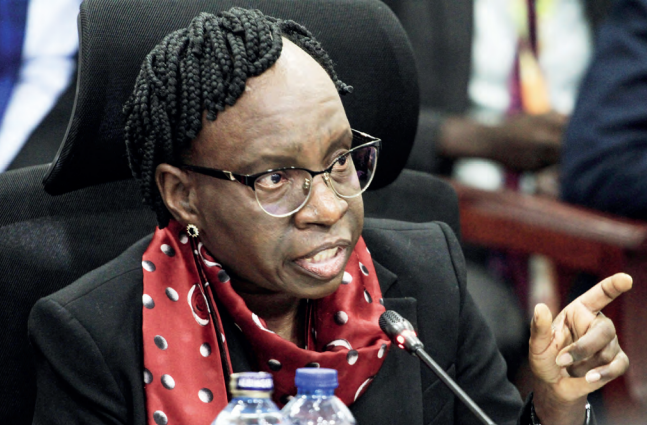
Auditor General Nancy Gathungu says the fund could not provide sufficient documentation to verify claims expenditure of Sh2.62 billion, raising concerns about accountability in the management of the scheme.
The missing records include patients’ names, membership numbers, employers, medical procedures undertaken and amounts claimed and approved.
The audit also found that records lacked details of hospitals where treatment was provided, admission and discharge dates, and information on patients treated overseas.
The findings leave the fund unable to demonstrate fully whether the reported expenditure was properly supported and accurately recorded.
In her report for the financial year ended June 30, 2025, Gathungu also questioned Sh994.4 million in expenditure whose supporting records were not provided for verification.
The auditor could not verify Sh5.27 billion the fund reported it was owed because management failed to provide the records needed to support the figure.
The auditor also could not verify Sh1.79 billion in bills and other payments the fund reported it owed.
Management failed to provide the detailed records and calculations needed to establish whether the amounts were correct because of missing supporting schedules and ledgers.
The findings raise questions about the financial controls governing a scheme intended to provide medical cover for public officers.
The fund reported Sh6.34 billion in benefits expenses during the year, comprising Sh2.62 billion in scheme benefits, Sh322.42 million in incurred-but-not-claimed liabilities and Sh3.40 billion in outstanding claim reserves.
However, Gathungu said the records presented to support the Sh2.62 billion in scheme benefits lacked essential information needed to establish the validity and accuracy of the claims.
The documents did not identify beneficiaries by name or Social Health Authority membership number.
They also lacked details of employers, the medical interventions undertaken and the amounts claimed and approved.
Other missing information included the dates of admission and discharge, the names and classification of medical facilities, and details of overseas treatment.
Without these records, the auditor said she could not establish the accuracy and completeness of the reported benefits expenditure.
The gaps mean the audit could not independently verify the claims against the patients treated, the services provided and the amounts approved for payment.
While the report does not establish that the entire amount was fraudulent or stolen, the absence of supporting documentation prevents independent confirmation that the expenditure was properly incurred.
The findings put the spotlight on the systems used to process medical claims and the safeguards meant to ensure public funds pay for documented services.
The audit also questioned Sh994.41 million recorded as expenditure on May 28 last year.
The amount appeared in the cash book as a “bank file” and as a contra entry in the bank statement.
However, management did not provide the expenditure ledger showing where the payment had been charged.
The supporting schedule also lacked employment numbers of the public officers treated and the dates when medical services were provided.
Gathungu said the omissions prevented her from verifying the transaction.
“The accuracy and completeness of the expenditure amounting to Sh994,409,819 could not be confirmed,” she said.
The auditor also raised concerns over Sh5.27 billion reported as trade receivables, saying management failed to provide supporting schedules and ledgers.
The records were necessary to verify the amounts owed to the fund and establish their accuracy.
A further Sh1.79 billion in payables was flagged, including amounts relating to the Social Health Authority, Work Injury Benefits Act funds and claims under the Social Health Insurance Fund.
The liabilities were not supported by the relevant ledgers and calculations, making it impossible to confirm their accuracy and existence.
The findings leave significant balances in the fund’s financial statements without sufficient supporting evidence.
The fund reported income of Sh6.53 billion during the year, but Gathungu said its accuracy and completeness could not be confirmed.
The income included Sh6.48 billion from civil servants and Sh50 million from the Social Health Authority.
A supporting schedule showed Sh1.21 billion received from the State Department for Public Services and Human Capital on February 26, 2025, leaving an unreconciled variance of Sh5.32 billion against the reported income.
The Sh50 million received from SHA also lacked supporting bank statements.
The fund reported actual revenue of Sh6.53 billion against a final budget of Sh3.66 billion, an excess of Sh2.87 billion, or 78 per cent.
Management also failed to provide an approved annual budget for the 2024-25 financial year for audit verification.
Gathungu said the revenue estimates might not have been realistic, raising concerns about the budgeting process and the risk of unauthorised expenditure.
The omission contravened the Public Finance Management (Public Officers Medical Scheme Fund) Regulations, 2024, which require the Fund administrator to prepare annual revenue and expenditure estimates for consideration by the Board.
“In the circumstances, Management was in breach of the law,” the auditor said.
The report also found that the fund lacked an operational policy to guide implementation of the scheme, while management failed to provide a list of contributing employers and contracts governing their contributions.
INSTANT ANALYSIS
The audit points to weaknesses in financial reporting, documentation and oversight. Gathungu’s findings underscore the need for the Fund to account for medical claims and demonstrate that public money is spent on properly documented services.