THE proposed $16 billion (about Sh2.1 trillion) Dangote East Africa Petroleum Refinery in Lamu is expected to transform Kenya’s industrial landscape, strengthen regional energy security and revive the long-planned Lamu Port-South Sudan-Ethiopia Transport (Lapsset) Corridor.
However, the project faces questions over financing, environmental safeguards, community land rights, security, competition from Tanzania’s energy corridor and the global transition away from fossil fuels.
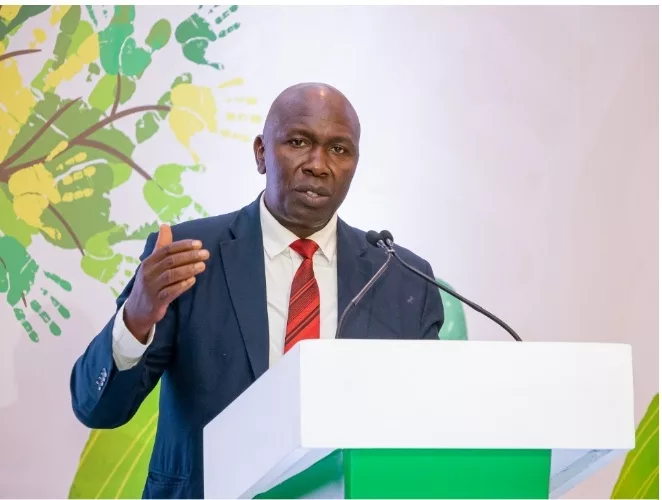
Dr Kenneth Orengo, chief executive of International Policy Group (IPG), an independent, non-profit policy research and advisory organisation based in Nairobi, examines six strategic tensions surrounding the refinery and explains what Kenya and its regional partners must do to turn the investment into a sustainable industrial asset.
IPG focuses on democratic governance, peacebuilding, institutional resilience, and sustainable development across East Africa and the Great Lakes Region. It has published policy briefs and hosted forums regarding major regional infrastructure projects.
Excerpts:
Why is the proposed Dangote refinery in Lamu strategically important for Kenya and the wider East African region?
The project addresses a structural weakness in Africa’s economy, where we export raw materials and import finished products at considerable cost to our foreign exchange reserves.
According to the Africa Finance Corporation, Africa imports more than 70 per cent of its refined petroleum products, contributing to substantial foreign exchange outflows.
A refinery of this scale could allow the region to process petroleum products closer to its markets, reduce logistics costs and create thousands of direct and indirect jobs in engineering, transportation and associated industries.
It could also strengthen manufacturing, agriculture and petrochemicals while positioning northern coastal infrastructure as an industrial hub rather than treating Lamu primarily as a port.
However, the project's potential must be distinguished from its actual delivery. Groundbreaking does not mean commissioning, and investment announcements do not automatically translate into jobs or affordable fuel.
The real test will be whether the refinery is completed on time, operates competitively, secures reliable crude supplies and delivers measurable regional benefits.
Your policy brief identifies six strategic tensions that could determine the project's success. Which is the most significant?
The six are interconnected. The global energy transition, geopolitical volatility, competition over regional energy supply routes, financing sustainability, environmental and land-rights safeguards, and security.
Financing delays could increase construction costs, land disputes could delay infrastructure, and security incidents could raise insurance and operating expenses. Meanwhile, changing global demand could undermine long-term profitability.
These risks are not necessarily reasons to abandon the project. They are reasons to address potential problems early.
The next five years will be critical in determining whether Lamu becomes a competitive regional energy hub or a costly infrastructure project whose economic potential remains unrealised.
Kenya has ambitious climate commitments and a largely renewable electricity system. Does investing in a large oil refinery contradict its energy transition agenda?
It presents a genuine policy dilemma. Kenya has invested significantly in renewable electricity, but transport, aviation, industrial production and petrochemicals still require substantial quantities of liquid fuels and related products.
The global energy transition must recognise Africa's development needs while maintaining the broader objective of reducing emissions.
The risk is that investors could commit billions of dollars to a facility based on assumptions that may not hold throughout its operating life. A refinery built around petrol and diesel alone could face pressure as electric vehicles become more widespread and energy efficiency improves.
Industrial diversification is therefore essential. The project should consider higher-value products such as polymers, fertilisers and industrial chemicals alongside conventional transport fuels.
It should also incorporate energy efficiency, cleaner production technologies and credible environmental management systems.
The question is how Kenya can pursue industrialisation without creating an inflexible asset that becomes economically uncompetitive as markets change.
The global energy market is being reshaped by geopolitical tensions. How could these developments affect Lamu?
Geopolitical volatility creates both opportunities and risks. The Russia-Ukraine war disrupted established energy flows, while instability in the Middle East has highlighted vulnerabilities along critical shipping routes, including the Strait of Hormuz.
Lamu's position on the Indian Ocean could provide an advantage by offering regional markets another source of refined petroleum products and diversifying supply options.
However, geography alone does not guarantee competitiveness. The refinery will need dependable crude supplies, commercially viable shipping arrangements, reliable infrastructure and access to customers.
Kenya and the developers should avoid excessive dependence on one supplier, market or shipping route. Diversification should extend to crude suppliers, customers, currencies and strategic stocks.
Lamu could become a flexible refining and emergency-supply hub serving East Africa and markets further inland, but only if it can deliver products reliably and competitively.
Kenya also faces competition from Tanzania, Uganda and their partners. Could the southern energy corridor undermine the Lamu refinery?
Regional competition is one of the most important strategic considerations.
Uganda, Tanzania and their partners are developing an alternative energy-trade network linked to the Port of Tanga and the East African Crude Oil Pipeline. The wider southern corridor is also exploring ways to move fuel through rail and lake transport systems into markets across the Great Lakes region.
These developments challenge Kenya's traditional position as a major transit route for petroleum products entering East Africa through Mombasa.
Bulk transport by water can be cheaper than road haulage, potentially attracting customers seeking lower logistics costs and more predictable deliveries.
However, Lamu has advantages. Its deep-water port can accommodate large vessels while its location could support crude imports and distribution of refined products.
The refinery could strengthen the Lapsset Corridor by linking energy infrastructure with transport, storage, trade and industrial development.
Kenya should accelerate connections between Lamu and inland markets, establish transparent transport tariffs and negotiate credible regional supply agreements. Regional governments should also explore complementary infrastructure where it improves efficiency.
Ultimately, customers will choose the route offering the best combination of price, reliability and delivery time. Political declarations alone will not secure market share.
Does a pan-African public share offering help ordinary citizens participate in the refinery, or would it expose them to unnecessary risks?
It broadens African ownership, allowing pension funds, institutional investors and individuals to invest directly in a strategic industrial asset.
However, cross-border investment presents regulatory, currency and liquidity risks. Different disclosure requirements, taxation arrangements and investor-protection regimes could complicate participation.
There is also a danger that ordinary investors could confuse the national importance of a project with its financial soundness.
The refinery must be assessed on commercial fundamentals, including construction costs, anticipated demand, operating expenses, debt obligations and expected returns. Investors should receive independent information explaining both potential gains and the possibility of losses.
Regional regulators need to coordinate oversight, while governments must avoid using patriotic appeals as a substitute for proper financial disclosure.
Democratising ownership is worthwhile only if it also provides access to reliable information and meaningful investor protection.
Environmental groups and communities have raised concerns about land acquisition and water use. How should these issues be addressed without delaying the project indefinitely?
Environmental and social safeguards should be treated as part of the project's economic foundation, not obstacles to development.
The refinery is planned for a region with established communities, historical land claims, fishing livelihoods and sensitive coastal ecosystems. Our policy brief highlights concerns over compulsory land acquisition, consultation and unresolved community claims in the Hindi and Manda-Magogoni areas.
Disputes before the courts must be handled lawfully. The scale of an investment does not override constitutional protections or the right to seek judicial remedies.
Communities need clear information about land acquisition, compensation, resettlement where applicable, employment opportunities and grievance-resolution mechanisms.
Water is another major concern. The brief identifies a proposed supply of approximately 200 million litres daily from the Tana River system near Kipini. This is a substantial requirement in a basin supporting farming, pastoralism, fishing and downstream ecosystems.
Before abstraction begins, the project needs independently assessed water balances, transparent allocation rules and monitoring that accounts for seasonal variation and drought.
Water recycling, efficiency measures and, where technically and economically viable, desalination could reduce pressure on freshwater resources.
Environmental and social assessments should also examine the cumulative effects of associated pipelines, roads, ports and industrial facilities.
Addressing these issues early can prevent costly disputes, legal challenges and conflict while giving investors greater certainty.
Security remains a concern in northern Kenya and along the Somali border. What does this mean for a project of this magnitude?
Security is fundamental to a refinery that depends on interconnected infrastructure, including the port, storage facilities, water pipelines and roads. Disruption to any critical component could affect the entire operation.
The 2020 attack on Camp Simba at Manda Bay demonstrated that high-value installations in the region face serious security threats.
The project will require coordinated protection involving security agencies, maritime surveillance and effective intelligence-sharing.
However, security cannot be reduced to deploying more personnel or establishing additional checkpoints. Alienating local communities could undermine the cooperation needed to protect the infrastructure.
Residents must retain legitimate livelihoods, including fishing and access to traditional transport routes. Security measures should be proportionate, lawful and sensitive to local circumstances.
Meaningful opportunities in employment, training, procurement and enterprise development can also help communities see the project's protection as a shared interest.
Security planning must therefore combine professional protection with community engagement, transparent complaints mechanisms and respect for constitutional rights.
What should the government and Dangote Group prioritise over the next five years to ensure the refinery succeeds?
I would identify six priorities. First, prepare for the energy transition through product diversification, improved efficiency and measures to prevent the refinery from becoming an uncompetitive long-term asset.
Second, strengthen supply resilience by diversifying crude sources, customers, shipping arrangements and strategic reserves.
Third, accelerate infrastructure and regional diplomacy to connect Lamu with inland markets. Open-access transport arrangements, competitive tariffs and credible regional supply agreements will be essential.
Fourth, maintain transparent and commercially disciplined financing. Government commitments must be affordable, investor protections clear, and construction funding linked to verified milestones.
Fifth, address land rights, water availability and environmental safeguards through independent assessments, meaningful community participation and effective grievance-resolution mechanisms.
Finally, protect the refinery and associated infrastructure while preserving local livelihoods and public trust.
Ultimately, how should Kenyans judge whether the Lamu refinery is a success?
We should judge it by measurable economic and social outcomes, not the scale of the announcement or the symbolism of the groundbreaking ceremony.
Has the project been completed within a commercially reasonable budget and timeline? Can it secure crude supplies and operate profitably? Will it reduce the cost and vulnerability of regional fuel supply? How many sustainable jobs will it create, and what opportunities will Kenyan businesses receive?
We should also assess whether it strengthens the Lapsset Corridor, expands regional trade and attracts further industrial investment without creating unsustainable public liabilities.
Equally important are whether land rights are respected, water use is sustainable, communities benefit and the refinery remains competitive as global energy markets evolve.
Lamu could demonstrate that African capital, regional cooperation and long-term industrial planning can deliver infrastructure serving multiple economies. It could also expose the costs of rushing into a mega-project without resolving its financial, environmental and social challenges.
The difference will lie in implementation, accountability and the willingness of governments and investors to confront difficult questions early.
Africa does not lack ambitious industrial ideas. What it needs is the institutional discipline to turn those ideas into durable economic value.